



Page 1
Page 1

Moral Philosophy on the Threshold of Modernity
This volume investigates the paradigm changes which occurred in ethics during the early modern era (1350-1600). While many general claims have been made regarding the nature of moral philosophy in the period of transition from medieval to modern thought, the rich variety of extant texts has seldom been studied and discussed in detail. The present collection attempts to do this. It provides new research on ethics in the context of Late Scholasticism, Neo-Scholasticism, Renaissance Humanism and the Reformation. It traces the fate of Aristotelianism and of Stoicism, explores specific topics such as probabilism and casuistry, and highlights the connections between Protestant theology and early modern ethics. The book also examines how the origins of human rights, as well as different views of moral agency, the will and the emotions, came into focus on the eve of modernity.

Hebrew Scholasticism in the Fifteenth Century : A History and Source Book
This book aims to respond to this need. After a historical introduction, where a "state of the art" about research on the relationship between Jewish philosophy and science and Latin Scholasticism in the thirtheenth-fifteenth centuries is given, the book consists of four chapters. Each of them offers a general bio-bibliographical survey of one or two key-authors of fifteenth-century "Hebrew Scholasticism", followed by English translations of some of their most significant "Scholastic" works or of some parts of them: Abraham Bibago’s "Treatise on the Plurality of Forms", Baruch Ibn Ya’ish’s commentaries on Aristotle’s "Nicomachean Ethics" and "De anima", Eli Habillo’s introduction to Antonius Andreas’s commentary on the "Metaphysics", Judah Messer Leon’s commentary on Aristotle’s "Physics" and questions on Porphyry’s "Isagoge".
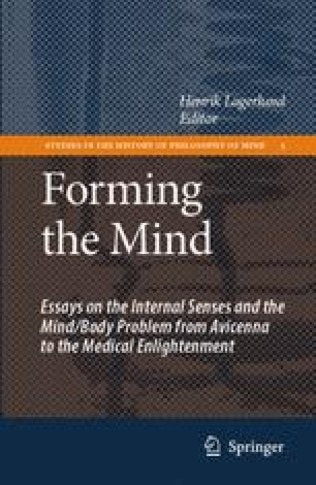
Forming the mind : Essays on the internal senses and the Mind/Body problem from avicenna to the medical enlightenment
The book collects essays from some of the foremost scholars in a relatively new and very promising field of research. It stresses how important and fruitful it is to see the time period between 1100 and 1700 as one continuous tradition, and brings together scholars working on the same issues in the Arabic, Jewish and Western philosophical traditions. In this respect, this collection opens up several new and interesting perspectives on the history of the philosophy of mind.
Aquinas and Maimonides on the Possibility of the Knowledge of God : An Examination of The Quaestio de attributis
This in-depth study of Thomas Aquinas’ Quaestio de attributis. Shows that the Quaestio contains Aquinas’ final answer to the dispute on the divine attributes, and thoroughly examines his interpretation of Maimonides’ position on the issue of the knowledge of God by analysing this and other texts related to it chronologically and doctrinally.
