



Page 1
Page 1
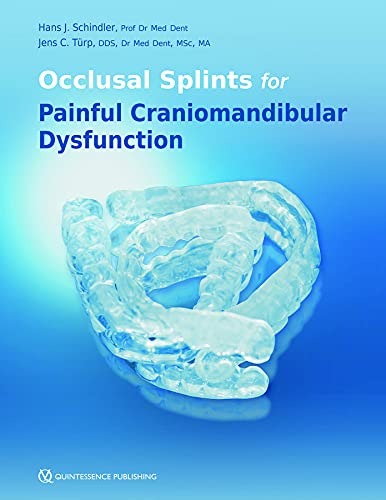
Occlusal splints for painful craniomandibular dysfunction
Bridges that gap, presenting a practical guide for the treatment of craniomandibular dysfunction (CMD)—a functional disorder that affects the muscles of mastication, temporomandibular joints, and/or occlusion—in patients with related pain. The first half of the book provides detailed but simple clinical instructions and examples of occlusal splint therapy, including splint fabrication and coordinative training for painful CMD, based entirely on a high level of evidence. The second half delves deeper into the etiology, advanced diagnostic techniques, neurobiology, and pathophysiology of painful CMD and splint therapy.

MRI of the Temporomandibular Joint : Correlation Between Imaging and Pathology
This book is the outcome of a fruitful, long-standing cooperation between expert radiologists and clinicians, and explains the most relevant features and technical requirements that are needed to optimally conduct and assess MR examinations for temporomandibular joint (TMJ) pathologies.

Maxillofacial Imaging
Maxillofacial imaging has evolved dramatically over the past two decades with development of new cross-sectional imaging techniques. Traditional maxillofacial imaging was based on plain films and dental imaging. However, today’s advanced imaging techniques with CT and MRI have only been partially implemented for maxillofacial questions. This book bridges the gap between traditional maxillofacial imaging and advanced medical imaging. We have applied CT and MRI to a variety of maxillofacial cases and these are illustrated with high-quality images and multiple planes. A comprehensive chapter on imaging anatomy is also included. This book is useful for oral and maxillofacial radiologists, oral and maxillofacial surgeons, dentists, radiologists, plastic surgeons, head and neck surgeons, and others that work with severe maxillofacial disorders.
Maxillofacial Imaging
Demonstrates how advanced medical imaging techniques can be successfully applied to dental and maxillofacial conditions. There is a focus on CT and MRI, but the use of all contemporary imaging techniques are illustrated including PET, PET/CT, ultrasonography, and cone beam CT. The presentation is in atlas style, with succinct, bulleted text and a wealth of high-quality images in multiple planes. All images for each patient are grouped to enable the reader very quickly to gain an imaging overview of the condition under consideration. After a comprehensive introductory chapter on normal imaging anatomy, the role of advanced imaging techniques is described in pathologic conditions of the mandible and maxilla, temporomandibular joint, regions closely related to the jaw, paranasal sinuses, oral cavity, salivary glands, and structures adjacent to the maxillofacial region. A concluding chapter examines the use of interventional procedures for diagnosis and treatment of maxillofacial conditions. Compared with the first edition, numerous additional cases have been incorporated and a completely new chapter focuses on cone beam CT.

Integrated clinical orthodontics
Offers an overview of clinical orthodontic theory and practice to equip clinicians to take an integrated approach to orthodontic practice. It presents the problems of orthodontics in an interdisciplinary context to describe how the potential complexity of dentofacial problems, the medical histories of patients, and a host of other factors contribute to orthodontic outcomes. The second edition has been expanded and thoroughly updated with new chapters and following an organized approach to the role of the orthodontist as part of a team. Cases in the book include orofacial deformities, sleep disorders, esthetic smile creation and temporomandibular joint problems.

Imaging of the Temporomandibular Joint
This book is designed to meet the demand for a comprehensive yet concise source of information on temporomandibular joint (TMJ) imaging that covers all aspects of TMJ diagnostics. Readers will find clear presentation of the imaging findings in the full range of TMJ pathologies, from intrinsic pathological processes to invasion by lesions of the temporal bone and mandibular condyle.
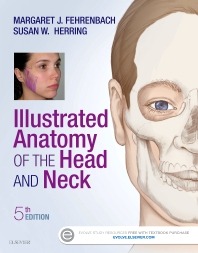
Illustrated anatomy of the head and neck
Provides dental assisting and dental hygiene students with complete coverage of head and neck anatomy, plus detailed discussions of the temporomandibular joint and its role in dental health, the anatomy of local anesthesia, and the spread of dental infection. Chapters are organized by anatomical systems of study and include expanded review questions that help prepare you for classroom and board examinations. Combine this new edition with its companion title, Illustrated Dental Embryology, Histology, and Anatomy, and you will have a solid foundation of basic scientific knowledge that ties to everyday clinical dental practice.
Diagnosing and managing temporomandibular joint conditions
Aims to contribute to current knowledge in diagnosing and managing temporomandibular joint (TMJ) disease. Individual chapters cover imaging techniques, myofascial pain, minimally invasive techniques, and operative arthroscopy. The book includes two chapters on condylar head changes regarding condylar resorption and condylar hyperplasia. The book concludes with the issues of TMJ reconstruction with total joint replacement. This book is intended for dentists, oral surgeons, maxillofacial surgeons, ENT physicians, students, and anyone interested in TMJ disease.

Clinical oral anatomy : A comprehensive review for dental practitioners and researchers
Presents the most current and comprehensive review of oral anatomy for clinicians and researchers alike. In 26 chapters, the reader is taken on a unique anatomical journey, starting with the oral fissure, continuing via the maxilla and mandible to the tongue and floor of the mouth, and concluding with the temporomandibular joint and masticatory muscles. Each chapter offers a detailed description of the relevant anatomical structures and their spatial relationships, provides quantitative morphological assessments, and explains the relevance of the region for clinical dentistry. All dental health care professionals require a sound knowledge of anatomy for the purposes of diagnostics, treatment planning, and therapeutic intervention. A full understanding of the relationship between anatomy and clinical practice is the ultimate objective, and this book will enable the reader to achieve such understanding as the basis for provision of the best possible treatment for each individual patient as well as recognition and comprehension of unexpected clinical findings.

Clinical Cases in Orofacial Pain
Individual cases cover temporomandibular joint disorders, masticatory muscle disorders, headache, neuropathic pain, dental pain, tooth wear, and dystonia. Following the popular Clinical Cases series style, cases are presented with associated academic commentary, including background information, diagnostic criteria and fundamental points that might influence the diagnosis, treatment planning or management of the case.

Bell's oral and facial pain
Includes advanced understanding of the neurophysiology and central processing of pain and the resulting changes to diagnostic, classi cation, and treatment guidelines. To assist clinicians in the dif cult and often complicated task of managing patients suffering from oral and facial pain, this textbook provides documented information concerning pain and pain behavior so that one may better understand what pain is, how it behaves, and how it might best be managed; develops a useful classi cation of orofacial pain disorders; offers practical diagnostic criteria by which the different orofacial pain disorders can be identi ed on a clinical level; and suggests guidelines for the effective management of patients who suffer from pain in the region of the mouth and face.

Bailey & Love's essential operations in oral and maxillofacial surgery
Covers all the surgical techniques across the entire remit of the specialty. The content encompasses coverage of safe surgical practice, including human factors, and includes detailed coverage of the major OMFS sub-specialties: Oral Surgery and Implantology, Trauma, Oncology, Reconstructive Surgery, Salivary Gland & Thyroid Surgery, Temporomandibular Joint Disorders, Orthognathic and Craniofacial Surgery, Cleft Lip and Palate, Facial Aesthetic Surgery, and Advances in Operative Oral & Maxillofacial Surgery.

Atlas of oral and maxillofacial radiology
Presents an extensive case collection of both common and less common conditions of the jaws and teeth. Focusing on the essentials of radiologic interpretation, this is a go-to companion for clinicians in everyday practice who have radiologically identified a potential abnormality, as well as a comprehensive study guide for students at all levels of dentistry, surgery and radiology. Unique lesion-based problem solving chapter makes this an easy-to-use reference in a clinical settingIncludes 2D intraoral radiography, the panoramic radiograph, cone beam CT, multidetector CT and MRIMultiple cases are presented in order to demonstrate the variation in the radiological appearances of conditions affecting the jaws and teethSpecial focus on conditions where diagnostic imaging may substantially contribute to diagnosisFeatures a useful chapter covering the temporomandibular joint

Assessment of mandibular angle and condyle morphology in a sample of Syrian people
The purpose of this study was to determine the prevalence of radiographic changes in the mandibu‐ lar angle (bone apposition) and osseous alterations in the temporomandibular joints (TMJs) in a sample of adult Syrian population . In addition, the study intended to investigate possible correlations between the two sites of contour bone changes (mandibular angle and TMJ) and to analyze various patient‐related factors, including sex, age and dental status.

3D diagnosis and treatment planning in orthodontics : an atlas for the clinician
A wide-ranging guide to modern diagnostics and treatment planning in orthodontics, which are mandatory prior to the initiation of any type of comprehensive treatment. The importance of three-dimensional (3D) imaging techniques has been increasingly recognized owing to the shortcomings of conventional two-dimensional imaging in some patients, such as those requiring complex adult treatment and those with temporomandibular joint dysfunctions or sleep disturbances.
