



Page 1
Page 1

Nonblocking Supervisory Control of State Tree Structures
This monograph proposes how to manage complexity by organizing the system as a State Tree Structure (STS). an efficient recursive symbolic algorithm is presented that can perform nonblocking supervisory control design in reasonable time and memory for complex systems.

Modelling and Analysis of Hybrid Supervisory Systems : A Petri Net Approach
Modelling and Analysis of Hybrid Supervisory Systems introduces a modelling formalism that merges Petri nets, differential equation systems and object-oriented methods; a formalism that is adequate for modelling complex and large-scale systems. To guide the designer and conduct hybrid modelling, the book describes a method that starts from the requirements of a supervisory system and results in a proposal for such a system. The method is mainly based on Unified Modelling Language diagrams, well-known tools in both academia and industry. In order to ensure that the supervisory system will behave as expected under any operational circumstances, a validation procedure that allows verification of the formal properties of the hybrid model is presented.

Model-based Process Supervision : A Bond Graph Approach
Model-based fault detection and isolation requires a mathematical model of the system behaviour. Modelling is important and can be difficult because of the complexity of the monitored system and its control architecture. The authors use bond-graph modelling, a unified multi-energy domain modelling method, to build dynamic models of process engineering systems by composing hierarchically arranged sub-models of various commonly encountered process engineering devices. The structural and causal properties of bond-graph models are exploited for supervisory systems design.

Introduction to Discrete Event Systems
Introduction to Discrete Event Systems is a comprehensive introduction to the field of discrete event systems, offering a breadth of coverage that makes the material accessible to readers of varied backgrounds. The book emphasizes a unified modeling framework that transcends specific application areas, linking the following topics in a coherent manner: language and automata theory, supervisory control, Petri net theory, Markov chains and queueing theory, discrete-event simulation, and concurrent estimation techniques
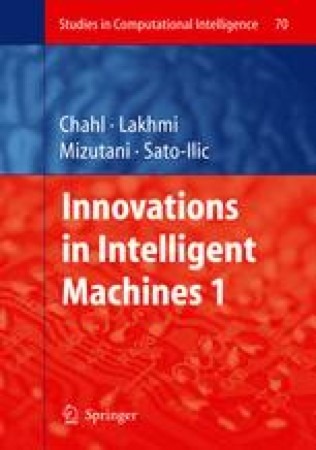
Innovations in Intelligent Machines - 1
This book includes a collection of chapters on the state of art in the area of intelligent machines. This research would provide a sound basis to make autonomous systems human-like. The contributions include: An introduction to intelligent machines / Supervisory control of multiple UAVs / Intelligent autonomous UAV task allocation / UAV path planning / Dynamic path planning / Routing in UAVS State estimation of micro air vehicles / Architecture for soccer playing robots / Robot perception / Application engineers scientists and researchers will find this book useful.

Disruptive trends in automation technology
The industrial sector is being transformed by the convergence of information technology and operational technology. The latter is another name for automation technology and covers established systems such as supervisory control and data acquisition (SCADA), programmable logic controllers (PLC), fieldbuses, and automation and control systems. As this technology is connected to the Internet and 5G networks, some monitoring, control, and analytic functionalities are deployed to the edge or cloud, and researchers are challenged to ensure the security, dependability, real-time performance, and maintainability of the resulting systems. The big data that is accessible from these systems create opportunities for artificial intelligence applications that can further disrupt the established practices in the automation domain.

Control of Traffic Systems in Buildings
Control of Traffic Systems in Buildings presents the state of the art in the analysis and control of transportation systems in buildings focusing primarily on elevator groups. The theory and design of passenger traffic and cargo transport systems are covered, together with actual operational examples and topics of special current interest such as: • noisy, on-line and algorithmic optimization; • simulation-based modeling of passengers and goods; • control of cooperative agent-oriented systems; • proposal for a benchmark to compare new control methods; • deployment and testing of transportation systems.
