



Page 1
Page 1

Model Based Inference in the Life Sciences : A Primer on Evidence
The abstract concept of "information" can be quantified and this has led to many important advances in the analysis of data in the empirical sciences. This text focuses on a science philosophy based on "multiple working hypotheses" and statistical models to represent them. The fundamental science question relates to the empirical evidence for hypotheses in this set—a formal strength of evidence. Kullback-Leibler information is the information lost when a model is used to approximate full reality. Hirotugu Akaike found a link between K-L information (a cornerstone of information theory) and the maximized log-likelihood (a cornerstone of mathematical statistics). This combination has become the basis for a new paradigm in model based inference. The text advocates formal inference from all the hypotheses/models in the a priori set—multimodel inference.

Introduction to Empirical Processes and Semiparametric Inference
This book provides a self-contained, linear, and unified introduction to empirical processes and semiparametric inference. These powerful research techniques are surprisingly useful for developing methods of statistical inference for complex models and in understanding the properties of such methods. The targeted audience includes statisticians, biostatisticians, and other researchers with a background in mathematical statistics who have an interest in learning about and doing research in empirical processes and semiparametric inference but who would like to have a friendly and gradual introduction to the area. The book can be used either as a research reference or as a textbook. The level of the book is suitable for a second year graduate course in statistics or biostatistics, provided the students have had a year of graduate level mathematical statistics and a semester of probability.

Introduction to Bayesian Scientific Computing : Ten Lectures on Subjective Computing
Inverse problems are closely related to statistical inference problems, where the observations are used to infer on an underlying probability distribution. This connection between statistical inference and inverse problems is a central topic of the book. Inverse problems are typically ill-posed: small uncertainties in data may propagate in huge uncertainties in the estimates of the unknowns. To cope with such problems, efficient regularization techniques are developed in the framework of numerical analysis. The counterpart of regularization in the framework of statistical inference is the use prior information.

Inference Control in Statistical Databases : From Theory to Practice
Inference control in statistical databases, also known as statistical disclosure limitation or statistical confidentiality, is about finding tradeoffs to the tension between the increasing societal need for accurate statistical data and the legal and ethical obligation to protect privacy of individuals and enterprises which are the source of data for producing statistics. Techniques used by intruders to make inferences compromising privacy increasingly draw on data mining, record linkage, knowledge discovery, and data analysis and thus statistical inference control becomes an integral part of computer science. This coherent state-of-the-art survey presents some of the most recent work in the field. The papers presented together with an introduction are organized in topical sections on tabular data protection, microdata protection, and software and user case studies.
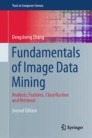
Fundamentals of image data mining : Analysis, features, classification and retrieval
Presents a comprehensive review of the essentials of image data mining, and the latest cutting-edge techniques used in the field. The coverage spans all aspects of image analysis and understanding, offering deep insights into areas of feature extraction, machine learning, and image retrieval. The theoretical coverage is supported by practical mathematical models and algorithms, utilizing data from real-world examples and experiments. Topics and features: Describes essential tools for image mining, covering Fourier transforms, Gabor filters, and contemporary wavelet transforms / Develops many new exercises (most with MATLAB code and instructions) / Includes review summaries at the end of each chapter / Analyses state-of-the-art models, algorithms, and procedures for image mining / Integrates new sections on pre-processing, discrete cosine transform, and statistical inference and testing / Demonstrates how features like color, texture, and shape can be mined or extracted for image representation / Applies powerful classification approaches: Bayesian classification, support vector machines, neural / networks, and decision trees / Implements imaging techniques for indexing, ranking, and presentation, as well as database visualization

Design of Observational Studies
This book introduction to statistical inference in observational studies and a detailed discussion of the principles that guide the design of observational studies. An observational study is an empiric investigation of effects caused by treatments when randomized experimentation is unethical or infeasible. Observational studies are common in most fields that study the effects of treatments on people, including medicine, economics, epidemiology, education, psychology, political science and sociology. The quality and strength of evidence provided by an observational study is determined largely by its design. Design of Observational Studies is organized into five parts. Chapters 2, 3, and 5 of Part I cover concisely many of the ideas discussed in Rosenbaum’s Observational Studies. Part II discusses the practical aspects of using propensity scores and other tools to create a matched comparison that balances many covariates, and includes an updated chapter on matching in R. In Part III, the concept of design sensitivity is used to appraise the relative ability of competing designs to distinguish treatment effects from biases due to unmeasured covariates. Part IV discusses evidence factors and the computerized construction of more than one comparison group. Part V discusses planning the analysis of an observational study, with particular reference to Sir Ronald Fisher’s striking advice for observational studies: "make your theories elaborate."

Le choix bayésien: Principes et pratique
Covers the so-called Bayesian approach to statistical inference and in particular its decision-making aspects. The bases of this axiomatics (choice of the a priori, optimal decisions, tests and regions of confidence) are discussed in detail, as well as more recent openings of Bayesian analysis such as the choice of models, the use of numerical methods. Stochastic approximation (MCMC), the theory of noninformative laws (Berger-Bernardo axioms) and the relation to the classical theory of admissibility. Each chapter is completed by an extensive series of exercises of increasing difficulty and by bibliographical notes on the themes addressed. This book can be used in a Master's program in Applied Mathematics, Biometrics, Econometrics or any other program that uses quantitative information processing techniques. It only requires a basic course in probability theory and mathematical statistics as a preliminary.
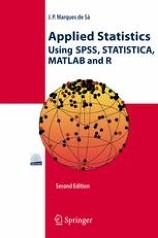
Applied Statistics Using SPSS, STATISTICA, MATLAB and R
The book provides a comprehensive coverage of the main statistical analysis topics important for practical applications such as data description, statistical inference, classification and regression, factor analysis, survival data and directional statistics.
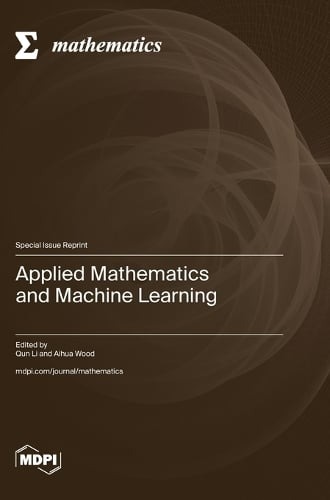
Applied mathematics and machine learning
The simultaneous availability of large datasets and high-performance computing capability in recent years has enabled the rapid development of powerful machine learning algorithms. On the one hand, state-of-the-art machine learning techniques have transformed many areas of science and engineering; on the other hand, theoretical discoveries in mathematical algorithms, differential equations, and statistical inferences, to name a few, have provided the foundation for the exploration of new multidisciplinary models for solving practical problems. This Special Issue endeavors to continue the journey that started in our previous Special Issue (Applied Mathematics and Computational Physics) by providing a platform for researchers from both academia and industry, as well as government, to present their new computational methods that have engineering and physics applications.
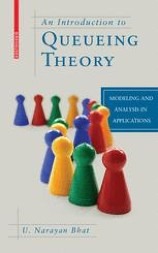
An Introduction to Queueing Theory : Modeling and Analysis in Applications
This introductory textbook is designed for a one-semester course on queueing theory that does not require a course in stochastic processes as a prerequisite. By integrating the necessary background on stochastic processes with the analysis of models, the work provides a sound foundational introduction to the modeling and analysis of queueing systems for a broad interdisciplinary audience of students in mathematics, statistics, and applied disciplines such as computer science, operations research, and engineering.
An Introduction to Bayesian Analysis : Theory and Methods
This book is a contemporary introduction to theory, methods and computation in Bayesian Analysis. It focuses on topics that have stood the test of time and on emerging areas. No other such book is available in the market.
A History of Parametric Statistical Inference from Bernoulli to Fischer, 1713-1935
This is a history of parametric statistical inference, written by one of the most important historians of statistics of the 20th century, Anders Hald. This book can be viewed as a follow-up to his two most recent books, although this current text is much more streamlined and contains new analysis of many ideas and developments. And unlike his other books, which were encyclopedic by nature, this book can be used for a course on the topic, the only prerequisites being a basic course in probability and statistics.
A First Course in Statistical Inference
Offers a modern and accessible introduction to Statistical Inference, the science of inferring key information from data. Aimed at beginning undergraduate students in mathematics, it presents the concepts underpinning frequentist statistical theory. Written in a conversational and informal style, this concise text concentrates on ideas and concepts, with key theorems stated and proved. Detailed worked examples are included and each chapter ends with a set of exercises, with full solutions given at the back of the book. Examples using R are provided throughout the book, with a brief guide to the software included. Topics covered in the book include: sampling distributions, properties of estimators, confidence intervals, hypothesis testing, ANOVA, and fitting a straight line to paired data.
