



Page 1
Page 1

True Visions : The Emergence of Ambient Intelligence
Written for the non-specialist seeking an authoritative but accessible overview of this interdisciplinary field, True Visions explains how the devices making up the AI world will operate collectively using information and intelligence hidden in the wireless network connecting them. Expert contributions address key AI components such as smart materials and textiles, system architecture, mobile computing, broadband communication, and underlying issues of human-environment interactions. It seeks to unify the perspectives of scientists from diverse backgrounds ranging from the physics of materials to the aesthetics of industrial design as it describes the emergence of ambient intelligence, one of today’s most compelling areas of innovation.

Smart nanosensors
Serves as a comprehensive compilation of contemporary research conducted in the domain of nanosensors. The amalgamation of many elements within the emerging field contributes to the development of a useful collection specifically designed for inexperienced researchers in the domain of smart materials and nanosensor technologies. An adequate range of subjects has been incorporated into the present book. It includes enzyme-mimetic use of smart nanomaterials for enhanced biosensing applications, theranostic utilization of smart nanomaterials for targeted drug delivery, sensors for pollutant detection, and the utilization of smart nanomaterials in the development of biosensors for studying host-microbe interactions. Nanosensors have emerged as a promising avenue for various applications, including sensing in the fields of medicine, packaging, and heavy metal ion detection. Recent developments in the field of smart nanomaterials have led to significant advancements in the application of intelligent switches and sensors within the domains of agriculture, food production, and water treatment.

Smart Materials for Ranging Systems
The problem of determining the location of an object, which is usually called ranging, attracts at present much attention in many different areas of applications, among them in ecological and safety devices. Electromagnetic waves along with sound waves are widely used for this purpose. Familiar examples of ranging systems are radar, sonar, GPS positioning, speed meters, etc.. Most are echo-type of devices, generating a wave and interpreting its echo from the object of interest. GPS is a cooperative system, in which the receiver observes timing signals from sources at known locations, and locates itself in reference to them. Passive ranging makes use of waves generated by the object to be located that are picked up by an observer.

Smart Materials for Energy, Communications and Security
This book presents the contributions of participants of the Advanced Research Workshop “Smart Materials for Energy, Communications and Security” (ARW SMECS; www.smecs.ferroix.net), organized in December 2007 in Marrakech in frame of the “NATO - Science for Peace” program.

Smart buildings : Technology and the design of the built environment
Explores how buildings and spaces are designed, built, used, and better understood through technology. A practical guide to technical advances including Internet of Things (IoT), 3D printing, innovative materials and robotics, Smart Buildings also outlines the opportunities for architecture including improved communication, flexibility, wellbeing, productivity and data collection.

Nonlinear Homogenization and its Applications to Composites, Polycrystals and Smart Materials ; Proceedings of the NATO Advanced Research Workshop, held in Warsaw, Poland, 23-26 June 2003
Although several books and conference proceedings have already appeared dealing with either the mathematical aspects or applications of homogenization theory, there seems to be no comprehensive volume dealing with both aspects. The present volume is meant to fill this gap, at least partially, and deals with recent developments in nonlinear homogenization emphasizing applications of current interest. It contains thirteen key lectures presented at the NATO Advanced Workshop on Nonlinear Homogenization and Its Applications to Composites, Polycrystals and Smart Materials. The list of thirty one contributed papers is also appended.
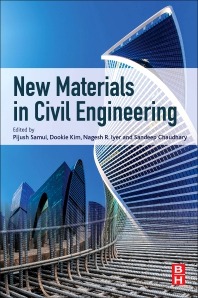
New Materials in Civil Engineering
A valuable guide to the properties, selection criteria, products, applications, lifecycle and recyclability of advanced materials. It presents an A-to-Z approach to all types of materials, highlighting their key performance properties, principal characteristics and applications. Traditional materials covered include concrete, soil, steel, timber, fly ash, geosynthetic, fiber-reinforced concrete, smart materials, carbon fiber and reinforced polymers. In addition, the book covers nanotechnology and biotechnology in the development of new materials.

Medical Reprints: 3D ed.
3D printing or additive manufacturing is a novel method of manufacturing parts directly from a digital model by using layer by layer material build-up approaches. This discovery is predicted to have the greatest impact on the future industries. Additive manufacturing has numerous applications in different areas including healthcare. Applications encompass many medical fields such as dentistry, surgery, and medical devices as well as the pharmaceutical field. Due to transplant donor deficiencies, ‘bioprinting’ has been invented to print biocompatible organs. Adding ‘time’ as a 4th dimension, 4D printing uses ‘smart materials’ to initiate the ‘smart drugs’ era.

High Performance Tensegrity-Inspired Metamaterials and Structures
New metamaterials, smart materials and structures, and adaptive systems with adjustable behaviour or which use high performance or 'extremal' materials can be applied to bigger structural systems, such as cellular tensegrity lattices with extremal mechanical properties. Numerical analyses justify tensegrities and discrete and continuum models offer two main approaches to the analysis of tensegrity-based mechanical metamaterials and lattices. Two examples of 2D and 3D tensegrity modules and lattices, and potential applications in civil engineering are presented.

Handbook of intelligent and sustainable smart dentistry : nature and bio-inspired approaches, processes, materials, and manufacturing
Provides the latest and most comprehensive evidence-based guidance on intelligent and sustainable approaches in dentistry. This valuable handbook is a single-stop solution for practitioners, researchers, scholars, students, academicians, and clinicians inquisitive in updating their knowledge on intelligent and sustainable dentistry. The handbook will bestow the readers with not only theoretical knowledge but will equip them with clinical skills as well.

Eco-efficient materials for reducing cooling needs in buildings and construction : Design, properties and applications
Provides a comprehensive review on building envelope materials and technologies for reducing cooling needs in buildings. The book offers in-depth analysis of the performance of new innovative materials and technologies used in pavements, facade and roofing materials, PCMs and chromogenic smart materials. Includes practical case study examples of their applications in building and construction. The book is an essential reference resource for researchers, architects and civil engineers, city planners, product developers, manufacturers, and other professionals working in eco-efficient cooling materials and sustainable and zero-energy building design.
Biomimetics for architecture & design : Nature - analogies - technology
Provides the readers with a timely guide to the application of biomimetic principles in architecture and engineering design. As a result of a combined effort by two internationally recognized authorities, the biologist Werner Nachtigall and the architect Göran Pohl, the book describes the principles which can be used to compare nature and technology, and at the same time it presents detailed explanations and examples showing how biology can be used as a source of inspiration and “translated” in building and architectural solutions (biomimicry). Even though nature cannot be directly copied, the living world can provide architects and engineers with a wealth of analogues and inspirations for their own creative designs. But how can analysis of natural entities give rise to advanced and sustainable design? By reporting on the latest bionic design methods and using extensive artwork, the book guides readers through the field of nature-inspired architecture, offering an extraordinary resource for professional architects, engineers, designers and urban planners, as well as for university teachers, researchers and students.

Biomaterials and engineering for implantology: in medicine and dentistry
Biomaterials are composed of metallic materials, ceramics, polymers, composites and hybrid materials. Biomaterials used in human beings require safety regulations, toxicity, allergic reaction, etc. When used as implantable materials their biological compatibility, biomechanical compatibility, and morphological compatibility must be acessed. This book explores the design and requirements of biomaterials for the use in implantology.

Automation in construction toward resilience : Robotics, smart materials and intelligent systems
Presents all aspects of automation in construction pertaining to the use of information technologies in design, engineering, construction technologies, and maintenance and management of constructed facilities. The broad scope encompasses all stages of the construction life cycle from initial planning and design, through the construction of the facility, its operation, and maintenance, to the eventual dismantling and recycling of buildings and engineering structures

Advanced materials in smart building skins for sustainability : From nano to macroscale
Demonstrates the importance of smart and dynamic building skins in in sustainable buildings / Provides the scientific basis for integration of nanoscale materials in building envelopes with enhanced performance / Illustrates engineering solution and design process incorporating advanced materials in applications of building skins. / Updates readers on the key areas of smart building skins embodied in the novel advanced materials with unique structures and smart properties that enable multiple functions in energy efficiency, solar harvesting, and environmental greenness. It synergistically integrates the topics and knowledge of material design and experimental studies, theoretical analyses of building energy-saving mechanisms and solar energy utilization, and new design methodologies and processes taking advanced materials into account at different scales - from nano to the macroscale.
