



Page 1
Page 1

Mute people aiding application
Communication is an essential tool for human survival. It is a fundamental and effective method of sharing thoughts, needs, feelings, and opinions. However, a large portion of the world's population lacks the ability to communicate with others. Such as the ones suffering from hearing loss, speech disability, or even both. Those disabilities have a significant impact on their lives in terms of work and relationships. The majority of these people are sometimes unable to support themselves financially due to the lack of job opportunities. Given these difficulties, we have decided to develop an application to help them overcome the obstacles they may encounter in their daily lives. After consulting with two deaf and mute people we customized an application that works in two ways. One of which is to translate their sign language in real time by using mobile camera and recognizing hand motion. The other works by converting text-to-voice, and accurately expressing the user’s emotions with the help of the facial emotion recognition.

Hearing faces
Our project aims to aid deaf-mute people by tracking hand movements of the deaf-mute person for word level American Sign Language using WLASL model that include 2D CNN -3D CNN and RNN networks training on WLASL large video dataset, then generating the corresponding text and analyzing the person's facial gestures to generate information related to the tone of voice that is most appropriate to the person's age, gender, and race through MTCNN network algorithm that training on generated dataset by us depending on blending VOXCELEB dataset and VGGFACE dataset .
Foundations of Multi-Paradigm Modelling for Cyber-Physical Systems
This book coherently gathers well-founded information on the fundamentals of and formalisms for modelling cyber-physical systems (CPS). Highlighting the cross-disciplinary nature of CPS modelling, it also serves as a bridge for anyone entering CPS from related areas of computer science or engineering.
Formal Methods for Hardware Verification ; 6th International School on Formal Methods for the Design of Computer, Communication, and Software Systems, SFM 2006, Bertinoro, Italy, May 22-27, 2006, Advances Lectures
This book presents 8 papers accompanying the lectures of leading researchers given at the 6th edition of the International School on Formal Methods for the Design of Computer, Communication and Software Systems (SFM 2006). SFM 2006 was devoted to formal techniques for hardware verification and covers several aspects of the hardware design process, including hardware design languages and simulation, property specification formalisms, automatic test pattern generation, symbolic trajectory evaluation, and more.
Embedded Systems Specification and Design Languages : Selected contributions from FDL’07
FDL is the most important European and, probably, worldwide forum to present research results, to exchange experiences, and to learn about new trends in the application of specification and design languages and the associated design and modeling methods and tools for complex, heterogeneous HW/SW embedded systems.

Digital VLSI Systems Design : A Design Manual for Implementation of Projects on FPGAs and ASICs Using Verilog
The book presents new material and theory as well as synthesis of recent work with complete Project Designs using industry standard CAD tools and FPGA boards, enabling the serious readers to design VLSI Systems on their own. The reader is taken step by step through the design right from implementing a single digital gate to a massive design consuming well over 100,000 gates. The Verilog codes developed for these designs are universal and can work on any FPGA or ASIC and are technology independent. The book presents the development of novel algorithms and architectures for optimum realization of high tech. products. All the design codes developed in this book are Register Transfer Level (RTL) compliant and can be readily used or amended to suit new projects.
Applications of Specification and Design Languages for SoCs : Selected papers from FDL 2005
This book provides detailed insights into recent works dealing with a large spectrum of issues in system-on-chip design, namely: assertion-based design, mapping on network-on-chip architectures, use of C/C++/SystemC design methodologies, hardware/software integration, mixing heterogeneous models of computation, analog/mixed-signal/mixed-technology system design and verification, UML/XML-based synthesis of analog and mixed-signal systems, UML to VHDL mapping, UML-based performance modeling, model transformation and formal verification, real-time system models, and Model Driven Architecture.

AI sign language translator
People with disabilities are facing a lot of difficulties every day. Whether it is in social life, work or education environment, or in communication. The effect of assistive technologies in enhancing people with disabilities was huge. Assistive technologies refer to the term of products or related systems that are used to help people with disabilities to maintain or improve functioning and thereby promote well-being. These technologies allow people with difficulties to be more productive in life. Assistive technologies could be in many forms such as wheelchairs, communication products or other forms. In the communication products, many efforts have been made to develop systems or devices that assist individuals who have difficulty understanding and producing speech.
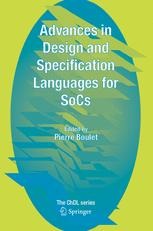
Advances in Design and Specification Languages for SoCs : Selected Contributions from FDL'04
Presents a selection of the articles from the Forum on Specification and Design Languages (FDL'04). The Analog and Mixed-Signal Systems contributions bring some answers to the difficult problem of co-simulating discrete and continuous models of computati

Advances in Design and Specification Languages for Embedded Systems : Selected Contributions from FDL’06
Advances in Design and Specification Languages for Embedded Systems is the latest contribution to the Chip Design Languages series and it consists of selected papers presented at the Forum on Specifications and Design Languages (FDL'06), which took place in September 2006 at Technische Universität Darmstadt, Germany. FDL, an ECSI conference, is the premier European forum to present research results, to exchange experiences, and to learn about new trends in the application of specification and design languages as well as of associated design and modelling methods and tools for integrated circuits, embedded systems, and heterogeneous systems. Modelling and specification concepts push the development of new methodologies for design and verification to system level, they thus provide the means for a model-driven design of complex information processing systems in a variety of application domains.
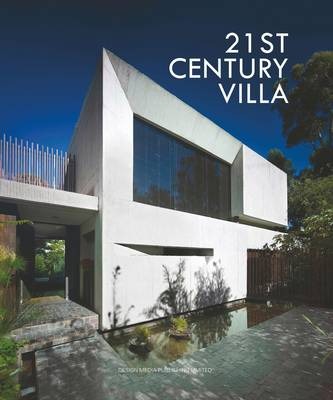
21st century villa
People's everchanging lifestyles bring about more and more requirements for the overall qualities of houses, and the demands for residences have marched towards the psychological dimension and cultural sphere. Consequently, there arise new design trends and new requirements for environment, material selection and design concept. The design projects in this book lead readers to perceive the comfort and cosiness of the natural space. The designers of these projects have created more natural, and convenient living spaces in the most natural and purest design languages, giving them a comprehensive and vivid explanation of the architecture design concept that buildings are created for people.
