



Page 1
Page 1

Writing mental ray shaders : A Perceptual Introduction
The word "render" isn't unique to the vocabulary of computer graphics. We can talk about a "watercolor rendering," a "musical rendering" or a "poetic rendering." In each of these, there is a transformation from one domain to another: from the landscape before the painter to color on paper, from musical notation to sound, from the associations in a poet's mind to a book of poetry. But the type of rendering that may come closest to what we mean when we talk about rendering in computer graphics is in architecture. Geometric blueprints and technical specifications of building materials are transformed in the architectural rendering into a picture of the building 1 Introduction as it will appear when construction is complete. In addition to the designs of the building's geometry and its visual characteristics, the artist chooses a point of view to depict the scene in perspective. This is a transformation of a description of imagined space into a picture of that space.

Rendering in SketchUp : From Modeling to Presentation for Architecture, Landscape Architecture, and Interior Design
Focuses on tasks and principles at the core of photorealistic rendering, including: Rendering process: Learn a step-by-step process focused on workflow within SketchUp's familiar workspace. Universal method: Understand how the process can be used to work with a variety of different integrated rendering programs, including Shaderlight, SU Podium and Twilight Render. These programs are easy to learn and function in SketchUp. Textures and materials: Discover how to obtain, apply and edit texture images representing surfaces. Component details: Learn how to acquire and organize model details to allow for rich, expressive settings while maintaining computer and SketchUp performance. Exterior and simulated lighting: Learn to set exterior lighting with the SketchUp’s Shadow menu or illuminate a scene with simulated lights, lamps, and bulbs. Render settings: Use specific settings for various rendering programs to quickly set texture character, image quality, and graphic output. Computer specifications: Find out how computers produce renders and the type of computer hardware required to streamline the process. Photoshop post-processing: Learn how to further refine rendered images in Photoshop.

Production Rendering : Design and Implementation
A Rendering framework for managing a micro polygon-oriented graphics pipeline. Problems presented by different types of geometry showing how different surface types can be made ready for shading : Shading and how it fits into a rendering pipeline / How to write a good shader compiler / Ray tracing in a production renderer / Incorporating global illumination into a renderer / Gathering surface samples into a final image / Tips and tricks in rendering

Neuroscribe = نيوروسكرايب
Neuroscribe is a cutting-edge deep learning framework designed to address the complexities and inefficiencies encountered in existing frameworks like PyTorch and TensorFlow. Aimed at streamlining model development and enhancing performance across diverse hardware environments, NeuroScribe offers a lightweight and flexible solution. The framework features a robust tensor library, an auto-differentiation engine, a comprehensive neural network module, and advanced optimization algorithms. With built-in visualization tools and a user-friendly interface, NeuroScribe simplifies both beginner and advanced workflows. Its cross-platform compatibility, supported by CUDA and Metal Performance Shaders (MPS), ensures optimal performance, and in some scenarios, NeuroScribe demonstrates superior speed compared to leading frameworks. Additionally, NeuroScribe introduces unique libraries and features not found in other frameworks, further enhancing its versatility and appeal. The modular architecture and automatic system detection further enhance its adaptability, making NeuroScribe a versatile and powerful tool for deep learning practitioners.

Essential Renderman
RenderMan has long been associated with top-end film production and is an essential tool for creating many of the effects and images in recent animated films (such as Monsters, Inc., Finding Nemo and The Incredibles). RenderMan is widely available and, with the demand for higher quality images, is now used by computer-based artists at all levels of the graphics industry. Intended to provide a straightforward and easy introduction to the basic techniques involved, this book provides an excellent grounding, enabling readers to confidently move to more advanced texts.
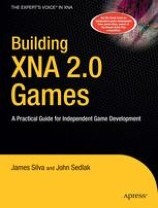
Building XNA 2.0 Games : A Practical Guide for Independent Game Development
Building XNA 2.0 Games: A Practical Guide for Independent Game Development is written by James Silva, who recently won the prestigious Microsoft Dream Build Play game competition with his award–winning game, The Dishwasher: Dead Samurai. Building XNA 2.0 Games: A Practical Guide for Independent Game Development is an in–depth and exclusive look into the entire XNA game development process and includes the creation of a software game masterpiece. James Silva guides you through the process he took to build his award–winning title, from concept to reality. He reveals tips and techniques for creating a polished, high–quality game with very few resources, while bridging the gap between coding and art.
3D Mesh processing and character animation : with examples using OpenGL, OpenMesh and Assimp
Focusses specifically on topics that are important in three-dimensional modelling, surface design and real-time character animation. It provides an in-depth coverage of data structures and popular methods used in geometry processing, keyframe and inverse kinematics animations and shader based processing of mesh objects. It also introduces two powerful and versatile libraries, OpenMesh and Assimp, and demonstrates their usefulness through implementations of a wide range of algorithms in mesh processing and character animation respectively. This Textbook is written for students at an advanced undergraduate or postgraduate level who are interested in the study and development of graphics algorithms for three-dimensional mesh modeling and analysis, and animations of rigged character models.
