



Page 1
Page 1

Injecting Salmonella Bacteria in to the Tumor Cures Cancer
The human body is inhabited by millions of tiny living organisms like good bacteria. We acquire these bacteria during birth and the first years of life, and they live with us throughout our lives. The human microbiomes are involved in healthy growth, in protecting the body from invaders, in helping digestion, and in regulating moods, but sometimes these bacteria can also be harmful. We need to take good care of our health to avoid the development of some diseases, like salmonella for example. Salmonella infections in humans can range from self-limiting gastroenteritis typically associated with non-typhoidal Salmonella (NTS) to typhoidal fever, which can be life-threatening. Salmonellosis causes considerable morbidity and mortality in both humans and animals, and has a significant socioeconomic impact worldwide.

Hydrological and Biological Responses to Forest Practices : The Alsea Watershed Study
Through analyses of works generated by the study, Hydrological and Biological Responses to Forest Practices: The Alsea Watershed Study addresses the quantification of forest resource sustainability and bolsters the case for long-term monitoring at a time when managers and policy makers are searching for ways to restore the runs of salmon and steelhead to rivers and streams of the Pacific Northwest. Edited by John D. Stednick, a forest hydrologist responsible for the study’s reactivation, this book will be of interest to students in natural resources, land managers, policy makers, and researchers, particularly in water and fishery resources.
Genome Mapping and Genomics in Fishes and Aquatic Animals
The series Genome Mapping and Genomics in Animals provides comprehensive and up-to-date reviews on genomic research on a large variety of selected animal systems, contributed by leading scientists from around the world.This volume summarizes the first era of genomic studies of aquaculture species, in which the tools and resources necessary to support whole-genome sequencing were developed. These tools will enhance efforts toward selective breeding of aquaculture species. Included in this volume are summaries of work on salmonids, cyprinids, catfish, tilapias, European sea bass, Japanese flounder, shrimps and oysters.

Foodborne Parasites
Microbiologists are being challenged as foodborne outbreaks are increasingly being observed worldwide. Most of these outbreaks are associated with viral and bacterial pathogens such as Campylobacter, Salmonella, and lately Escherichia coli O157:H7.Foodborne Parasites examines the two major parasite groups that are transmitted via water or foods: the protozoa, which are single celled organisms, and the helminths. The helminths are classified in three sub groups: cestodes (tapeworms), nematodes (round worms), and trematodes (flukes). To better understand their significance, each chapter covers the biology, mechanisms of pathogenesis, epidemiology, treatment, and inactivation of these parasites.

Foodborne Microbial Pathogens : Mechanisms and Pathogenesis
The author presents up-to-date information on molecular and cellular mechanism of several major foodborne microbial pathogens, including select agents for bioterrorism, virulence genes and their regulation in the host or the food environment, pathogenicity testing models, clinical symptoms, and prevention and control strategies. In order to understand the disease process, one must have certain understanding about the role of the immune system. Thus this book also covers the host parasite interaction to a level where the readers will have a better appreciation for the disease mechanism.
Fish and Diadromy in Europe (ecology, management, conservation)
This book contains selected papers from an international symposium organised by the Diadfish network held in Bordeaux (France) in 2005. Readers will find up-to-date information on the ecology, ecotoxicology and physiology of several diadromous species (Atlantic salmon, shads, lampreys, eels) and this whole group in Europe. Main impacts are also documented and analysed in case studies, and solutions or remediation actions are presented.

Effect of Clove essential oil and Rosemary aqueous extract for future promising triple acting gel
In this study, antimicrobial properties of rosemary essential oil (Rosmarinus officinalis-REO), rosemary aqueous extract, clove essential oil (Syzygium aromaticum-CEO) and their mixtures (REO/CEO) at 10% and 20% concentration for each one have been evaluated. The agar well diffusion method has been used for screening the antimicrobial activity against Staphylococcus aureus, Staphylococcus albus, Streptococcus, Enterococcus Salmonella, Escherichia coli, Acinetobacter, Pseudomonas aeruginosa, Candida albicans In Staph. Aureus, Salmonella, E.coli, Acinetobacter and p.aeruginosa...
Marswalk One : First Steps on a New Planet
MARSWALK ONE: First Steps on a New Planet addresses the question of why we should embark on a journey to Mars, documenting what the first human crew will do when they place their feet in the red dust of the planet. The book also addresses why we need to carry out these tasks and, more importantly, what a human crew could achieve that an automated mission could not. Understanding the clear benefits of sending a human crew to the surface of Mars, and how these benefits can be seen back on Earth, is the key to sustained long-term public and political support for the programme in terms of cash and commitment. The book accepts that the journey will be made, but does not specify precisely when. Flight time, and how to get to and from the planet are discussed briefly, to understand why the suggested duration spent at Mars is reasonable. The main objective of the work is to look at what science will be done on the surface – supported by orbital operations – and what hardware and technology will be employed to achieve the mission objectives. This analysis is drawn from previous experiences in manned and unmanned space programmes, including Apollo, Skylab, Salyut/Mir, Shuttle and ISS, Viking, Luna/Lunokhod, and recent Mars missions such as Pathfinder and Global Surveyor.
Chirurgie oncoplastique et reconstruction dans le cancer du sein: Techniques et indications L’expérience de l’Institut Curie = Oncoplastic surgery and reconstruction in breast cancer: Techniques and indications The Institut Curie experience
This book is the application of plastic surgery techniques to cancer situations that is called "oncoplastic" surgery. The Institut Curie team takes stock of these techniques and indications applied in 2007 in France.
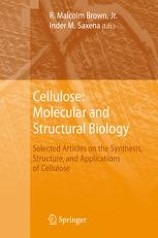
Cellulose : Molecular and Structural Biology : Selected Articles on the Synthesis, Structure, and Applications of Cellulose
Cellulose: Molecular and Structural Biology is an up-to-date treatise on the most advanced and provocative research into the biosynthesis, structure, and applications of nature’s most abundant macromolecule and renewable resource, cellulose.Molecular, biochemical, and evolutionary aspects of cellulose biosynthesis are reviewed in a variety of living organisms, including cyanobacteria, eubacteria, (Acetobacter, Salmonella, and E. coli), vascular plants (including Arabidopsis, forest trees, and maize), and tunicates.
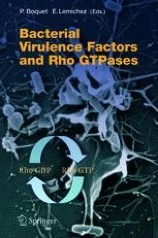
Bacterial virulence factors and Rho GTPases
The authors of this volume present the synthesis on how the various host cellular Rho GTPases activities are manipulated by bacteria to fulfill their virulence.
Advances in Microbiology, Infectious Diseases and Public Health ; Vol.15
Focuses on current progress in the broad field of medical microbiology, and covers both basic and applied topics related to the study of microbes, their interactions with human and animals, and emerging issues relevant for public health. Original research and review articles present and discuss multidisciplinary findings and developments on various aspects of microbiology, infectious diseases, and their diagnosis, treatment and prevention.
