



Page 1
Page 1

New Trends in Soil Micromorphology
The soil water retention curve, the saturated hydraulic conductivity and the unsaturated hydraulic conductivity function are basic soil hydraulic functions and parameters. Ample apprehension of the soil hydraulic functions and parameters is required for a successful formulation of the principles leading to sustainable soil management, agricultural production and environmental protection. From these, all the other parameters, required in the solution of the practical tasks, are derived.

National Constitutions in European and Global Governance : Democracy, Rights, the Rule of Law: National Reports
It offers important insights into three areas. First, it explores how constitutions reflect the transfer of powers from domestic to European and global institutions. Secondly, it revisits substantive constitutional values, such as the protection of constitutional rights, the rule of law, democratic participation and constitutional review, along with constitutional court judgments that tackle the protection of these rights and values in the transnational context, e.g. with regard to the Data Retention Directive, the European Arrest Warrant, the ESM Treaty, and EU and IMF austerity measures. The responsiveness of the ECJ regarding the above rights and values, along with the standard of protection, is also assessed. Thirdly, challenges in the context of global governance in relation to judicial review, democratic control and accountability are examined. On a broader level, the contributors were also invited to reflect on what has increasingly been described as the erosion or ‘twilight’ of constitutionalism, or a shift to a thin version of the rule of law, democracy and judicial review in the context of Europeanisation and globalisation processes.

Medical product regulatory affairs : pharmaceuticals, diagnostics, medical devices
Based on a module prepared by the authors for an MSc course offered by the University of Limerick, Ireland, Medical Product Regulatory Affairs is a comprehensive and practical guide on how pharmaceutical and medical devices are regulated within the major global markets. The Second Edition builds on the success of the first with an even wider scope and full coverage of new EU regulations on the safe use of medical devices. Following a look at drug development, complete sections are devoted to national and EU regulatory issues, manufacturing license application and retention, and regulation in the USA. Other topics dealt with include CDER, CBER and marketing and manufacturing licenses, the ICH process and Good Laboratory/Clinical/ Manufacturing Practices.

International financial statement analysis workbook
The workbook offers an opportunity to test your understanding of the standards and mechanics of financial reporting and makes use of the text’s tools and techniques. This informative guide—which has practical application across international borders—aids in the understanding of financial reporting standards, income statements, balance sheets, cash flow statements, inventories, long-lived assets, income taxes, and much more. International Financial Statement Analysis Workbook is designed to facilitate information retention and build a strong foundation in financial statement analysis.

Iatrogenic effects of orthodontic treatment : Decision-making in prevention, diagnosis, and treatment
This book is a well-illustrated guide to the iatrogenic effects of orthodontic treatment that provides practical information on orthodontic diagnosis, treatment planning, and post-treatment retention and highlights preventive measures to avoid complaints and lawsuits.

Guyton and Hall textbook of medical physiology
Employs a distinctive format to ensure maximum learning and retention of complex concepts. A larger font size emphasizes core information, while supporting information, including clinical examples, are detailed in smaller font and highlighted in pale blue - making it easy to quickly skim the essential text or pursue more in-depth study. This two-tone approach, along with other outstanding features, makes this bestselling text a favorite of students worldwide. Offers a clinically oriented perspective written with the clinical and preclinical student in mind, bridging basic physiology with pathophysiology. Focuses on core material and how the body maintains homeostasis to remain healthy, emphasizing the important principles that will aid in later clinical decision making. Presents information in short chapters using a concise, readable voice that facilitates learning and retention. Contains more than 1,200 full-color drawings and diagrams - all carefully crafted to make physiology easier to understand. Features expanded clinical coverage including obesity, metabolic and cardiovascular disorders, Alzheimer's disease, and other degenerative diseases.
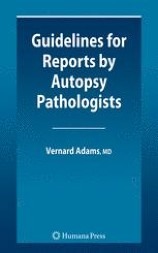
Guidelines for reports by autopsy pathologists
Traditionally, pathology residents have learned how to write autopsy reports by trial-and-error, with oral feedback from local mentors. Now, pathologists and pathologists in training throughout the English-speaking world have access to a manual that describes what should be in an autopsy report, how to organize the material, and what the purposes are. Guidelines for Reports by Autopsy Pathologists lists numerous bad habits to avoid, and offers examples of effective report construction. It covers not only how to describe diseases and injuries, but also how to formulate and write opinions. As a supplement, Guidelines for Reports by Autopsy Pathologists also contains recommendations on record retention schedules for medical examiners (not everything needs to be saved in perpetuity), and how to formulate opinions for death certificates. Aimed at pathologists in training, Guidelines for Reports by Autopsy Pathologists will alos benefit the seasoned pathologists who want to improve their reports.

Ganong's review of medical physiology
Focuses particularly on including only material that is of the highest yield. We have thoroughly revised the learning objectives for every chapter, reorganized and updated the text to ensure that all objectives are clearly addressed in a logical order, aligned chapter summaries so that the take-home messages quickly address each learning objective in turn, and expanded the number of review questions so that readers also have the ability to check their understanding and retention of every objective covered.
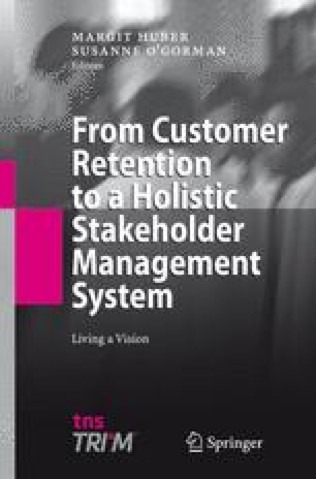
From Customer Retention to a Holistic Stakeholder Management System : Living a Vision
Being the fourth in the series on Stakeholder Management books, the current volume looks back at the beginnings of Stakeholder Management and how it has since developed into a fully-fledged system over the last 20 years. It also highlights the importance of a benchmarking database generated from several thousand case studies for comparing businesses. Furthermore, international case studies look at the application of Stakeholder Management in a wide array of industries such as the automotive, public and hospitality sector as well as the consumer market. The reader benefits from a well-rounded account of articles that explain the entire process from data collection to implementation of actions derived from result analysis.

Fixed prosthodontics for edentulous patients
Fixed prosthodontics, a pivotal branch of restorative dentistry, focuses on the design and application of dental prostheses that are ermanently affixed to the patient’s oral structures. Key considerations in FP include accurate diagnosis, meticulous treatment planning, and precise fabrication of the prosthesis to ensure optimal fit and longevity. This approach not only addresses functional deficits but also improves the overall quality of life for patients by restoring their natural smile and chewing ability.

Equity policies in global higher Education : Reducing inequality and increasing participation and attainment
This book discusses and analyses global policies and practices aimed at promoting equity in higher education participation and attainment. Although the massification of higher education systems has facilitated the participation of students from deprived backgrounds, socioeconomic inequalities persist in access to the most prestigious institutions and programmes. Privileged students benefit from a number of advantages in the competition for selective and scarce places: access to information, lower aversion to debt, higher expectations, better previous schooling and higher academic achievement.

Endodontic Prognosis : Clinical Guide for Optimal Treatment Outcome
Serves as a clinical guide to help the practitioner improve endodontic treatment outcomes. It focuses on the various factors affecting the prognosis of endodontic treatments and on their impact on short-term and long-term results.

Disrupting Finance : FinTech and Strategy in the 21st Century
This Pivot demonstrates how a variety of technologies act as innovation catalysts within the banking and financial services sector. Traditional banks and financial services are under increasing competition from global IT companies such as Google, Apple, Amazon and PayPal whilst facing pressure from investors to reduce costs, increase agility and improve customer retention. Technologies such as blockchain, cloud computing, mobile technologies, big data analytics and social media therefore have perhaps more potential in this industry and area of business than any other. This book defines a fintech ecosystem for the 21st century, providing a state-of-the art review of current literature, suggesting avenues for new research and offering perspectives from business, technology and industry.

Digital Anatomy : Applications of Virtual, Mixed and Augmented Reality
This book offers readers fresh insights on applying Extended Reality to Digital Anatomy, a novel emerging discipline. Indeed, the way professors teach anatomy in classrooms is changing rapidly as novel technology-based approaches become ever more accessible. Recent studies show that Virtual (VR), Augmented (AR), and Mixed-Reality (MR) can improve both retention and learning outcomes.

Diastema (diagnosis & management)
Management strategies for midline diastema include addressing the underlying cause, habit correction, and potential orthodontic or restorative treatments. Orthodontic options like traditional braces, clear aligners, and lingual braces are effective in closing the gaps. Restorative treatments such as composite bonding, porcelain veneers, and ceramic crowns also offer solutions, with each method tailored to the patient’s specific needs. Despite numerous studies on environmental factors influencing diastema, the genetic basis remains under researched. Proper diagnosis, treatment planning, and long-term retention are crucial for successful diastema management.

Debonding and Fixed Retention in Orthodontics : An Evidence-Based Clinical Guide
Guide reviews the protocols, materials, and techniques required at two key stages of orthodontic treatment. The book has been written as a reference guide and the chapters introduce the best-supported and most efficient approaches to each stage of debonding and fixed retainer bonding treatments, from choice of material through to final results.

Customising Stakeholder Management Strategies: Concepts for Long-term Business Success
The third in the series on Stakeholder Management, this volume presents a wide array of case studies to demonstrate how Stakeholder Management strategies are customized specifically to companies' requirements to fulfill their long term business goals.

Curriculum Reform in the European Schools : Towards a 21st Century Vision
Examines the modern role of the European School system within the European Union, at a time when the global economy demands a new vision for contemporary education. The European schools are currently in a state of crisis: their 60-year-old tradition of bilingual and multilingual education is being strained by rapid EU expansion and the removal of English speaking teachers as a result of Brexit. Their tried and tested model of mathematics and science education has rapidly been overtaken by new developments in pedagogy and assessment research, while recruitment and retention of students and teachers has become increasingly fraught as European member states review what they are, and what they are not, prepared to fund. The authors draw on original and empirical research to assess the European Schools’ place in a new Europe where the entire post-war European Project is potentially at risk. This well-researched volume will be of interest to practitioners working in European schools as well as students and scholars of EU politics and international education.

Curcumin : clinical uses, health effects and potential complications
Curcumin is a natural product with polyphenolic structure. It is used in therapeutic remedies alone or in combination with other natural substances. Many researchers are investigating it because of its biological activities such as: anti-inflammatory, anti-cancer, anti-protozoal, anti-viral, anti-bacterial and has been found to be effective for treatment of Alzheimer, depression, headaches, fibromyalgia, leprosy, fever, menstrual problems, water retention, worms and kidney problems etc. It is an active ingredient in dietary spice, turmeric. It has reactive functional groups: a diketone moiety and two phenolic groups. Despite its unique biological activities, it suffers from some shortcomings which include: gastrointestinal problems, poor bioavailability due to its poor absorption, short half-life, poor solubility in aqueous solutions, rapid systemic elimination and antithrombotic activity which can interfere with blood clotting. The first chapter of this book reviews the different delivery systems used for incorporation of curcumin and its derivatives, release kinetics and up to date in vivo results. Chapter two discusses curcumin nano and microencapsulation and its implications on clinical uses.

Manual of laboratory testing methods for dental restorative materials
Delivers a comprehensive and accessible review of the materials used in restorative dentistry. The book offers readers an evidence-based application of the materials and their mechanical, physical, and optical properties. Each chapter begins with key points and includes a glossary to aid in the learning and retention of the material contained within. The book also covers the methods used to study the properties and the advantages and disadvantages of various dental restorative materials as well as why they are selected.
