



Page 1
Page 1

Nutritional psychiatry : A primer for clinicians
There is increasing evidence that mental health problems such as schizophrenia, depression and anxiety are linked with poor nutrition. At present, very few psychiatrists provide nutritional advice for their patients, despite such advice complimenting drug and psychological therapies. This edited volume is the first book to provide a comprehensive overview of the relationship between nutrition and mental health, for mental health professionals. Featuring contributions from leading authorities in the field, the book examines the link between diet and the microbiome-gut brain axis and how this correlates with a variety of psychiatric disorders. The book explores how enhancing the beneficial bacteria in the gut, through the use of psychobiotics, prebiotics or dietary change can improve mood and reduce anxiety.

Nutritional psychiatry
Provides a comprehensive overview of nutritional psychiatry, elucidating its theoretical foundations, the biological mechanisms linking diet to mental health (including inflammation, oxidative stress, disrupted energy metabolism the gut–brain axis and other implicated pathways), and the current evidence base for dietary impacts on major psychiatric disorders such as depression, anxiety, schizophrenia, bipolar disorder, and ADHD.
Neuropsychiatric Disorders : An Integrative Approach
This multidisciplinary book includes current research papers and reviews in the areas of basic neuroscience, neural mechanisms underlying neurodegenerative disorders. It further includes new approaches for neuroprotective treatments, clinical, neurobiological and treatment aspects of psychiatric disorders. The book was conceived as a celebration of the professional life and work of Peter Riederer to mark the occasion of his retirement.

Neuroimmune Pharmacology
This exciting new textbook, Neuroimmune Pharmacology, reflects the history and vision of the Society on NeuroImmune Pharmacology and of the Society’s official publication, the Journal of Neuroimmune Pharmacology. All three represent deliberations arising from a relatively young, interdisciplinary, and dynamic field of research, which have major translational implications for neurodegenerative, neuroinflammatory, neuropsychiatric diseases, and infections of the nervous system. They all demonstrate the synergistic value of integrating the parts: Neuroscience, Immunology, and Pharmacology. The extraordinary accomplishment of Neuroimmune Pharmacology is its comprehensive nature.

NEURO-COVID-19 : Neuroinvasive potential and neurological complications of SARS-CoV-2
From the earliest days of the COVID-19 pandemic, there have been reports of significant neurological and psychological symptoms following SARS-CoV-2 infection. This research paper is designed to examine the potential psychoneuroendocrine pathogenic mechanisms by which SARS-CoV-2 elicits psychiatric sequelae, as well as to posit potential pharmacologic strategies to address and reverse these pathologies. Following a brief overview of the presence and prevalence of neuropsychiatric manifestation in COVID-19 patients, we address mechanisms by which SARS-CoV-2 could enter or otherwise elicit changes in the CNS.
Neuroactive Steroids in Brain Function, Behavior and Neuropsychiatric Disorders : Novel Strategies for Research and Treatment
Over the past few decades the involvement of neurosteroids in brain function and mental health has attracted much interest, not only from a neuroscience perspective, but also from clinical and therapeutic aspects. In recent years, much of the research has focused on the multifunctional position of neurosteroids in the nervous system. The areas that have been explored, in particular, are the cellular and molecular mechanisms involved in the activity of neurosteroids in the brain, the role of neurosteroids in brain development, neurodegeneration and neuroplasticity, and their pharmacological properties. The large increase in the number of publications highlights this amplified interest in neurosteroids. Over the last 7 years at least 400 papers have been published describing the putative role of neurosteroids in the modulation of basic brain function and in the etiology and treatment of psychiatric and neurological disorders.

Intervening in the Brain : Changing Psyche and Society
The present book subjects the whole range of questions associated with these problems to a thorough exploration. Extensive state-of-the-art accounts of the relevant clinical and theoretical neurosciences are followed by an in-depth philosophical analysis of the problems of personal identity and a comprehensive disquisition on legal and ethical questions posed by present and foreseeable future practices of neuroenhancement. A concluding chapter presents the study’s main results as recommendations, addressing clinical practitioners and researchers in the field as well as to politicians, legislators, law courts, philosophers, lawyers, and anybody fascinated by or concerned about the dawning era of intervening in the brain.

Improving Psychiatric Care for Older People : Barbara Robb’s Campaign 1965-1975
This book tells the story of Barbara Robb and her pressure group, Aid for the Elderly in Government Institutions (AEGIS). In 1965, Barbara visited 73-year-old Amy Gibbs in a dilapidated and overcrowded National Health Service psychiatric hospital back-ward. She was so appalled by the low standards that she set out to make improvements. Barbara’s book Sans Everything: A case to answer was publicly discredited by a complacent and self-righteous Ministry of Health. However, inspired by her work, staff in other hospitals ‘whistle-blew’ about events they witnessed, which corroborated her allegations. Barbara influenced government policy, to improve psychiatric care and health service complaints procedures, and to establish a hospitals' inspectorate and ombudsman.

I disturbi della consapevolezza nelle malattie neuropsichiatriche = Disturbances of awareness in neuropsychiatric diseases
Aims to outline the set of current international knowledge on disease awareness in various neuropsychiatric conditions (hemiplegia resulting from brain damage, psychosis, dementia and mood disorders), with particular reference to anosognosia and 'insight. The comparison between different conceptualizations and the variety of clinical manifestations gives rise to a very complex picture that requires a multidimensional approach, especially as regards the diagnostic moment. To this end, the authors propose an integration of various contributions on the pathogenetic level, based on neuroanatomical evidence and supported by the most recent neuroimaging techniques. In addition, the use of a complex diagnostic battery is suggested, capable of analyzing the different aspects of the phenomenon, and distinguishing it from the psychological defensive mechanism of denial. Research in this field is also essential to promote rehabilitation and compliance with treatment, as well as the enrichment of knowledge on the processes underlying consciousness and awareness in the human being.

Homocysteine : Related Vitamins and Neuropsychiatric Disorders
There is an increasing interest in the connection between the homocysteine metabolism and neuropsychiatric disease with a steeply increasing number of publications. In particular, the association between homocysteine metabolism and cognitive decline/dementia attracts much interest. If simple, non-toxic homocysteine-lowering treatment with vitamins can reduce the incidence of, or delay the onset of dementia, it would have an enormous impact in societies with a rapidly increasing number of elderly at risk for dementia. This book summarises the research within the neuropsychiatric field, but also gives an overview of the underlying biochemistry and of diagnostic aspects.

Health technology assessments by the National Institute for Health and Clinical Excellence : A qualitative study
This volume dissects the robustness of the agency’s technology appraisal processes as NICE evaluates innovative methods for diagnosis and intervention. Given the unique features of attention-deficit/hyperactivity disorder (ADHD)—starting with it being diagnosed mainly in children and adolescents, its high comorbidity with other psychiatric conditions, and its considerable economic impact—the disorder is a perfect focal point for discussion.

Handbook of Consultation-Liaison Psychiatry
This book takes a practical biopsychosocial approach to helping readers navigate this complex terrain.Early chapters trace the roots of psychosomatic medicine and consultation-liaison psychiatry, the nature of psychiatric diagnosis, and explain the clinical, educational, administrative, and research functions of CL psychiatry, and walk the reader through the basics of psychiatric consultation. They discuss common reasons for psychiatric consultation and the immediate management of urgent conditions such as agitation and suicidal behavior. From there, chapters feature case vignettes, practice guidelines, and specific information on topics as varied as postpartum depression, withdrawal symptoms, and chronic pain. And in keeping with this real-world orientation, contributors identify cultural issues, analyze ethical concerns, and flag the potential conflicts of interest that practitioners must recognize and prevent for successful practice.

From Melancholia to Depression : Disordered Mood in Nineteenth-Century Psychiatry
This book maps a crucial but neglected chapter in the history of psychiatry: how was melancholia transformed in the nineteenth century from traditional melancholy madness into a modern biomedical mood disorder

Fishs clinical psychopathology : Signs and symptoms in psychiatry
The fifth edition of this modern classic presents the clinical descriptions and psychopathological insights for which this text is renowned, and adds suggested questions to assist with eliciting key symptoms. It also covers recent revisions of diagnostic classification systems, including the World Health Organization's ICD-11: International Classification of Diseases. Clear and readable, this new edition provides concise descriptions of the signs and symptoms of mental illness and astute accounts of the varied manifestations of disordered psychological function. Designed for use in clinical practice, this is an essential text for students of medicine, trainees in psychiatry, and practising psychiatrists.

Estrogen Effects in Psychiatric Disorders
A number of studies, mostly focusing on estrogen replacement therapy in women, have reported beneficial actions of these hormones on various neurobiological and neuropathological parameters in health and disease. Recent research has focused on gender differences and there is increasing evidence that estrogens exert protective effects in schizophrenia. Hormonal fluctuations or lack of estrogen may increase the risk of depression among vulnerable women. Treatment of depression with estrogen may stabilize and restore disrupted homeostasis – as during post-partum, premenstrual, or perimenopausal conditions – and act as a psychomodulator to offset vulnerability to dysphoric mood when estrogen levels are significantly decreased, as in the case of postmenopausal women. Studies on the effect of estrogens on Alzheimer’s Disease are still rather controversial, they do, however, facilitate the hypothesis that estrogens may have a modifying effect on the onset and course of AD, at least in subgroups of patients.

Deep Brain Stimulation in Neurological and Psychiatric Disorders
Deep Brain Stimulation in Neurological and Psychiatric Disorders discusses today’s most current and cutting-edge applications of DBS. Initially used to treat Parkinson’s disease and essential tremor, DBS now has new clinical indications, new anatomic targets, and new technologies that enable an expanded role for DBS in the treatment of other movement disorders.
Machine learning for brain disorders
Organized into five parts. Part One presents the fundamentals of ML. Part Two looks at the main types of data used to characterize brain disorders, including clinical assessments, neuroimaging, electro- and magnetoencephalography, genetics and omics data, electronic health records, mobile devices, connected objects and sensors. Part Three covers the core methodologies of ML in brain disorders and the latest techniques used to study them. Part Four is dedicated to validation and datasets, and Part Five discusses applications of ML to various neurological and psychiatric disorders.
Longer-Term Psychiatric Inpatient Care for Adolescents : A Multidisciplinary Treatment Approach
Describes the theoretical underpinnings and operational aspects of delivering longer-term inpatient psychiatric care to adolescents experiencing severe, unremitting mental illness. The authorship is drawn from the multidisciplinary team that supports the Walker Adolescent Unit, located in Sydney, Australia. The book begins with an account of the planning and development of the unit, an examination of the physical environment, and the adaptations that have been made to ensure its functionality. There follows a consideration of the therapeutic milieu. The book describes clinical processes such as admission and discharge planning, formulation and case review. There is information about the specific roles of professionals and the therapies that they provide. The book describes the steps taken to maintain and enhance the physical wellbeing of patients. There are chapters dedicated to governance, and to training and education. The final chapter describes how the unit responded to challenges created by the COVID-19 pandemic.

Lifestyle psychiatry through the lens of behavioral medicine
Lifestyle medicine is a practice which adopts evidence-based lifestyle interventions as a primary modality to prevent, treat, and reverse chronic diseases. The six main pillars of this specialty include physical activity, nutrition, stress resilience, cessation or risk reduction of substance use, quality sleep, and connectivity. Lifestyle psychiatry is a rapidly emerging area within healthcare informed by rigorous research within the social and biological sciences, public health, and medicine. A volume in the Lifestyle Medicine series, this book uses a comprehensive biopsychosocial approach to prevent and treat psychiatric disorders and promote mental and physical well-being through evidence-based lifestyle interventions.
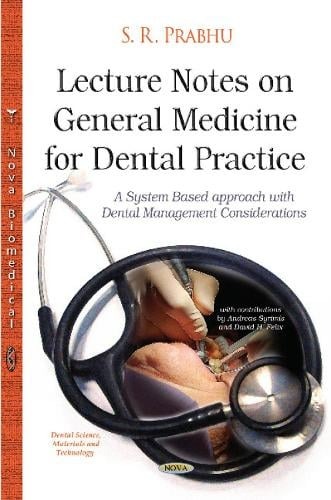
Lecture Notes on General Medicine for Dental Practice : A System based Approach with Dental Management Considerations
Offers a system based approach covering a broad range of topics in general medicine for dental practice. The book includes chapters on history taking and patient interview, general physical examination, system specific examination, common health related complaints, systemic infections, and diseases of the gastrointestinal, cardiovascular, respiratory, neurological, immunological, renal, endocrinal, dermatological and musculoskeletal systems. Nutritional disorders, psychiatric disorders, the female patient with menstrual, menopause and pregnancy related disorders, dental management of patients taking medications for systemic conditions and medical emergencies in dental practice have also been discussed in some detail.
