



Page 1
Page 1

Méthodes Numériques : Algorithmes, analyse et applications = Numerical Methods : Algorithms, Analysis and Applications
This book aims to present the theoretical and methodological foundations of numerical analysis. Particular attention is paid to the concepts of stability, precision and complexity of algorithms. Modern methods relating to the following topics are presented and analyzed in detail: solving linear and nonlinear systems, polynomial approximation, optimization, numerical integration, orthogonal polynomials, rapid transformations, ordinary differential equations. The techniques presented are illustrated by numerous tables and figures. Many examples and counter-examples are offered to allow the reader to develop his critical sense.
Indefinite Linear Algebra and Applications
This book is dedicated to relatively recent results in linear algebra with indefinite inner product. It also includes applications to differential and difference equations with symmetries, matrix polynomials and Riccati equations. These applications have been developed in the last fifty years, and all of them are based on linear algebra in spaces with indefinite inner product. The latter forms a new more or less independent branch of linear algebra and we gave it the name of indefinite linear algebra. This new subject in linear algebra is presented following the lines and principles of a standard linear algebra course. This book has the structure of a graduate text in which chapters of advanced linear algebra form the core. This together with the many significant applications and accessible style will make it widely useful for engineers, scientists and mathematicians alike.

Geometry of Müntz Spaces and Related Questions
Starting point and motivation for this volume is the classical Muentz theorem which states that the space of all polynomials on the unit interval, whose exponents have too many gaps, is no longer dense in the space of all continuous functions. The resulting spaces of Muentz polynomials are largely unexplored as far as the Banach space geometry is concerned and deserve the attention that the authors arouse. They present the known theorems and prove new results concerning, for example, the isomorphic and isometric classification and the existence of bases in these spaces. Moreover they state many open problems. Although the viewpoint is that of the geometry of Banach spaces they only assume that the reader is familiar with basic functional analysis. In the first part of the book the Banach spaces notions are systematically introduced and are later on applied for Muentz spaces. They include the opening and inclination of subspaces, bases and bounded approximation properties and versions of universality.
Galois Theory
Classical Galois theory is a subject generally acknowledged to be one of the most central and beautiful areas in pure mathematics. This text develops the subject systematically and from the beginning, requiring of the reader only basic facts about polynomials and a good knowledge of linear algebra.The book discusses Galois theory in considerable generality, treating fields of characteristic zero and of positive characteristic with consideration of both separable and inseparable extensions, but with a particular emphasis on algebraic extensions of the field of rational numbers. While most of the book is concerned with finite extensions, it concludes with a discussion of the algebraic closure and of infinite Galois extensions.

Fields and Galois Theory
The pioneering work of Abel and Galois in the early nineteenth century demonstrated that the long-standing quest for a solution of quintic equations by radicals was fruitless: no formula can be found. The techniques they used were, in the end, more important than the resolution of a somewhat esoteric problem, for they were the genesis of modern abstract algebra. This book provides a gentle introduction to Galois theory suitable for third- and fourth-year undergraduates and beginning graduates. The approach is unashamedly unhistorical: it uses the language and techniques of abstract algebra to express complex arguments in contemporary terms. Thus the insolubility of the quintic by radicals is linked to the fact that the alternating group of degree 5 is simple - which is assuredly not the way Galois would have expressed the connection.

Field Theory ; 2nd ed.
This book presents the basic theory of fields, starting more or less from the beginning. It is suitable for a graduate course in field theory, or independent study.There are new exercises, a new chapter on Galois theory from an historical perspective, and additional topics sprinkled throughout the text, including a proof of the Fundamental Theorem of Algebra, a discussion of casus irreducibilis, Berlekamp's algorithm for factoring polynomials over Zp and natural and accessory irrationalities.

Factorization of Matrix and Operator Functions : The State Space Method
The present book deals with factorization problems for matrix and operator functions. The problems originate from, or are motivated by, the theory of non-selfadjoint operators, the theory of matrix polynomials, mathematical systems and control theory, the theory of Riccati equations, inversion of convolution operators, theory of job scheduling in operations research. The book systematically employs a geometric principle of factorization which has its origins in the state space theory of linear input-output systems and in the theory of characteristic operator functions. This principle allows one to deal with different factorizations from one point of view. Covered are canonical factorization, minimal and non-minimal factorizations, pseudo-canonical factorization, and various types of degree one factorization.

Essays in Constructive Mathematics
This book aims to promote constructive mathematics, not by defining it or formalizing it, but by practicing it, by basing all definitions and proofs on finite algorithms. The topics covered derive from classic works of nineteenth century mathematics---among them Galois' theory of algebraic equations, Gauss's theory of binary quadratic forms and Abel's theorem about integrals of rational differentials on algebraic curves. It is not surprising that the first two topics can be treated constructively---although the constructive treatments shed a surprising amount of light on them---but the last topic, involving integrals and differentials as it does, might seem to call for infinite processes. In this case too, however, finite algorithms suffice to define the genus of an algebraic curve, to prove that birationally equivalent curves have the same genus, and to prove the Riemann-Roch theorem. The main algorithm in this case is Newton's polygon, which is given a full treatment. Other topics covered include the fundamental theorem of algebra, the factorization of polynomials over an algebraic number field, and the spectral theorem for symmetric matrices.

Diophantine Approximation : Festschrift for Wolfgang Schmidt
This volume contains 22 research and survey papers on recent developments in the field of diophantine approximation. The first article by Hans Peter Schlickewei is devoted to the scientific work of Wolfgang Schmidt. Further contributions deal with the subspace theorem and its applications to diophantine equations and to the study of linear recurring sequences. The articles are either in the spirit of more classical diophantine analysis or of geometric or combinatorial flavor. In particular, estimates for the number of solutions of diophantine equations as well as results concerning congruences and polynomials are established. Furthermore, the volume contains transcendence results for special functions and contributions to metric diophantine approximation and to discrepancy theory.

Difference Equations : From Rabbits to Chaos
Difference equations are models of the world around us. From clocks to computers to chromosomes, processing discrete objects in discrete steps is a common theme. Difference equations arise naturally from such discrete descriptions and allow us to pose and answer such questions as: How much? How many? How long? Difference equations are a necessary part of the mathematical repertoire of all modern scientists and engineers.The book cover the basics of difference equations and some of their applications in computing and in population biology. Each chapter leads to techniques that can be applied by hand to small examples or programmed for larger problems. Along the way, the reader will use linear algebra and graph theory, develop formal power series, solve combinatorial problems, visit Perron—Frobenius theory, discuss pseudorandom number generation and integer factorization, and apply the Fast Fourier Transform to multiply polynomials quickly.

Design and Analysis of Simulation Experiments
This is an advanced expository book on statistical methods for the Design and Analysis of Simulation Experiments (DASE). Though the book focuses on DASE for discrete-event simulation (such as queuing and inventory simulations), it also discusses DASE for deterministic simulation (such as engineering and physics simulations). The text presents both classic and modern statistical designs. Classic designs (e.g., fractional factorials) assume only a few factors with a few values per factor. The resulting input/output data of the simulation experiment are analyzed through low-order polynomials, which are linear regression (meta)models. Modern designs allow many more factors, possible with many values per factor. These designs include group screening (e.g., Sequential Bifurcation, SB) and space filling designs (e.g., Latin Hypercube Sampling, LHS). The data resulting from these modern designs may be analyzed through low-order polynomials for group screening and various metamodel types (e.g., Kriging) for LHS.

Courbes algébriques planes = Plane Algebraic Curves
Resulting from a master's course at the University of Paris VII, this text is re-edited as it appeared in 1978. Various tools are introduced in connection with Bézout's theorem necessary for the development of the notion of the multiplicity of intersection of two algebraic curves in the complex projective plane. Starting from elementary notions on affine and projective algebraic subsets, we define the intersection multiplicities and interpret their sum in terms of the resultant of two polynomials. The local study is a pretext for the introduction of formal or convergent series rings; it culminates in Puiseux's theorem, the convergence of which is reduced by splits to that of the theorem of implicit functions. Various figures illuminate the text: we "see" in particular that the homogeneous equation x3 + y3 + z3 = 0 defines a torus in the complex projective plane.
Computing in Algebraic Geometry : A Quick Start using SINGULAR
Algebraic geometry generally studies the properties of solution sets of systems of polynomial equations without direct reference to the actual polynomials used in these systems. … This is especially desirable for classwork where the development of the abstract machinery generally outlasts the patience of the students, except possibly the most motivated ones.

Computer Mathematics ; 8th Asian Symposium, ASCM 2007, Singapore, December 15-17, 2007. Revised and Invited Papers
This book constitutes thoroughly refereed post-conference proceedings of the 8th Asian Symposium on Computer Mathematics, ASCM 2007, held in Singapore in December 2007.

Combinatorics of Coxeter Groups
Coxeter groups are of central importance in several areas of algebra, geometry, and combinatorics. This clear and rigorous exposition focuses on the combinatorial aspects of Coxeter groups, such as reduced expressions, partial order of group elements, enumeration, associated graphs and combinatorial cell complexes, and connections with combinatorial representation theory. While Coxeter groups have already been exposited from algebraic and geometric perspectives, this text is the first one to focus mainly on the combinatorial aspects of Coxeter groups. The first part of the book provides a self-contained introduction to combinatorial Coxeter group theory. The emphasis here is on the combinatorics of reduced decompositions, Bruhat order, weak order, and some aspects of root systems. The second part deals with more advanced topics, such as Kazhdan-Lusztig polynomials and representations, enumeration, and combinatorial descriptions of the classical finite and affine Weyl groups. A wide variety of exercises, ranging from easy to quite difficult are also included.
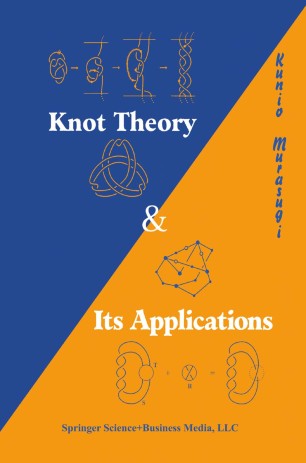
Knot Theory and Its Applications
The book contains most of the fundamental classical facts about the theory, such as knot diagrams, braid representations, Seifert surfaces, tangles, and Alexander polynomials; also included are key newer developments and special topics such as chord diagrams and covering spaces. The work introduces the fascinating study of knots and provides insight into applications to such studies as DNA research and graph theory. In addition, each chapter includes a supplement that consists of interesting historical as well as mathematical comments.

Cálculo científico con MATLAB y Octave = Scientific computing with MATLAB and Octave
This textbook is an introduction to Scientific Calculus, illustrating various numerical methods for the computer solution of certain classes of mathematical problems. The authors show how to compute the zeros or integrals of continuous functions, solve linear systems, approximate functions by polynomials, and construct precise approximations for the solution of differential equations. To make the presentation concrete and attractive, the MATLAB programming environment has been adopted as a faithful companion.
Cálculo científico com MATLAB e Octave = Scientific calculus with MATLAB and Octave
Its objective is to present various numerical methods for solving certain mathematical problems on the computer that cannot be treated in a simpler way. Classical issues such as the computation of zeros or integrals of continuous functions, the solving of linear systems, the approximation of functions by polynomials and the construction of precise approximations for solutions of differential equations are addressed. All algorithms are presented in the programming languages MATLAB and Octave, whose main commands and instructions are introduced gradually, aiming in particular at their compatibility in both languages.
Braid Groups
Braids and braid groups have been at the heart of mathematical development over the last two decades. Braids play an important role in diverse areas of mathematics and theoretical physics. The special beauty of the theory of braids stems from their attractive geometric nature and their close relations to other fundamental geometric objects, such as knots, links, mapping class groups of surfaces, and configuration spaces. In this presentation the authors thoroughly examine various aspects of the theory of braids, starting from basic definitions and then moving to more recent results. The advanced topics cover the Burau and the Lawrence--Krammer--Bigelow representations of the braid groups, the Alexander--Conway and Jones link polynomials, connections with the representation theory of the Iwahori--Hecke algebras, and the Garside structure and orderability of the braid groups.
Arithmetical investigations : Representation theory, orthogonal polynomials, and quantum interpolations
In this volume the author further develops his philosophy of quantum interpolation between the real numbers and the p-adic numbers. The p-adic numbers contain the p-adic integers Zp which are the inverse limit of the finite rings Z/pn. This gives rise to a tree, and probability measures w on Zp correspond to Markov chains on this tree. From the tree structure one obtains special basis for the Hilbert space L2(Zp,w). The real analogue of the p-adic integers is the interval [-1,1], and a probability measure w on it gives rise to a special basis for L2([-1,1],w) - the orthogonal polynomials, and to a Markov chain on "finite approximations" of [-1,1]. For special (gamma and beta) measures there is a "quantum" or "q-analogue" Markov chain, and a special basis, that within certain limits yield the real and the p-adic theories. This idea can be generalized variously. In representation theory, it is the quantum general linear group GLn(q)that interpolates between the p-adic group GLn(Zp), and between its real (and complex) analogue -the orthogonal On (and unitary Un )groups. There is a similar quantum interpolation between the real and p-adic Fourier transform and between the real and p-adic (local unramified part of) Tate thesis, and Weil explicit sums.
