



Page 1
Page 1
Molecular Pathology in Clinical Practice
This book addresses all areas of molecular pathology clinical practice in a single text, including: molecular biology basics, genetics, infectious diseases, hematopathology, solid tumors, HLA typing, identity testing and laboratory management. This text will provide a comprehensive reference for molecular pathologists as well as the practicing molecular pathologist and trainees.

Molecular Markers of Brain Tumor Cells : Implications for Diagnosis, Prognosis and Anti-Neoplastic Biological Therapy
Childhood brain tumors are a diverse group of diseases characterized by the abnormal growth of tissue contained within the skull. Other than leukemia and lymphoma, brain tumors are the most common type of neoplasms that occur in children. The leading cause of death from childhood neoplasms among persons up to 19 years is brain tumors. As such, this book is a review of the most recent molecular biological research concerning brain tumors with references and comparisons to a variety of neoplastic disorders. The book then uses this information to foreshadow the direction that future anti-neoplastic therapies will take. Because of the wide spectrum of the objectives of the book, any individual involved in cancer research will greatly benefit from the work. Histopathologists, neuropathologists, clinical and research oncologists, and medical students will find this book to be an invaluable resource as a reference guide. Patients and their families will also find the book useful as it offers a comprehensive update on new, non-classical therapeutic modality options and contains a detailed description and analysis of brain tumors. Such an endeavor has yet to be undertaken by any other book and may prove to be the most comprehensive book on brain tumors thus far.

Integration / Interaction of Oncologic Growth
The present multi-volume Book Series, CANCER GROWTH AND PROGRESSION, encompasses the widest possible framework of cutting edge research in the field of neoplastic pathology and other integrated fields. The individual volumes in this series focus on the topics of highest scientific interest for basic and clinical researchers, pathologists, medical and surgical oncologists and allied multidisciplinary teams interested in the study of these aspects of neoplastic growth, progression and inhibition. The range of topics covered is extensive.

Hypoplastic Left Heart Syndrome
Hypoplastic Left Heart Syndrome draws together the experiences of the leading experts in the field. Through their work in all aspects of congenital cardiac care, they have become acknowledged as the world leaders in the diagnostic, medical and social needs of children born with hypoplasia of the left heart. More importantly, for the first time the book recognizes the crucial contributions made by the families of these children. Diagnostic possibilities, options for medical and surgical treatment and a history of their evolution are looked into and the book also gives an insight into the longer-term effects that treatment has on the child and its family. As well as including contributions from medical clinicians, nurses, and psychologists, for the first time a forum is provided for the parents, who have complemented the contributions from the medical and nursing experts to provide a holistic view of the lives and experiences of the children born with this condition. No other publication, currently available, offers such a comprehensive overview of the care required by a child with hypoplasia of the left heart. This book provides the ultimate reference for anyone treating children with this heart condition, particularly paediatric cardiac clinical and nursing teams, radiologists and radiographers, obstetric medical and nursing teams, psychologists, pathologists, geneticists and workers in social care.

Handbook of Renal Biopsy Pathology
This practical handbook provides a short, clear and useful guide to interpretation of renal biopsy specimens. It is intended to be useful to pathologists, pathologists-in-training, nephrologists, nephrologists-in-training and medical students.

Handbook of Pathogens and Diseases in Cephalopods
The aim of this book is to facilitate the identification and description of the different organs as well as pathogens and diseases affecting the most representative species of cephalopods focussed on Sepia officinalis, Loligo vulgaris and Octopus vulgaris. These species are valuable ‘morphotype’ models and belong to the taxonomic groups Sepioidea, Myopsida and Octopoda, which include most of the species with a high market value and aquaculture potential. The study is based on photographs at macroscopic and histological level in order to illustrate the role of the most important pathogens and related diseases from the view of a pathological diagnosis. The reader is able to familiarize with functional anatomy, necropsy and general histology of adults and paralarvae, as well as with the identification of different pathogens and pathologies. This work is thus an invaluable guide for the diagnosis of cephalopod diseases. Besides including pathogens for non-European cephalopod species, it also provides a useful contribution encouraging marine pathologists, parasitologists, veterinarians and those involved in fishery sanitary assessments, aquarium maintenance and aquaculture practices aiming to increase their knowledge about the pathology of cephalopods.
Guidelines for reports by autopsy pathologists
Traditionally, pathology residents have learned how to write autopsy reports by trial-and-error, with oral feedback from local mentors. Now, pathologists and pathologists in training throughout the English-speaking world have access to a manual that describes what should be in an autopsy report, how to organize the material, and what the purposes are. Guidelines for Reports by Autopsy Pathologists lists numerous bad habits to avoid, and offers examples of effective report construction. It covers not only how to describe diseases and injuries, but also how to formulate and write opinions. As a supplement, Guidelines for Reports by Autopsy Pathologists also contains recommendations on record retention schedules for medical examiners (not everything needs to be saved in perpetuity), and how to formulate opinions for death certificates. Aimed at pathologists in training, Guidelines for Reports by Autopsy Pathologists will alos benefit the seasoned pathologists who want to improve their reports.
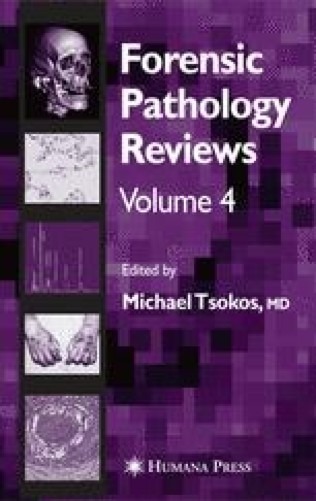
Forensic Pathology Reviews ; Vol. 4
Building on the excellent foundation laid in earlier volumes of the series, leading forensic pathologists from the United States and around the world again provide in Forensic Pathology Reviews, Volume 4 evidence-based accounts of special topics of current interest from various fields of forensic pathology and death-scene investigation. The authors offer cutting-edge insights into death from environmental conditions (lightning and elder abuse), homicide by sharp force, death from natural causes (asthma, Marfan syndrome, and peliosis of the liver and spleen), and pathology of human endothelium in septic organ failure.

Forensic pathology reviews ; Vol. 3
Maintaining the high quality achieved in earlier volumes, leading national and international forensic pathologists provide in Forensic Pathology Reviews, Volume 3 evidence-based accounts of special topics of current interest from various fields of forensic pathology and death-scene investigation. The authors offer cutting-edge insights into the medicolegal investigation of bodies found in water, the forensic aspects of the human immunodeficiency virus (HIV)-1 infection of the central nervous system, deaths in a head-down position, and forensic bitemark analysis. Additional chapters address taphonomic changes in human bodies during the early postmortem interval, arrhythmogenic ventricular dysplasia that produces sudden death in young people, the postmortem diagnosis of death in anaphylaxis, and iatrogenic deaths. The forensic aspects of suicide, murder-suicide, and suicide trends in the United States are also discussed, along with the evaluation of fatal pulmonary thromboembolism and the use of radiology in medicolegal investigations. A comprehensive, up-to-date review of the international literature is given for each chapter. Evidence-based and state-of-the-art, Forensic Pathology Reviews, Volume 3 synthesizes the practical advances made in a variety of important subspecialties of forensic pathology, demonstrating how the latest medical and scientific advances are being applied to solve current problems of high interest to forensic pathologists today.
Forensic neuropathology and associated neurology
Incorporating the most recent literature and state-of-the-art methods, this practical work and atlas covers the entire domain of neuropathology for forensic pathologists as well as for specialists in associated fields. Its concise, direct style provides the reader with succinct and easy-to-find answers to forensic, pathological, pathophysiological, biomechanical, and molecular biology problems.
Fine needle aspiration cytology : Diagnostic principles and dilemmas
Histopathologists all over the world have to report cytopathology during the course of their work and it is then that they find themselves facing diagnostic dilemmas. This practical, well-illustrated book, explicitly dedicated to this readership will serve their needs and meets their requirements in daily practice.

Early Cancer of the Gastrointestinal Tract : Endoscopy, Pathology, and Treatment
Differences in the diagnostic criteria for early cancer of the gastrointestinal tract between Japan and Western countries have been an interesting issue for some time, physicians in Japan being much more inclined to give a diagnosis of cancer than their European and North American counterparts. This book addresses those differences by contrasting the views of Eastern and Western endoscopists and pathologists on 24 cases presented in Part I.

Diagnosis of endometrial biopsies and curettings : A practical approach
Diagnosis of Endometrial Biopsies and Curettings, 2nd edition, revised and now with color illustrations, continues the tradition of its predecessor as being the concise and complete diagnostic guide to the endometrial biopsy. The text is structured to present a logical approach to formulating a pathologic diagnosis from the diverse array of tissue received in the surgical pathology laboratory with an emphasis on differential diagnosis. More than 220 illustrations complement the text, with 70 of them in full color throughout. Each chapter includes a section on "Clinical Queries and Reporting", which summarizes the features that must be discussed in the final pathology report. The authors are two prominent gynecologic pathologists, and this book is derived from their long-running Short Course presented at the International Academy of Pathology.

Dermatopathology
This book provides an introduction to the principles of dermatopathology, aimed primarily at dermatologists and pathologists in training, but useful for a wide audience

Dental pathology : A practical introduction ; 2nd ed.
Invaluable companion that will assist dentists and oral surgeons in recognizing and diagnosing gross dental abnormalities. New, updated edition with more figures and information on diagnostically difficult cases. Will help pathologists to increase their diagnostic skills. Includes diagnosis of histological alterations due to dental treatment

Dental pathology : A practical introduction ; 1st ed.
This atlas and instructional text is intended for use by pathologists, dental specialists, and interested students. These are admirable goals. It is a good introduction as the title implies . The author is an outstanding, well established expert in this field.The diagrams and photographs are truly outstanding. The gross photographs of tissue specimens are the best I have seen in any book. This stands alone in the field as a replacement for extinct texts

Cutaneous Lymphomas : Unusual Cases 2
This book describes unusual cases of cutaneous lymphomas and is of special interest for clinicians and pathologists dealing with the vexing subject of cutaneous lymphoma. In addition to the case description, it gives the clinical, histological, and in most cases also the phenotypical features and the results of molecular techniques. A commentary puts the observations into the context of cutaneous lymphomas.

Manual of Benirschke and Kaufmanns Pathology of the Human Placenta
Benirschke and Kaufmann's Pathology of the Human Placenta has long been regarded as the gold standard in the field. It is comprehensive and thorough and contains the detail necessary for those in the subspecialties of placental, perinatal and pediatric pathology. However, placentas are relatively common specimens and are not examined primarily by specialists in the field, but by general pathologists. Thus, there is a need for a more practical and concise manual that can be used by pathology trainees and generalists in their daily work. Manual of Benirschke and Kaufmann's Pathology of the Human Placenta will fill that need. The Manual is a practical, user-friendly guidebook for the general pathologist and pathologist in training for everyday, bench-side use. Organized in 27 chapters, the book will discuss placental development, general features, approach to the specimen by macroscopic and microscopic evaluation, all aspects of placental abnormalities and lesions, disease processes and the placenta, legal aspects of the placental examination, future directions and much more. The sections on macroscopic and microscopic evaluations feature quick-reference tables that allow the reader to identify abnormalities, learn the situations where they occur, and refer back to the text for in-depth discussions. Each chapter will end with selected readings from Pathology of the Human Placenta for more detailed discussions, classic recommended readings, as well as an up-to-date bibliography of current literature. The manual features over 444 illustrations, more than 100 of them in full-color. A must-have for every pathologist and pathology resident.
Liver and Pancreatic Diseases Management
New therapeutical approaches, advances in oncology and in diagnostic imaging, which reduce the need for invasive techniques and reach an improvement in survival and quality of life in cancer, are considered in this book. Modern literature has been reviewed with special reference to articles of general interest. In the clinical management of patients with liver, bile duct and pancreas diseases, it is important to assess the degree of disturbance and to diagnose the causative insult, and therefore clinical and laboratory methods of assessing each of these pathologies are of high interest. This version is an up-to-date account of diseases of the liver, biliary tract and pancreas, including transplantation, which we trust will be of value for surgeons, physicians and pathologists and also a reference book for medical students.
Le dépistage du cancer du col de lutérus = Cervical cancer screening
Each year, cervical cancer kills approximately 1,000 people in France, making it the fifth leading cause of cancer death and the eighth most common cancer among women. While eradicating cervical cancer is not possible, a national screening campaign should significantly reduce its incidence. This campaign should be based, in particular, on the systematic use of Pap smears. Conventional Pap smears have already reduced the number of invasive cancers by more than 50%. Improving them requires optimizing their sensitivity. This book details the natural history of cervical cancer, its incidence and mortality, and the various aspects of screening: general principles, the French screening program, the different types of Pap smears, the role and contribution of the HPV test, the management of abnormal Pap smears, the role of colposcopy, and the follow-up of treated women. It is intended for all those involved in this screening : specialist interns and gynecologists, pathologists and biologists, public health physicians, but also general practitioners whose role in screening is privileged since they are at the forefront of medical demand.
