



Page 1
Page 1
Ontologies-Based Business Integration
E-business integration is a vision we have developed over a long period of time. As we have worked in business practice for many years prior to and in parallel with our academic research, we have always thought of such - tegration not only as an intellectual challenge but also as a real business tool. Consequently, when we started our project on Ontologies-based R- onciliation for Business Integration (ORBI) in 2004, not only pure science but also business objectives were at the center of our research. We were very happy to be able to form a project consortium that consisted not only of renowned researchers but also of experienced business practitioners from a range of companies. Each played a specific role – as user, provider or co-developer of the application components that are based on the me- ods we have developed. So may this book find its way not only to the desks of researchers and students, but also into the offices and minds of business practitioners worldwide who are dealing with the challenge of integrating their business processes, applications and information.
omputational science and its applications - ICCSA 2005 ; Vol. 3480 ; International Conference, Singapore, May 9-12, 2005, Proceedings, Part I
The four volume set assembled following The 2005 International Conference on Computational Science and its Applications, ICCSA 2005, held in Suntec International Convention and Exhibition Centre, Singapore, from 9 May 2005 till 12 May 2005, represents the ?ne collection of 540 refereed papers selected from nearly 2,700 submissions. Computational Science has ?rmly established itself as a vital part of many scienti?c investigations, a?ecting researchers and practitioners in areas ranging from applications such as aerospace and automotive, to emerging technologies such as bioinformatics and nanotechnologies, to core disciplines such as ma- ematics, physics, and chemistry. Due to the shear size of many challenges in computational science, the use of supercomputing, parallel processing, and - phisticated algorithms is inevitable and becomes a part of fundamental t- oretical research as well as endeavors in emerging ?elds.

Numerical Solution of Partial Differential Equations on Parallel Computers
The scientific fields of Ma- ematics and Physics provide a powerful vehicle for such descriptions in terms of Partial Differential Equations (PDEs). Formulated as such equations, physical laws can become subject to computational and analytical studies. In the computational setting, the equations can be discreti ed for ef?cient solution on a computer, leading to valuable tools for simulation of natural and man-made processes. Numerical so- tion of PDE-based mathematical models has been an important research topic over centuries, and will remain so for centuries to come. In the context of computer-based simulations, the quality of the computed results is directly connected to the model’s complexity and the number of data points used for the computations. Therefore, computational scientists tend to ?ll even the largest and most powerful computers they can get access to, either by increasing the si e of the data sets, or by introducing new model terms that make the simulations more realistic, or a combination of both. Today, many important simulation problems can not be solved by one single computer, but calls for parallel computing.

Numerical Simulation in Molecular Dynamics : Numerics, Algorithms, Parallelization, Applications
Particle models play an important role in many applications in physics, chemistry and biology. They can be studied on the computer with the help of molecular dynamics simulations. This book presents in detail both the necessary numerical methods and techniques (linked-cell method, SPME-method, tree codes, multipole technique) and the theoretical background and foundations. It illustrates the aspects modelling, discretization, algorithms and their parallel implementation with MPI on computer systems with distributed memory. Furthermore, detailed explanations are given to the different steps of numerical simulation, and code examples are provided.

Number Fields and Function Fields – Two Parallel Worlds
These invited articles by leading researchers in the field explore various aspects of the parallel worlds of function fields and number fields. Topics range from Arakelov geometry, the search for a theory of varieties over the field with one element, via Eisenstein series to Drinfeld modules, and t-motives.

Noninvasive Imaging of Myocardial Ischemia
Non-invasive imaging plays a very important role in the assessment of patients investigated for coronary artery disease, providing valuable information for diagnosis and aiding management decisions. It covers a broad spectrum of investigations including radionuclide imaging, echocardiography, magnetic resonance imaging and computed tomography. Progress towards the most efficacious means of assessing a patient is relentless, with recent years seeing an important shift in emphasis from invasive to noninvasive techniques. This informative book compares the various modalities in a practical diagnostic environment. It thus provides a forum for fertile discussion, bringing the discussion of these various methodologies together in one reference for the first time. The narrative flow is unique and will ensure that all levels of medical practitioners with an interest in cardiac imaging will find this an unparalleled resource for use in guiding their practice.
New Trends and Technologies in Computer-Aided Learning for Computer-Aided Design ; IFIP International Working Conference: EduTech 2005, Perth, Australia, October 20-21, 2005
Computation and communication technologies underpin work and development in many different areas. Among them, Computer-Aided Design of electronic systems and E-Learning technologies are two areas which are different but share many concerns. The design of CAD and E-Learning systems already touches on a number of parallels, such as system interoperability, user interfaces, standardization, EML-based formats, reusability aspects (of content or designs), and intellectual property rights. Furthermore, the teaching of Design Automation tools and methods is particularly amenable to a distant or blended learning setting, and implies the interconnection of typical CAD tools, such as simulators or synthesis tools, with e-learning tools. There are many other aspects in which synergy can be found when using E-Learning technology for teaching and learning technology. This workshop, sponsored by IFIP WG 10.5 Design and Engineering of Electronic Systems in cooperation with IFIP WG 3.6 Distance Education, will explore the interrelationship between these two subjects, where Computer-Aided Design meets Computer-Aided Learning. New Trends and Technologies in Computer-Aided Learning for Computer-Aided Design documents recent approaches and results presented at the EduTech 2005 Workshop, which was held in October 2005 in Perth, Australia and sponsored by the International Federation for Information Processing (IFIP). The topics chosen for this working conference are very timely: learning environments, tools and applications for education, education technologies and trends, and teaching in the hardware design area.

New Horizons of Parallel and Distributed Computing
Parallel and distributed computing is one of the foremost technologies for shaping future research and development activities in academia and industry. Hyperthreading in Intel processors, hypertransport links in next generation AMD processors, multicore silicon in today’s high-end microprocessors, emerging cluster and grid computing, has moved parallel/distributed computing into the mainstream of computing. New Horizons of Parallel and Distributed Computing is a collection of self-contained chapters written by pioneers and researchers to provide solutions for newly emerging problems in this field. This volume will not only provide novel ideas, work in progress and state-of-the-art techniques in the field, but also stimulate future research activities in the area of parallel and distributed computing with applications. New Horizons of Parallel and Distributed Computing is intended for researchers and graduate students in computer science and electrical engineering, as well as researchers and developers in industry. This book can be used as a textbook and a reference for use by students, researchers, and developers.
Network and Parallel Computing ; IFIP International Conference, NPC 2008, Shanghai, China, October 18-20, 2008. Proceedings
This book constitutes the refereed proceedings of the IFIP International Conference on Network and Parallel Computing, NPC 2008, held in Shanghai, China in October 2008.The 32 revised full papers presented were carefully selected from over 140 submissions. The papers are organized in topical sections on network technologies; network applications; network and parallel architectures; parallel and distributed software.
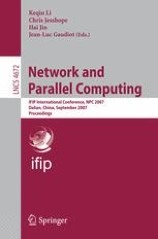
Network and Parallel Computing ; IFIP International Conference, NPC 2007, Dalian, China, September 18-21, 2007, Proceedings
The goal of NPC is to establish an international forum for researchers and practitioners to present their - cellent ideas and experiences in all system fields of network and parallel computing. The main focus of NPC 2007 was on the most critical areas of network and parallel computing: network applications, network technologies, network and parallel arc- tectures, and parallel and distributed software.
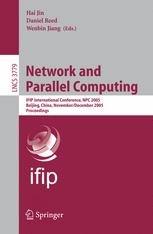
Network and Parallel Computing ; IFIP International Conference, NPC 2005, Beijing, China, November 30 - December 3, 2005, Proceedings
These proceedings contain the papers presented at the 2005 IFIP International Conference on Network and Parallel Computing (NPC 2005), held in Beijing, China, between November 30 and December 3, 2005. The goal of the conference was to establish an international forum for engineers and scientists to present their ideas and experiences in network and parallel computing. A total of 320 submissions were received in response to our Call for Papers. These papers were from the following countries or regions: Australia, Canada, China, France, Germany, Hong Kong, India, Iran, Italy, Japan, Korea, Lux- burg, Nepal, Netherlands, Taiwan, United Arab Emirates, and United States.

Nearest Neighbor Search : A Database Perspective
Modern applications are both data and computationally intensive and require the storage and manipulation of voluminous traditional (alphanumeric) and nontraditional data sets (images, text, geometric objects, time-series). Examples of such emerging application domains are: Geographical Information Systems (GIS), Multimedia Information Systems, CAD/CAM, Time-Series Analysis, Medical Information Sstems, On-Line Analytical Processing (OLAP), and Data Mining. These applications pose diverse requirements with respect to the information and the operations that need to be supported. From the database perspective, new techniques and tools therefore need to be developed towards increased processing efficiency. This monograph explores the way spatial database management systems aim at supporting queries that involve the space characteristics of the underlying data, and discusses query processing techniques for nearest neighbor queries. It provides both basic concepts and state-of-the-art results in spatial databases and parallel processing research, and studies numerous applications of nearest neighbor queries.

Multicriteria Scheduling : Theory, Models and Algorithms
Scheduling and multicriteria optimisation theory have been subject, separately, to numerous studies. Since the last twenty years, multicriteria scheduling problems have been subject to a growing interest. However, a gap between multicriteria scheduling approaches and multicriteria optimisation field exits. This book is an attempt to collect the elementary of multicriteria optimisation theory and the basic models and algorithms of multicriteria scheduling. It is composed of numerous illustrations, algorithms and examples which may help the reader in understanding the presented concepts. This book covers general concepts such as Pareto optimality, complexity theory, and general method for multicriteria optimisation, as well as dedicated scheduling problems and algorithms: just-in-time scheduling, flexibility and robustness, single machine problems, parallel machine problems, shop problems, etc.
Modern parallel programming with C++ and assembly language : X86 SIMD development using AVX, AVX2, and AVX-512
Understand the essential details about x86 SIMD architectures and instruction sets including AVX, AVX2, and AVX-512. / Master x86 SIMD data types, arithmetic instructions, and data management operations using both integer and floating-point operands. / Code performance-enhancing functions and algorithms that fully exploit the SIMD capabilities of a modern x86 processor. Employ C++ intrinsic functions and x86-64 assembly language code to carry out arithmetic calculations using common programming constructs including arrays, matrices, and user-defined data structures. Harness the x86 SIMD instruction sets to significantly accelerate the performance of computationally intense algorithms in applications such as machine learning, image processing, computer graphics, statistics, and matrix arithmetic. / Apply leading-edge coding strategies and techniques to optimally exploit the x86 SIMD instruction sets for maximum possible performance.

Modelling Distributed Systems
Process algebras are languages for the description of elementary parallel systems and are used to study the behavioural properties of distributed systems, but they often lack the ability to handle data. This textbook guides students through algebraic specification and verification of distributed systems, and some of the most prominent formal verification techniques.

Modeling, Simulation and Optimization of Complex Processes HPSC 2018 ; Proceedings of the 7th International Conference on High Performance Scientific Computing, Hanoi, Vietnam, March 19-23, 2018
The contributions cover a broad, interdisciplinary spectrum of scientific computing and showcase recent advances in theory, methods, and practical applications. Subjects covered include numerical simulation, methods for optimization and control, machine learning, parallel computing and software development, as well as the applications of scientific computing in mechanical engineering, airspace engineering, environmental physics, decision making, hydrogeology, material science and electric circuits.

Modeling, Simulation and Optimization of Complex Processes ; Proceedings of the Third International Conference on High Performance Scientific Computing, March 6–10, 2006, Hanoi, Vietnam
This proceedings volume contains a selection of papers presented at the Third International Conference on High Performance Scientific Computing held at the Hanoi Institute of Mathematics, Vietnamese Academy of Science and Technology (VAST), March 6-10, 2006. The conference has been organized by the Hanoi Institute of Mathematics, Interdisciplinary Center for Scientific Computing (IWR), Heidelberg, and its International PhD Program ``Complex Processes: Modeling, Simulation and Optimization'', and Ho Chi Minh City University of Technology. The contributions cover the broad interdisciplinary spectrum of scientific computing and present recent advances in theory, development of methods, and applications in practice. Subjects covered are mathematical modelling, numerical simulation, methods for optimization and control, parallel computing, software development, applications of scientific computing in physics, chemistry, biology and mechanics, environmental and hydrology problems, transport, logistics and site location, communication networks, production scheduling, industrial and commercial problems.

Modeling, Simulation and Optimization of Complex Processes ; Proceedings of the International Conference on High Performance Scientific Computing, March 10-14, 2003, Hanoi, Vietnam
This proceedings volume contains a selection of papers presented at the symposium "International Conference on High Performance Scientific Computing'' held at the Hanoi Institute of Mathematics of the Vietnam National Center for Natural Science and Technology (NCST). The contributions cover the broad interdisciplinary spectrum of scientific computing and present recent advances in theory, development of methods, and applications in practice. Subjects covered are mathematical modelling, numerical simulation, methods for optimization and optimal control, parallel computing, symbolic computing, software development, applications of scientific computing in physics, chemistry, biology and mechanics, environmental and hydrology problems, transport, logistics and site location, communication networks, production scheduling, industrial and commercial problems.

Microarray technology and Its applications
The genomics revolution would not have been possible without the 'parallelisation' offered by microarray technology. This technological - and commercial - success has been since emulated by other applications areas, with a tremendous amplification of innovation. This book describes the fundamentals and latest developments in microarray technology, as well as its future directions. It presents detailed overviews of the different techniques of fabricating microarrays, of the chemistries and preparative steps involved, of the different types of microarrays, and of the instrumentation and optical issues involved.
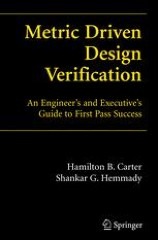
Metric Driven Design Verification : An Engineer's and Executive's Guide to First Pass Success
A metric based flow is described that focuses on the four steps of: 1. Planning: Defining what needs to be done and the automatically trackable metrics that will be used to measure progress. 2. Execution: Implementing verification environments and then extensively exercising the device under verification utilizing comprehensive, massively parallel regression strategies. 3. Measurement: Automatically capturing the metrics defined in planning to provide objective data with which to manage the verification project. Custom tailoring those metrics through an automated reporting framework to provide all stakeholders a real-time meaningful view of project status. 4. Response: Utilizing the returned metrics to effectively adapt to changing project conditions. Making use of automated response mechanisms to automate engineering processed and management response to streamline project management processes
