



Page 1
Page 1

Nutrition in Kidney Disease
The field of kidney disease has evolved over the years to encompass a broad and sophisticated knowledge base. There has been a proliferation of scientific information and technical advances in the field. In Nutrition in Kidney Disease, the authors provide a comprehensive perspective of the emerging science in nutrition in kidney disease. This important book is written by a collaborative group of distinguished dietitians and physicians in the specialized field of kidney disease and clinical nutrition, who have devoted their careers to the care of patients with kidney disease. At the end of key chapters, case studies assess knowledge of the subject within the context of didactic curriculums.

Nephrology Worldwide
This book presents contributions from leading international experts in the field of nephrology. Each chapter is independent and discusses nephrology in the author’s country, including the history of nephrology development, kidney disease epidemiology, clinical nephrology, dialysis practice in acute and chronic renal failure settings (hemodialysis, hemodiafiltration, peritoneal dialysis), pediatric nephrology, and kidney transplantation. In addition, the book covers topics such as the job market for nephrologists, reimbursement, nephrology education, and the number of professionals in the private and public sectors.

I recettori dellangiotensina : Dalla biologia molecolare alla terapia con gli antagonisti recettoriali
Describes all the structural and functional characteristics of angiotensin receptors, with particular reference to their molecular and pharmacological properties. The therapeutic applications of AT1 receptor antagonists and the results obtained from large trials are also discussed, especially in arterial hypertension, heart failure, diabetic nephropathy and stroke.

Handbook of Renal Biopsy Pathology
This practical handbook provides a short, clear and useful guide to interpretation of renal biopsy specimens. It is intended to be useful to pathologists, pathologists-in-training, nephrologists, nephrologists-in-training and medical students.

Fundamentals of Renal Pathology
This book will provide the general pathologist, pathology residents and fellows in training, the renal pathologist, and the nephrologist and nephrology resident, with a compact and up-to-date resource on the basics of renal pathology. Beginning with the basic concepts and methods in renal pathology, the text covers renal anatomy, including gross and miscroscopic appearance and pathogenic mechanisms in renal diseases.

Frailty and Kidney Disease : A Practical Guide to Clinical Management
This book is of importance in nephrology, specifically nephrogeriatrics, since frailty is a condition affecting many elderly patients and which is becoming increasingly common in medical practice. As such, there is a considerable need for information to assist professionals treating these patients. The book includes chapters on the frailty syndrome (definition, evaluation and treatment), the main geriatric syndromes (gait disorder, falls, incontinence, and delirium), the main renal syndromes (acute renal injury, chronic kidney disease) as well as dialysis and kidney transplant, and the relationship between geriatrics and renal syndromes.

Diabetic Kidney Disease
Presents the latest information on the clinical-pathological features of diabetic kidney disease. The data included is based on a cohort study of biopsy-proven diabetic nephropathy patients and nephrosclerosis patients, who were observed over a long term, and on the long-term registry for diabetic nephropathy (diabetic kidney disease) in Japan. It provides a clinical-pathological axis in clinical settings, including differential pathological/clinical diagnoses of CKD in diabetic patients (e.g. the presence of “classic” diabetic nephropathy and/or nephrosclerosis and/or other primary kidney diseases). The abundant biopsy specimens with long-term medical records provide a detailed pathological and clinical description. The book also includes urine-sample data for developing and validating possible candidates for novel biomarkers for diabetic kidney disease. Many countries, including Japan, have ageing populations, in which nephrosclerosis contributes to the progression of kidney lesions in patients with diabetic kidney disease. As such, a comparison of a diabetic nephropathy cohort with nephrosclerosis is indispensable to offer better treatments.

Les infections urinaires = Urinary tract infections
Les Infections urinaires provides an update on knowledge concerning the epidemiology of community-based infection, on the mechanisms of bacterial resistance and on certain aspects of the disease useful to urologists as well as infectious diseases, gynecologists, emergency physicians and attending physicians. . Nosocomial urinary tract infection is approached from the perspective of risk factors. Acute and chronic prostatitis was the subject of a consensus conference supported by the World Health Organization within the framework of the International Consensus Conferences in Urology in Paris. The full text and the recommendations are reported with the consent of their authors. This book is an author's book and not an author's book because urinary tract infection is multiple, complex and justifies a multidisciplinary approach.

L’insuffisance rénale aiguë = Acute renal failure
The aim of this book is to make current data from the experimental and clinical literature accessible to readers. More than a thousand articles are published each year on the theme and the authors aim to synthesize this information. These data relate in particular to the identification of early markers of renal dysfunction without which screening, recognition of the main pathophysiological determinants and prevention remain uncertain. This book focuses attention on clinical situations characterized by the renal impact of the main dysfunctions of vital functions, the prognosis of which is worsened by the occurrence of this renal failure. The following will be treated in particular: the renal consequences of oxidative stress, the renal consequences of respiratory dysfunction, cardiac dysfunction, hepatic dysfunction, alterations in hemostasis, septic shock and hemorrhagic shock. Finally, the physiopathological data from experimental models are gradually finding their echo in the clinical field, opening up therapeutic avenues whose recent evaluations will be analyzed.
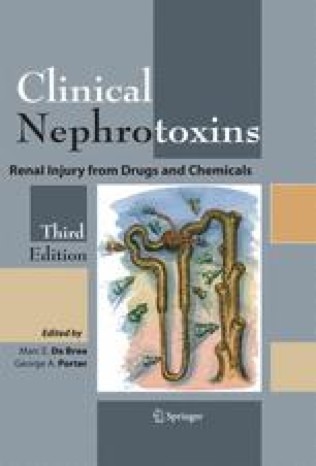
Clinical Nephrotoxins: Renal Injury from Drugs and Chemicals
Clinical Nephrotoxins: Renal Injury from Drugs and Chemicals is a comprehensive handbook on all aspects of adverse effects by drugs and chemical substances on the kidneys.

Challenges in Pediatric Kidney Transplantation : A practical guide
This book provides a comprehensive overview of the unique challenges inherent in pediatric kidney transplantation. The text reviews the problems faced during each stage of the kidney transplantation process, including the occurrence of infections during the pre-transplant stage, surgical challenges during the actual transplantation, and medication issues during the post-transplant stage. The book also features high-yield case presentations of typical pediatric transplant scenarios, from the pre-transplant management of a child with CAKUT to the evaluation and treatment of antibody mediated rejection in children.
Applied Peritoneal Dialysis : Improving Patient Outcomes
This book offers a comprehensive guide to peritoneal dialysis (PD). Home dialysis, and more specifically PD, is growing in popularity in the US. By conservative estimates, experts suggest that 45 percent of dialysis patients in the US can be on home dialysis. However, the current penetration rate is only 10 percent. This is changing with an expected major increase in the next 5 years. One of the reasons for the low uptake is that many nephrologists lack comfort and confidence in using PD as a dialysis modality.
