



Page 1
Page 1

Handbook of Research Methods for Marketing Management
Divided into four parts covering quantitative and qualitative research approaches, mixed-methods approaches, and critical issues regarding how research is conducted, the Handbook offers guidance for all marketing researchers. This guidance includes insights on scale development, necessary condition analysis, experimental design, visual research methods, phenomenology and mobile ethnography. Chapters also consider recent advances in marketing research methods, legal aspects of marketing research, research ethics and how a forensic science framework can be used in marketing research.

Handbook of Marketing Decision Models
The HANDBOOK OF MARKETING DECISION MODELS presents the state of the art in marketing decision models, dealing with new modeling areas such as customer relationship management, customer value and online marketing, but also describes recent developments in other areas. In the category of marketing mix models, the latest models for advertising, sales promotions, sales management, and competition are dealt with. New developments are presented in consumer decision models, models for return on marketing, marketing management support systems, and in special techniques such as time series and neural nets. Not only are the most recent models discussed, but the book also pays attention to the implementation of marketing models in companies and to applications in specific industries.

Handbook of marketing analytics : Methods and applications in marketing management, public policy, and litigation support
Shows analytical marketing methods and their high-impact real-life applications in marketing management, Public policy, and litigation support. Fourteen chapters present an overview of specific marketing analytic methods in technical detail, While 22 case studies present thorough examples of the use of each method. Multidisciplinary in scope, This handbook covers experimental methods, non-experimental methods, and their digital-era extensions. It explores topics such as : Classical and bayesian econometrics, Causality, Machine learning, Optimization, And recent advancements in conjoint analysis.

Corporate Brand Design : Developing and Managing Brand Identity
Corporate Brand Design offers a unique and comprehensive exploration of the relationship between companies, their brand design and their stakeholders. The book begins its approach with a literature review, to provide an overview of current thinking on the subject and establish a theoretical framework. The following sections cover key stages during the corporate brand development process: brand signature design, its components and impact on brand reputation; website design and how it builds customer perception of the brand; corporate architecture design and the branding of space and place; brand experience design from a sensuality perspective. International case studies from a range of industries feature in each chapter to demonstrate how the theory translates to practice, alongside case questions to cement learning and definitions of the key constructs. By combining academic theory with practical case studies and examples, readers will gain a thorough understanding of the corporate brand design process and how it influences customer identification and loyalty to the brand. The book is a useful resource for advanced undergraduate and postgraduate students of strategic brand management, corporate brand design and visual identity, and marketing communications
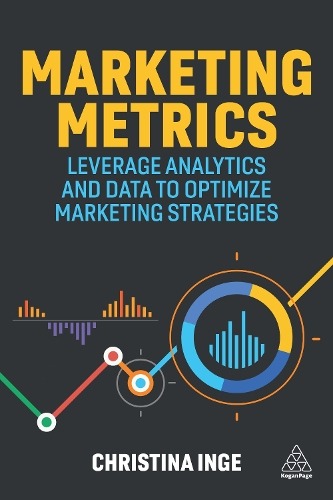
Marketing metrics : Leverage analytics and data to optimize marketing strategies
Featuring examples from a range of organizations including Coca-Cola and Mercedes-Benz, it shows how to create a strategy which leverages consumer data for customer-centric marketing, establishes the ROI of channels and campaigns, strengthens brands and creates data-driven product strategies. Covering the range of new global laws that impact consumer privacy and data collection and usage, Marketing Metrics shows how to use data in a non-invasive, secure and ethical way.

Marketing Management
The world of marketing is changing every day ― and in order for students tohave a competitive edge, they need a text that reflects the best and mostrecent marketing theory and practices. Marketing Management collectivelyuses a managerial orientation, an analytical approach, a multidisciplinaryperspective, universal applications, and balanced coverage to distinguish itfrom all other marketing management texts out there.
Marketing for Sustainable Development : Rethinking Consumption Models
Many people see a weak association between marketing and sustainable development and even consider them as two incompatible fields. However, marketing benefits from an extremely powerful position to encourage transformations at the production level and to guide consumers towards responsible behaviors. From its inception, marketing has been positioned as a support for the relationship between the company and its customers, with the quest for well-being set in the very foundations of the discipline.

Marketing and the Customer Value Chain : Integrating Marketing and Supply Chain Management
Offers a systemic approach to the integration of marketing and supply chain management. It examines the strategic connections and disconnections between supply chain and operations management and marketing by focusing on the factors that constitute the extended marketing mix, including product, price, promotion, people, and processes.
Management in marketing communications ; Vol.22
Provides a comprehensive overview of the essential topics in the field of management in marketing communication. these substantial topics are examined and addressed by scholars from the marketing and management discipline. beginning with the role of culture as a crucial element in marketing communication, the book delves into various matters within the scope of marketing communication. consequently, social media and its significance in modern marketing strategies are examined together with the topic of transition from offline to online marketing, emphasizing the impact of accelerated digitalization and its onset during the third decade of the twenty-first century. furthermore, the book discusses the rapid digital transformation stimulated by the COVID-19 pandemic and thus creates room for further exploration and research.

Key Account Management in Business-to-Business Markets: An Assessment of Its Economic Value
In times of fierce competition in business-to-business markets strong and economically sound business relationships with a company's customers rank among the main success factors. As a well established marketing management conception, key account management is of particular significance in this context. Interestingly enough, empirical research studies have recently proved that relationship marketing, and particularly key account management, does not achieve the economic value originally expected.

Case studies in the traditional food sector : A volume in the consumer science and strategic marketing series
The book explores how consumer and sensory science has been implemented in the food industry for achieving the following strategic aims: Rejuvenating product image, Shaping new market places, Achieving market differentiation and geographical diffusion, Achieving customer loyalty, Promoting traditional features of the product and defining product positioning in competitive environment. This book aims to answer the following questions, amongst others: How research in the field of consumer science became relevant for marketing strategies?, Which tangible economic and financial outcomes have been obtained by the joint work of sensory scientists, Researchers in marketing field and food business professionals?, And which communication methods and practices have been relevant to make the most of R&D in the food industry?
Artificial intelligence for marketing management
Artificial intelligence (AI) has driven businesses to adopt new business practices rapidly, enhance product development and services, has helped to power AI-based market intelligence and customer insights, and improve customer relationship management. This timely book addresses the use of AI in marketing.

AI Strategy for sales and marketing : Connecting marketing, sales and customer experience
AI Strategy for Sales and Marketing presents a framework for understanding how AI can boost customer-centricity and sales by creating a connected strategy that delivers value today and into the future. Supported by practical tips and advice throughout, it covers topics including personalization, upskilling, customer experience for both on and offline shopping channels and the importance of using AI responsibly to create consumer trust.

Advanced introduction to marketing strategy
Presents a systematic, next-generation approach to marketing strategy, demonstrating how success is gained and sustained via continuous innovation to create new value for customers. George S. Day develops the outside-in approach to formulating strategy, while providing compelling insights into key market stakeholders to illustrate how to sustain customer value leadership in the face of mounting market turbulence.

A Twenty-First Century Guide to Aldersonian Marketing Thought
The book has three major themes: glimpses into the kind of interesting character he was, key excerpts from his writings, and commentaries on the perceived current relevance of Aldersonian marketing thought. … this book is an excellent vehicle for educating people on a guru, influencer, theoretician, practitioner and leader in the development of marketing theory. … this is a valuable resource for anyone desiring to know about marketing theory and to understand the genesis of a number of concepts currently found in today’s marketing textbooks.
