



Page 1
Page 1

New Aspects of Zirconium Containing Organic Compounds
Metal carbene complexes have made their way from organometallic curiosities to valuable reagents and catalysts. They offer novel synthetic opportunities in carbon-carbon bond formation based on either carbene-centered reactions or on metal-templated processes which makes them indispensable in modern synthetic methodology. The most prominent metal carbenes are now either commercially available or easy to synthesize and handle with modern laboratory techniques. This volume organized in eight chapters written by the leading scientists in the field illustrates the theoretical background, non-classical nucleophilic and cycloaddition patterns, chromium-templated benzannulation and photo-induced reactions, rhodium-catalyzed carbene transfer as well as the principles and applications of olefin metathesis which has coined the progress in synthetic methodology over the past decade. Designed for researchers in academia and industry as well as graduate students it presents the state-of-the-art potential of carbene complexes in modern organic synthesis.

Natural Fullerenes and Related Structures of Elemental Carbon
This book provides an up-to-date summary of the state of knowledge on natural fullerenes occurrences and the laboratory techniques used to determine their presence at low concentration in rock samples. It demonstrates that natural fullerenes exist and should be searched for in places not yet considered such as carbon-containing deep-seated crustal rocks.Natural Fullerenes and Related Structures of Elemental Carbon is written for professional astronomers, meteoriticists, earth and planetary scientists, biologists and chemists interested in carbon and hydrocarbon vapor condensation. It is an invaluable resource for practicing research scientists and science teachers in Earth and Planetary Science, Astronomy and Carbon Science.
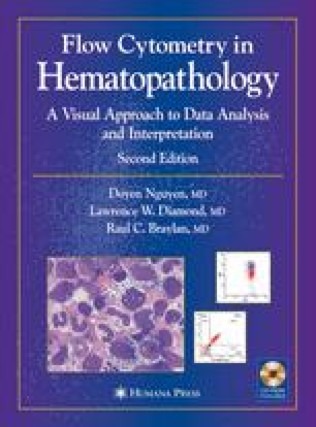
Flow cytometry in hematopathology : A visual approach to data analysis and interpretation
Although instrumentation and laboratory techniques for flow cytometry (FCM) immunophenotyping of hematopoietic malignancies are well documented, there is relatively little information on how best to perform data analysis, a critical step in FCM testing. In Flow Cytometry in Hematopathology: A Visual Approach to Data Analysis and Interpretation, three physicians highly experienced in laboratory hematopathology and FCM offer a unique systematic approach to FCM data analysis and interpretation based on the visual inspection of dual parameter FCM graphics. This step-by-step approach to optimal FCM data analysis is demonstrated by means of numerous FCM graphics derived from actual well-documented clinical cases.The focus of the additional material is on the TCR-Vb eight-tube kit which has greatly facilitated the evaluation mature T-cell disorders, and on the DNA dye DRAQ5 for improved grading of malignant lymphoma. The authors also include notes on "tricks of the trade" and pitfalls to avoid. The discussion, covering leukemias, lymphomas, and other conditions, moves from simple to complex specimens, with an emphasis on visual pattern analysis.

Color in Dentistry : A Clinical Guide to Predictable Esthetics
Provides step-by-step protocols to help dental professionals accurately match, communicate, and reproduce the color of teeth and gingiva. These authors demonstrate how to implement color science in simple problem-solving instructions for predictable esthetics in both clinical protocols and laboratory techniques. An extensive presentation of clinical cases is included to illustrate the use of recommended protocols in general practice. An outstanding contribution to the practice and theory of color management in contemporary dentistry
Clinical metabolomics applications in genetic diseases
Helps readers discover the forefront of personalized medicine on clinical metabolomics and its applications in genetic diseases. This comprehensive guide offers a functional relationship map between cell components and genetic variations in various diseases, providing insights that can be applied to personalized medicine. Covers the latest developments in metabolomics for health, with practical guidance for clinical experts looking to advance their laboratory techniques and career. The metabolomics profile is a powerful tool that has revolutionized our understanding of the relationship between genetics, clinical readouts, and disease outcomes. By integrating metabolomics with genomics and clinical phenotypes, the authors have developed diagnostic and prediction models that have vastly improved patient outcomes and deepened the understanding of disease mechanisms.

Biochemistry for medical laboratory technology students
The book will not only help the students to have a better knowledge of the subject but also lay a strong foundation for integration of biochemical processes in clinical subjects, thus helping them in their journey to become highly skilled medical laboratory technologists.
Basic Science Techniques in Clinical Practice
Medical researchers including doctors, nurses, medical students and allied health professionals are required to undertake a period of research as part of their career pathway. Basic Science Techniques in Clinical Practice covers the main areas, allowing anyone to set up and complete research projects and this information can easily be translated to clinical projects. Written by international authors to provide a flavor from many institutions, the book’s appeal is cross-sectional, both at hospital and primary care levels worldwide.
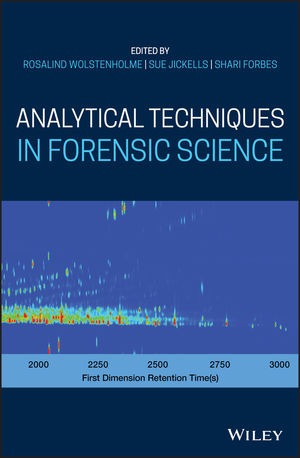
Analytical Techniques in Forensic Science
Analytical Techniques in Forensic Science is a comprehensive guide written in accessible terms that examines the interface between analytical chemistry and trace evidence in forensic science. With contributions from noted experts on the topic, the text features a detailed introduction analysis in forensic science and then subsequent chapters explore the laboratory techniques grouped by shared operating principles. For each technique, the authors incorporate specific theory, application to forensic analytics, interpretation, forensic specific developments, and illustrative case studies.
100 cases in clinical pathology and laboratory medicine
Presents 100 clinical scenarios commonly seen by medical students and junior doctors in the emergency department, outpatient clinic, operating theatre or in general practice. A succinct summary of the patient's history, examination and initial investigations is followed by questions on each case, with particular emphasis on the interpretation of the results and in which an understanding of the underlying clinical pathology is central to arriving at the correct diagnosis. The answer includes a detailed discussion on each topic, providing an essential revision aid as well as a practical guide for students and junior doctors, especially those preparing for undergraduate and postgraduate examinations.
