



Page 1
Page 1

The Intelligent Enterprise : Theoretical Concepts and Practical Implications
Today's enterprises have to continuously extend their operational limits to earn profit, thrive and prosper. Over time evolution led to the development of two concepts to master this challenge: intelligence and knowledge. This work introduces a system theoretic perspective on enterprises, regarding them as natural living systems formed by evolutional forces. Intelligence and knowledge manifest in the system's behavior. 'Intelligence' is identified as the necessary framework that realizes continuous adaptation through the ongoing development and incorporation of control procedures and building blocks. The content that fills this framework is the 'Enterprise Knowledge'. The rigid framework of business processes has to be replaced by a project framework, employees have to be integrated as 'Knowledge Workers' and IT systems have to offer advanced structural and organizational properties to facilitate declarative processing.

Semantic Web Services : Concepts, Technologies, and Applications
Semantic Web services combine Web services communication technology with the intelligent processing of ontology-based metadata to achieve highly integrated enterprise application integration scenarios, for service look-up, schema matching, or protocol negotiation, for example. Rudi Studer and his team deliver a self-contained compendium about this exciting field, starting with the basic standards and technologies and also including advanced applications in eGovernment and eHealth. The contributions provide both the theoretical background and the practical knowledge necessary to understand the essential ideas and to design new cutting-edge applications.

Geospatial Services and Applications for the Internet
This book covers a wide spectrum of techniques, algorithms and modeling methodologies that address the challenges in service-oriented architectural design for GIS, and intelligent processing for spatial queries. This book presents in-depth studies on performance improvement, data integration, service personalization and interoperation between geospatial services. These studies provide the reader with a wide spectrum of examples and case studies on the development of GIS for hydrological applications, electrical power supply applications, land usage and urban planning, and NASA’s Earth image datasets dissemination.

Computational Collective Intelligence ; 12th International Conference, ICCCI 2020, Da Nang, Vietnam, November 30 – December 3, 2020, Proceedings
This volume constitutes the refereed proceedings of the 12th International Conference on Computational Collective Intelligence, ICCCI 2020, held in Da Nang, Vietnam, in November 2020.* The 70 full papers presented were carefully reviewed and selected from 314 submissions. The papers are grouped in topical sections on: knowledge engineering and semantic web; social networks and recommender systems; collective decision-making; applications of collective intelligence; data mining methods and applications; machine learning methods; deep learning and applications for industry 4.0; computer vision techniques; biosensors and biometric techniques; innovations in intelligent systems; natural language processing; low resource languages processing; computational collective intelligence and natural language processing; computational intelligence for multimedia understanding; and intelligent processing of multimedia in web systems.
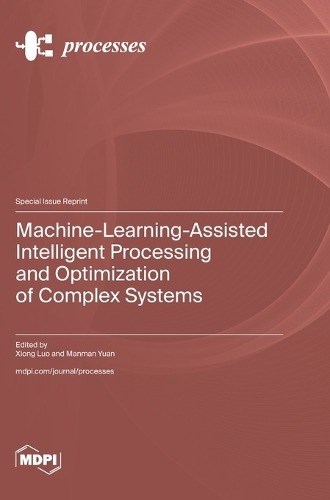
Machine-learning-assisted intelligent processing and optimization of complex systems
Focuses on the most recent developments in intelligent optimization methods and their applications in various test cases. The reprint covers various topics, including distributed multiagent modeling, metaheuristic algorithms, multisource data fusion, mobile computing and mobile sensing, machine learning-based intelligent processing for modeling complex manufacturing systems, and data-driven intelligent modeling
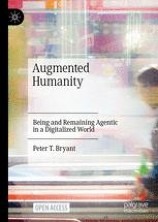
Augmented Humanity : Being and Remaining Agentic in a Digitalized World
This book will examine the implications of digitalization for the understanding of humanity, conceived as a community of intelligent agency. It addresses important topics across a range of social and behavioral theories and identifies a range of novel mechanisms and their social behavioral effects. Across the book, the author highlights the expansion of intelligent processing capability brought about by digitalization and the challenges this exposes for integrating artificial and human capabilities
