



Page 1
Page 1

Nutrition and Gastrointestinal Disease
Nutritional support of people with gastrointestinal impairment is critical to treatment and ultimately successful management. As such, gastroenterologists should be experts in nutrition and knowledgeable about the affects of nutrition on disease management. Nutritional and Gastrointestinal Disease fulfills that need, serving as a hands-on, practical reference in nutrition support for the clinical gastroenterologist and other clinicians with similar interests. The volume offers expert nutritional knowledge and management ideas as well as methodology for combating problems such as short bowel syndrome, inflammatory bowel disease, celiac disease and obesity. Renowned authorities also investigate nutrition’s influence on such issues as liver failure and acute pancreatitis. While gastroenterology training programs around the world remain deficient in their nutrition curriculum, Nutritional and Gastrointestinal Disease provides a comprehensive and groundbreaking support for clinical gastroenterologists.

Memories : Molecules and Circuits
This volume surveys the recent advances and provides an integrative view of molecular, cellular, and systems level mechanisms underlying cognitive processes in both animals and humans. Current state of the art and future avenues are discussed by distinguished scientists who provide not only an overview of the underlying neurobiology of cognitive processes from a basic science standpoint, but who also focus on clinical and therapeutic aspects surrounding impairments associated with disorders that affect cognition.
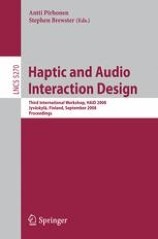
Haptic and Audio Interaction Design ; 3rd International Workshop, HAID 2008 Jyväskylä, Finland, September 15-16, 2008 Proceedings
This book constitutes the refereed proceedings of the Third International Workshop on Haptic and Audio Interaction Design, HAID 2008 held in Jyväskylä, Finland, in September 2008.The 13 revised full papers presented were carefully reviewed and selected for inclusion in the book. The papers are organized in topical sections on visual impairment, applications of multimodality, evaluation, conceptual integration of audio and haptics, interaction techniques, and perception.

Handbook of nutrition and ophthalmology
The Handbook of Nutrition in Ophthalmology is the first general text on nutrition and eye health created for physicians, nutritionists, and researchers. Dr. Richard D. Semba provides important links between the epidemic of obesity and implications it has for eye disease and blindness. The volume addresses three broad themes throughout. The first is that a healthy diet as a major lifelong habit will likely have an impact on reducing a substantial portion of visual impairment and blindness. The second is that a historical perspective is essential to understanding current challenges in ophthalmology, medicine, and public health. The third theme is that many nutrients play a role in oxidative stress and inflammation, and this theory has emerged as a major underlying hypothesis in the pathogenesis of eye diseases.

Fundamentals of clinical research : Bridging medicine, statistics and operations
The scope of clinical research is to evaluate the effect of a treatment on the evolution of a disease in the human species.The treatment can be pharmacological, surgical, psychological/behavioral or organizational/logistic. The disease, intended as an impairment of a state of well-being or a condition capable of provoking such impairment over time, can be universally accepted as such (e.g. a cancer or a bone fracture) or perceived as such only by limited groups of individuals in a given cultural context (e.g. hair loss or weight gain). The course of the disease that ones wishes to change can be the one with no intervention or, more frequently, the one observed with the available treatment. The evaluation of the effect of a treatment on the course of a disease is a lengthy process, which progresses in increasingly complex stages.
First Responder's Guide to Abnormal Psychology : Applications for Police, Firefighters and Rescue Personnel
Natural disasters. Hostage situations. Terror attacks. During these and other emergency situations, first responders make split-second judgments: evaluating risks, identifying dangerous conditions, and—often the hardest job of all—attending to those distressed and disturbed by their ordeal. First Responder's Guide to Abnormal Psychology gives readers critical insights into the human impact of extreme trauma, and the various levels of mental impairment suffered by both victims and survivors. Renowned trauma experts William Dorfman and Lenore Walker give this book immediate relevance through the use of real-life examples from a wide range of crisis situations. They have also deliberately minimized research citations within the text for greater readability.
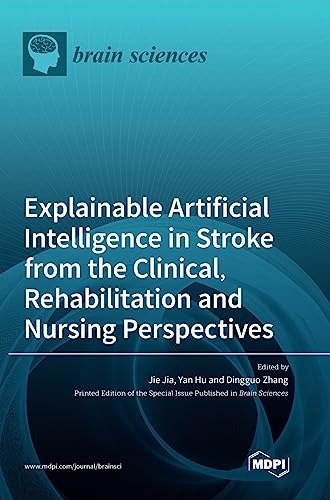
Explainable artificial intelligence in troke from the clinical, rehabilitation and nursing perspectives
As we know, strokes are one of the world's leading causes of death, and the cruel aspect of a stroke is that it leaves people with severe functional disability and/or cognitive impairment. Strokes have a significant impact on economies worldwide, as it is estimated that about 10% of the male population and 8% of the female population are affected by them. Such people need personal help in their everyday life and must be materially supported by social services. With the advancement of medicine, artificial intelligence, and new technologies have been developing rapidly and are gradually applied in diseases of the nervous system, increasingly helping diagnosis, treatment, rehabilitation, and prognosis of disease.
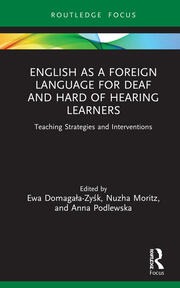
English as a foreign language for Deaf and hard of hearing learners : Teaching strategies and interventions
The chapters cover a wide range of interventions and strategies including early education teaching strategies, using sign -bilingualism in the classroom, enhancing oral communication, speech visualization, improving pronunciation, using films and cartoons, lip reading techniques, written support, and harnessing writing as a memory strategy.

Eldercare Technology for Clinical Practitioners
Eldercare Technology: A Handbook for Practitioners addresses technologies targeted at the assessment, early detection and the mitigation of common geriatric conditions including decline in functional abilities, gait, mobility, sleep disturbance, vision impairment, hearing loss, falls, and cognitive decline.

Disability, Health and Human Development
Introduces the human development model to define disability and map its links with health and wellbeing, based on Sen’s capability approach. The author uses panel survey data with internationally comparable questions on disability for Ethiopia, Malawi, Tanzania and Uganda. It presents evidence on the prevalence of disability and its strong and consistent association with multidimensional poverty, mortality, economic insecurity and deprivations in education, morbidity and employment. It shows that disability needs to be considered from multiple angles including aging, gender, health and poverty. Ultimately, this study makes a call for inclusion and prevention interventions as solutions to the deprivations associated with impairments and health conditions.

Diabetes mellitus and bacterial and fungal urinary tract infection
Diabetes mellitus is a heterogeneous group of disorders characterized by variable degrees of insulin resistance, impaired insulin secretion, and increased glucose production. Patients with type 2 diabetes mellitus are at increased risk of infections, with the urinary tract being the most frequent infection site. Various impairments in the immune system, in addition to poor metabolic control of diabetes, and incomplete bladder emptying due to autonomic neuropathy, may all contribute in the pathogenesis of urinary tract infections (UTI) in diabetic patients. Factors that were found to enhance the risk for UTI in diabetics include age, metabolic control, and long-term complications, primarily diabetic nephropathy and cystopathy. The spectrum of UTI in these patients ranges from asymptomatic bacteriuria (ASB) to lower UTI (cystitis), pyelonephritis, and severe urosepsis.
Computers Helping People with Special Needs ; 10th International Conference, ICCHP 2006, Linz, Austria, July 11-13, 2006, Proceedings
This book constitutes the refereed proceedings of the 10th International Conference on Computers Helping People with Special Needs, ICCHP 2006, held in Linz, Austria, in July 2006. The papers evaluate how various fields in computer science can contribute to helping people with various kinds of disabilities and impairment.

Clinical Pathways in Stroke Rehabilitation : Evidence-based Clinical Practice Recommendations
This book focuses on practical clinical problems that are frequently encountered in stroke rehabilitation. Consequences of diseases, e.g. impairments and activity limitations, are addressed in rehabilitation with the overall goal to reduce disability and promote participation.
Management of Erectile Dysfunction in Clinical Practice
Management of Erectile Dysfunction in Clinical Practice is a concise and practical guide to erectile dysfunction (ED) and its management. The book covers normal function and dysfunction, assessment, treatment options and interventions. Since ED is a symptom, not a disease the underlying causes such as hypertension, coronary artery disease, diabetes, chronic renal impairment, chronic arthritis, chronic alcoholism, multiple sclerosis are looked at.
Longevity and Frailty
Contained in this book are the outcome of a colloquium sponsored by Fondation IPSEN in which interdisciplinary perspectives were brought to bear on conceptual, empirical and clinical aspects of this relationship. The result is a unique, innovative and timely blend of papers on topics ranging from frailty concepts in animal models and early Homo sapiens, to documentation of progress in morbidity compression, on the relationships between frailty and impairments and inflammation, and perspectives on long-term health care needs in an aging world.
Changing Television Environments ; 6th European Conference, EUROITV 2008, Salzburg, Austria, July 3-4, 2008 Proceedings
This book constitutes the refereed proceedings of the 6th European Conference on Interactive Television, EuroITV 2008, held in Salzburg, Austria, in July 2008.

Chamomile & insulin nasal spray in the treatment of Alzheimer's disease
Chamomile is one of the most widely used herbs in Western countries, in the present study, we assessed the effect of chamomile combined with insulin on the learning and memory impairments (Alzheimer's disease) induced by scopolamine. The cognition-enhancing effect of chamomile & insulin was investigated using the Y-maze test. Drug-induced amnesia was induced by treating animals with scopolamine. Mix solution administration intranasally reversed scopolamine induced cognitive impairments in mice by the Y-maze test. Moreover, results suggest that the combination of both chamomile and insulin may be a useful cognitive impairment treatment, and its beneficial effects are mediated, in part, via inhibitory effects in vivo on the release of several pro-inflammatory mediators and as a co-absorbent.

Adverse Food Reaction
Adverse food reaction is a broad term indicating a link between an ingestion of a food and an abnormal response. Adverse reactions to foods, aside from those considered toxic, are caused by a particular individual intolerance towards commonly tolerated foods. Intolerance derived from an immunological mechanism is referred to as Food Allergy, the non-immunological form is called Food Intolerance. IgE-mediated food allergy is the most common and dangerous type of adverse food reaction. It is initiated by an impairment of normal Oral Tolerance to food in predisposed individuals (atopic). Food allergy produces respiratory, gastrointestinal, cutaneous and cardiovascular symptoms but often generalized, life-threatening symptoms manifest at a rapid rate-anaphylactic shock.
