



Page 1
Page 1

Modern treatments for chronic blood diseases
Blood is a body fluid in humans and other animals that delivers necessary substances such as nutrients and oxygen to the cells and transports metabolic waste products away from those same cells. In vertebrates, it is composed of blood cells suspended in blood plasma. Plasma, which constitutes 55% of blood fluid, is mostly water (92% by volume), and contains proteins, glucose, mineral ions, hormones, carbon dioxide (plasma being the main medium for excretory product transportation), and blood cells themselves. Albumin is the main protein in plasma, and it functions to regulate the colloida osmotic pressure of blood. The blood cells are mainly red blood cells (also called RBCs or erythrocytes), white blood cells (also called WBCs or leukocytes) and platelets (also called thrombocytes). Thalassemias are inherited blood disorders characterized by decreased hemoglobin production Symptoms depend on the type and can vary from none to severe. Often there is mild to severe anemia (low red blood cells or hemoglobin). Anemia can result in feeling tired and pale skin. There may also be bone problems, an enlarged spleen, yellowish skin, and dark urine. Slow growth may occur in children.

Gene Therapy for Cancer
The possibility of treating cancer, a disease defined by genetic defects, by introducing genes targeting these very alterations has led to an immense interest in gene therapy for cancer. Although incremental successes have been realized, enthusiasm for gene therapy has declined due to an increasing number of obstacles. These obstacles include vector systems that do not reach systemic metastases, therapeutic genes with redundant mec- nisms allowing for cellular resistance, and toxicities in clinical trials leading to premature closure of these studies. Different tactics to overcome or circumvent these obstacles have catalyzed the development of a wide range of gene therapy approaches. Thus far, almost two-thirds of gene therapy trials have focused on cancer. This reflects the concept that gene therapy approaches for the treatment of cancer do not necessarily require long-term expression of the gene as is necessary for the treatment of primary genetic defects like hemophilia or juvenile diabetes.
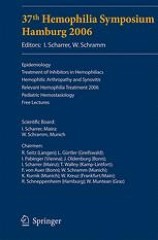
37th Hemophilia Symposium ; Epidemiology : Treatment of Inhibitors in Hemophiliacs ; Hemophilic Arthropathy and Synovitis ; Relevant Hemophilia Treatment 2006 ; Pediatric Hemostasiology; Free Lectures
This book contains the contribution to the 37th Hemophilia Symposium, Hamburg 2006. The main topics are epidemiolgy, treatment of inhibitors in hemophiliacs, hemophilic arthropathy and synovitis, relevant hemophilia treatment 2006, and pediatric hemostasiology.

36th Hemophilia Symposium Hamburg 2005 ; Epidemiology ; Hemophilia Therapy - Management of Bleedings and Inhibitors ; Orthopedic Treatment in Hemophiliacs ; Hemostaseologic Diagnosis; Pediatric Hemostaseology ; Free Lectures
This book contains main topics are epidemiolgy, hemophilia therapy, orthopedic treatment in hemophiliacs, hemostaseologic diagnosis and pediatric hemostaseology. The volume is rounded off by numerous free papers and posters on hemophilia, inhibitors in hemophilia and diagnostics.
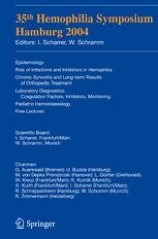
35th Hemophilia Symposium Hamburg 2004 ; epidemiology ; risk of infections and inhibitors in hemophilia ; chronic lic synovitis and long-term results of orthopedic treatment ; laboratory diagnostics : coagulation factors ; inhibitors, monitoring ; pediatric hemostaseology ; Free Lectures
Motion analysis as introduced 2 years ago on a national basis effectively identifies individual functional disorders and provides a means for describing them on the basis of a score. Individual therapy planning is possible. More treatment tends to produce better function scores and thus helps to lower the strain on the joint.

34th Hemophilia symposium Hamburg 2003 ; HIV infection and epidemiology ; Management of bleedings in hemophiliacs with inhibitors ; orthopedic problems and therapy in hemophiliacs ; Therapy with protein C ; Pediatric Hemostaseology ; Free Lectures
This book contains the contributions to the 34th Hemophilia Symposium, Hamburg 2003. The main topics are HIV infection and epidemiology, management of bleedings in hemophiliacs with inhibitors, orthopedic problems and therapy in hemophiliacs, therapy with protein C and pediatric hemostaseology. The volume is rounded off by numerous free papers and posters on hemophilia, hemophiliacs with inhibitors, thrombophilia and molecular diagnostics.
