



Page 1
Page 1

Novel food grade enzymes : Applications in food processing and preservation industries
Covers all the aspects of food-grade enzymes, including their classification, kinetics, microbial production, biosynthetic pathways, commodity-wise industrial applications, and downstream processing strategies. The broad focus of this book is on the application of various classes of enzymes in dairy, fruits and vegetables, cereals and oilseeds, meat and poultry, and brewing and food packaging industries. Certain recent areas such as nanotechnological perspective in enzyme immobilization, infusion strategies as well as its efficient usage in food packaging and preservation are some of the salient highlights of this book. This book also discusses the aspects related to application of enzymes in functional food development and shelf life extension of various commodities food products.

Modern Food Microbiology
With 30 revised and updated chapters, the new edition of this classic text brings benefits to professors and students alike who will find new sections on proteobacteria, bottled water, food sanitizers (eletrolyzed oxidating water, ozone, chlorine, activin, chitosans, endolysins, etc.), bicontrol, biosensors quorum sensing, molecular genetic methods of analysis, food safety objectives, noroviruses, and prions. The book builds on the trusted and established sections on food preservation by modified atmosphere, high pressure and pulsed electric field processing, food-borne pathogens, food regulations, fresh-cut produce, new food products, and risk assessment and analysis. In-depth references, appendixes, illustrations, index and thorough updating of taxonomies make this an essential for every food scientist.

Inflammation and natural products ; 1st ed.
Brings together research in the area of the natural products and their anti-inflammatory action in medical, nutraceutical and food products, addressing specific chronic inflammatory diseases like cancer and the mechanistic aspects of the mode of action of some key natural products. Inflammation is a complicated process, driven by infection or injury or genetic changes, which results in triggering signalling cascades, activation of transcription factors, gene expression, increased levels of inflammatory enzymes, and release of various oxidants and pro-inflammatory molecules in inflammatory cells. Excessive oxidants and inflammatory mediators have a harmful effect on normal tissue, including toxicity, loss of barrier function, abnormal cell proliferation, inhibiting normal function of tissues and organs and finally leading to systemic disorders. The emerging development of natural product formulations utilizing the unique anti-inflammatory compounds such as polyphenols, polysaccharides, terpenes, fatty acids, proteins and several other bioactive components has shown notable successes.

Global regulations of medicinal, pharmaceutical, and food products
Medicine regulation demands the application of sound medical, scientific, and technical knowledge and skills, and operates within a legal framework. Regulatory functions involve interactions with various stakeholders (e.g., manufacturers, traders, consumers, health professionals, researchers, and governments) whose economic, social, and political motives may differ, making implementation of regulation both politically and technically challenging. This book discusses regulatory landscape globally and the current global regulatory scenario of medicinal products and food products comprehensively.

Food Materials Science : Principles and Practice
Food manufacture is about producing billions of units of standardized products which must be cheap, nutritious, safe and appealing to the consumer’s taste. Food products are complex multicomponent and structured edible materials that nevertheless must comply with the laws of physics and fundamentals of engineering sciences. In the last 20 years the design of food products with specific functionalities has advanced significantly by the application of scientific knowledge from disciplines such as polymer physics, colloidal and mesoscopic physics, materials science and new imaging and probing techniques borrowed from chemistry, biology and medicine. Our knowledge of the relationship between microstructure, processing, and macroscopic properties continues to increase as the science of food materials advances at a fast pace.

Food irradiation
Treatment of food by specific ionizing radiations to improve microbiological safety and storability is one of the most extensively studied technology of the XXth century. However, much of the research has been carried out in laboratories and it is still relatively underutilized commercially. Its application potential is very diverse, from inhibition of sprouting of tubers and bulbs to production of commercially sterile food products. The safety of consumption and wholesomeness of irradiated food have been extensively studied in international cooperations. Numerous international expert groups set up jointly by the FAO, the IAEA and the WHO, or the Scientific Committee on Food of the European Commission concluded that foods irradiated with appropriate technologies are both safe and nutritionally adequate. A Codex General Standard for Irradiated Foods and a Recommended International Code of Practice for Radiation Processing of Food have been developed.

Development of trans-free lipid systems and their use in food products
Encompasses the work of leading researchers discussing, from a scientific and technological perspective, the latest and most innovative approaches to structure edible oils without the use of trans fats. Additionally, the authors discuss practical uses and technical limitations associated with the use of "structured edible oils" in different food systems. Appealing to researchers and professionals working in lipid science, food chemistry and fat metabolism, it fills the gap in the literature for a book in this fast-changing field.
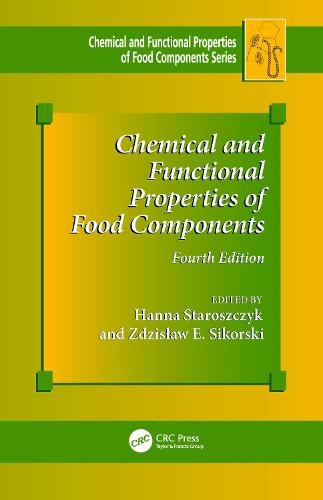
Chemical and functional properties of food components
Described the contents of food raw materials and products, the chemistry/biochemistry of food components, as well as the changes occurring during post-harvest storage and processing affecting the quality of foods. Discusses the role of chemical compounds in the structure of raw materials and the formation of different attributes of food quality, including nutritional value, safety, and sensory properties. It contains four new chapters: “Non-Protein Nitrogenous Compounds”; “Prooxidants and Antioxidants in Food”; “Non-Nutritive Bioactive Compounds in Food of Plant Origin”; and “Analytical Methods Used for Assessing the Quality of Food Products.”
Bioactive components of milk
Of all food products dairy foods have the most potential concerning functional foods. Therefore, there is a tremendous amount of interest in value-added milk products and the identification of components in food which have health benefits. Bioactive Components of Milk provides an overview of these derived components and their diverse activities including: the stimulation of beneficial microflora, alerting the immune system to the presence of potential pathogens and allergens, binding and eliminating toxins, etc. The book is divided into four parts. The first part focuses on bioactive milk lipid components, which very widely among mammalian species. The second part describes different aspects of biological active colostrums and milk proteins and their derivatives, with special concern on species specific effects. The third part reviews the production of recombinant human proteins in the milk of livestock animals - including ethical issues - and the aims of altering milk composition for the benefit of both the animals themselves and the consumers. The final part focuses on the influence of ruminants nutrition on the biological activity of milk.
Aquaculture in the Ecosystem
This book provides a scientific forecast of the development in aquaculture with a focus on the environmental, technological, social and economic constraints that need to be resolved to ensure sustainable development of the industry and allow the industry to be able to feed healthy seafood products to the future generations. The chapters included discuss the most critical bottlenecks of the development encompassing subjects of understanding the environmental impacts, the current state-of-art in monitoring programs and in coastal zone management, the important interactions between wild and cultured organisms including release of non-native species into the wild, the current trends within the development of aquafeeds along with human health aspects as well as the political, socio-economic and economic trends within the industry including a chapter on approaches taken by Non Governmental Organisations (NGOs) to aquaculture. Finally the last chapter provides different future scenarios of the industry based on the identified bottlenecks.
Agricultural Implications of the Fukushima Nuclear Accident : The First Three Years
Consists of various topics, including radioactivity inspection of food products; decontamination trials for rice and livestock production; the state of contamination in wild animals and birds, trees, mushrooms, and timber; the dynamics of radioactivity distribution in mountain and paddy fields; damage incurred by the forestry and fishery industries; and the change in consumers’ minds. The last chapter introduces a real-time radioisotope imaging system, the forefront technique to visualize actual movement of cesium in soil and in plants. This is the only book to provide systematic data about the actual change of radioactivity, and thus is of great value for all researchers who wish to understand the effect of radioactive fallout on agriculture.

Agricultural Implications of the Fukushima Nuclear Accident (III)
Reports on studies undertaken at contaminated sites such as farmland, forests, and marine and freshwater environments, with a particular focus on livestock, wild plants and mushrooms, crops, and marine products in those environments. It also provides additional data collected in the subsequent years to show how the radioactivity levels in agricultural products and their growing environments have changed with time and the route by which radioactive materials entered agricultural products as well as their movement between different components (e.g., soil, water, and trees) within an environmental system (e.g., forests). The book covers various topics, including radioactivity testing of food products; decontamination trials for rice and livestock production; the state of contamination in, trees, mushrooms, and timber; the dynamics of radioactivity distribution in paddy fields and upland forests; damage incurred by the forestry and fishery industries; and the change in consumers’ attitudes. Chapter 19 introduces a real-time radioisotope imaging system, a pioneering technique to visualize the movement of cesium in soil and in plants.
