



Page 1
Page 1

Modern Biogeochemistry : Environmental Risk Assessment
At present, quantitative ecological risk assessment is widely used in different contexts, however very often without an understanding of the natural mechanisms that drive the processes of environmental and human risk. Its application is often accompanied by high uncertainty about risk values. On the other hand, the sustainability of modern technoecosystems is known because of their natural biogeochemical cycling that has been transformed to various extents by anthropogenic studies. Accordingly our understanding of the principal mechanisms that drive the biogeochemical food webs allows us to present a quantitative ecological risk assessment and to propose technological solutions for management of various ERA enterprises. It also enables us to devise a powerful mechanism for ecological insurance, to assign responsibilities and protect rights while managing the control of damage from natural and anthropogenic accidents and catastrophes.

From Energetics to Ecosystems : the Dynamics and Structure of Ecological Systems
Ecosystems are complex and enigmatic entities that are ultimately our life support systems. Understanding these systems to the point of being able to predict their behaviour in the face of perturbations requires that researchers adopt a number of strategies that vary in both approach and scale. This book, in a sense, is representative of some of the developments that have unfolded when math and physics met ecology. Here, some of the world’s leading ecologists examine ecosystems from theoretical, experimental, and empirical viewpoints, from energetics to ecosystems. The book begins with simplifying and synthesizing nature’s complex relationships. It then moves on to explore the mapping between food web structure and function and ends with the role of theory in integrating different research areas. From the breadth of systems analyzed to the rigor of approaches taken, this book is not only a useful resource for students and researchers in ecology, but also serves as a fitting tribute to the life and work of Peter Yodzis.
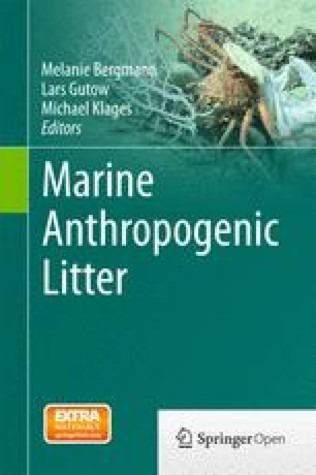
Marine Anthropogenic Litter
This book describes how man-made litter, primarily plastic, has spread into the remotest parts of the oceans and covers all aspects of this pollution problem from the impacts on wildlife and human health to socio-economic and political issues. Marine litter is a prime threat to marine wildlife, habitats and food webs worldwide. The book illustrates how advanced technologies from deep-sea research, microbiology and mathematic modelling as well as classic beach litter counts by volunteers contributed to the broad awareness of marine litter as a problem of global significance. The authors summarise more than five decades of marine litter research, which receives growing attention after the recent discovery of great oceanic garbage patches and the ubiquity of microscopic plastic particles in marine organisms and habitats.
