



Page 1
Page 1

Nonlinear H2/H-Infinity Constrained Feedback Control : A Practical Design Approach Using Neural Networks
In this book the authors present algorithms for H2 and H-infinity design for nonlinear systems which, unlike earlier theories, provide solution techniques for the core Hamilton–Jacobi equations that yield control systems which can be implemented in real systems; neural networks are used to solve the nonlinear control design equations.

Modern Control Systems ; 14th ed.
Written to be equally useful for all engineering disciplines, this text is organized around the concepts of control systems theory in the context of frequency and time domains. It provides coverage of both classical and modern methods of control engineering to give students a strong foundation in basic principles that they can utilize to explore advanced topics in later chapters. Emphasis is placed on real-world complex control systems and practical design applications as well as evolving design strategies like green engineering and human-centered design. Problem solving is strongly emphasized, with an abundance of problems of increasing complexity that help students learn to apply theory to computer-aided design and analysis concepts using MATLAB® and LabVIEW MathScript.

Modern Control Systems ; 13th ed.
Presents the structure of feedback control theory and to provide a sequence of exciting discoveries. The book demonstrates various real-world, global engineering problems while touching on evolving design strategies like green technology. Some of the themes at-hand include climate change, clean water, sustainability, waste management, emissions reduction, and minimizing energy. Throughout the text, students apply theory to the design and analysis of control systems.

Modeling, Control and Implementation of Smart Structures : A FEM-State Space Approach
This monograph presents an introductory overview of smart structures, their concepts, their active involvement in the vibration control, their applications and the extensive research work done on it so far. The modelling of flexible beams using two types of beam theories, viz., the Euler-Bernoulli theory and the Timoshenko beam theory is presented, including a new concept of finite element modeling of the flexible structures using Timoshenko beam theory with the inclusion of the shear both in the piezo-patches as well as in the host structure. It presents the design of the periodic output feedback control system for smart structure systems, the design of the FOS controllers for active vibration control and the design of Discrete Sliding Mode controllers using multirate output feedback technique.

Model Abstraction in Dynamical Systems : Application to Mobile Robot Control
The subject of this book is model abstraction of dynamical systems. The p- mary goal of the work embodied in this book is to design a controller for the mobile robotic car using abstraction. Abstraction provides a means to rep- sent the dynamics of a system using a simpler model while retaining important characteristics of the original system. A second goal of this work is to study the propagation of uncertain initial conditions in the framework of abstraction. The summation of this work is presented in this book.

Mechanical Wave Vibrations: Analysis and Control
Delivers an expert discussion of the wave analysis approach (as opposed to the modal-based approach) to mechanical vibrations in structures. The book begins with deriving the equations of motion using the Newtonian approach based on various sign conventions before comprehensively covering the wave vibration analysis approach. It concludes by exploring passive and active feedback control of mechanical vibration waves in structures.

H-infinity control for nonlinear descriptor systems
The authors present a study of the H-infinity control problem and related topics for descriptor systems, described by a set of nonlinear differential-algebraic equations. They derive necessary and sufficient conditions for the existence of a controller solving the standard nonlinear H-infinity control problem considering both state and output feedback. One such condition for the output feedback control problem to be solvable is obtained in terms of Hamilton–Jacobi inequalities and a weak coupling condition; a parameterization of output feedback controllers solving the problem is also provided. All of these results are then specialized to the linear case. The derivation of state-space formulae for all controllers solving the standard H-infinity control problem for descriptor systems is proposed. Among other important topics covered are balanced realization, reduced-order controller design and mixed H2/H-infinity control.

Hard Disk Drive Servo Systems
The second edition of this monograph provides a systematic treatment of the design of modern hard disk drive servo systems updated with the latest research results to reflect recent improvements in spindle speed and bit density and other changes in this fast-moving field. In particular, it focuses on the applications of some newly developed results in control theory, i.e., robust and perfect tracking control and composite non-linear feedback control which are suitable for track following and seeking respectively. Emphasis is placed on hard disk drive servo systems with single- or dual-stage actuation using a voice-coil-motor actuator enhanced in the latter case by the addition of a micro-actuator providing faster responses and therefore higher bandwidth in track following. Other issues such as modeling and compensation of nonlinearities and friction in microdrives, disturbance rejection and resonance compensation are also addressed.

Fast Motions in Biomechanics and Robotics : Optimization and Feedback Control
In the past decades, much progress has been made in the field of walking robots. The current state of technology makes it possible to create humanoid robots that nearly walk like a human being, climb stairs, or avoid small - stacles. However, the dream of a robot running as fast and as elegantly as a human is still far from becoming reality. Control of such fast motions is still a big technological issue in robotics, and the maximum running speed of contemporary robots is still much smaller than that of human track runners. The conventional control approach that most of these robots are based on does not seem to be suitable to increase the running speeds up to a biological level.

Dissipative Systems Analysis and Control : Theory and Applications
Dissipative Systems Analysis and Control (second edition) presents a fully revised and expanded treatment of dissipative systems theory, constituting a self-contained, advanced introduction for graduate students, researchers and practising engineers. It examines linear and nonlinear systems with examples of both in each chapter; some infinite-dimensional examples are also included. Throughout, emphasis is placed on the use of the dissipative properties of a system for the design of stable feedback control laws. The theory is substantiated by experimental results and by reference to its application in illustrative physical cases (Lagrangian and Hamiltonian systems and passivity-based and adaptive controllers are covered thoroughly).

Digital Human Modeling : Trends in Human Algorithms
The emerging information technologies have given rise to new human patterns in terms of both physiological and psychological interactions. Human Algorithms aim to model human forms, interactions, and dynamics in this new context.

Decoupling Control
Decoupling or non-interactive control has attracted considerable research attention since the 1960s when control engineers started to deal with multivariable systems. The theory and design techniques for decoupling control have now, more or less matured for linear time-invariant systems, yet there is no single book which focuses on such an important topic. The present monograph fills this gap by presenting a fairly comprehensive and detailed treatment of decoupling theory and relevant design methods. Decoupling control under the framework of polynomial transfer function and frequency response settings, is included as well as the disturbance decoupling problem. The emphasis here is on special or relatively new compensation schemes such as (true and virtual) feedforward control and disturbance observers, rather than use of feedback control alone. The results are presented in a self-contained way and only the knowledge of basic linear systems theory is assumed of the reader.
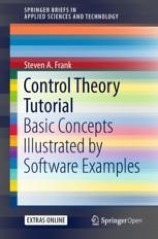
Control Theory Tutorial : Basic Concepts Illustrated by Software Examples
Introduces the basic principles of control theory in a concise self-study guide. It complements the classic texts by emphasizing the simple conceptual unity of the subject. A novice can quickly see how and why the different parts fit together. The concepts build slowly and naturally one after another, until the reader soon has a view of the whole. Each concept is illustrated by detailed examples and graphics. The full software code for each example is available, providing the basis for experimenting with various assumptions, learning how to write programs for control analysis, and setting the stage for future research projects. The topics focus on robustness, design trade-offs, and optimality. Most of the book develops classical linear theory. The last part of the book considers robustness with respect to nonlinearity and explicitly nonlinear extensions, as well as advanced topics such as adaptive control and model predictive control.

Control of Singular Systems with Abrupt Changes
In this book many problems like stochastic stability, stochastic stabilization using state feedback control and static output control, Hinfinity control, filtering, guaranteed cost control and mixed H2/Hinfinity control and their robustness are tackled.

Control Design Techniques in Power Electronics Devices
The book is introduced through the very important topic of modeling switched power electronics as controlled dynamical systems. Detailed circuit layouts, schematics and actual closed-loop control responses from a representative group of the plants under discussion and generated by applying the theory are included. The control theories which feature in the book are: sliding mode control and feedback control by means of approximate linearization (linear state feedback, static and dynamic proportional-integral-differential (PID control), output feedback trough observer design, Lyapunov-based control and passivity-based control). Nonlinear control design methods represented include: exact feedback linearization, input-output linearization, differential flatness, generalized PID control and, again, passivity-based control.

Collective Phenomena in Synchrotron Radiation Sources : Prediction, Diagnostics, Countermeasures
This book helps to dispel the notion that collective phenomena, which have become increasingly important in modern storage rings, are an obscure and inaccessible topic. Despite an emphasis on synchrotron light sources, the basic concepts presented here are valid for other facilities as well. Graduate students, scientists and engineers working in an accelerator environment will find this to be a systematic exposition of the principles behind collective instabilities and lifetime-limiting effects. Experimental methods to identify and characterize collective effects are also surveyed. Among other measures to improve the performance of a projected or existing facility, a detailed account of feedback control of instabilities is given.

Magnetic Control of Tokamak Plasmas
The main topic of Magnetic Control of Tokamak Plasmas is the design of feedback control systems guaranteeing the stability of plasma equilibrium inside a tokamak and the regulation of the plasma position and shape during plasma pulses. Modelling and control details are presented, allowing the non-expert to understand the control problem. Starting from equations of magneto-hydro-dynamics, all the steps needed for the derivation of plasma state-space models are enumerated. The basics of electromagnetics are frequently recalled. The control problem is then described beginning with control of current and position – vertical and radial – and progressing to the more challenging shape control. The solutions proposed vary from simple PIDs to more sophisticated MIMO controllers.
Advances in Electrical and Computer Technologies ; Select Proceedings of ICAECT 2019
Contains the papers presenting the latest developments in the areas of Electrical, Electronics, Communication systems and Computer Science such as smart grids, soft computing techniques in power systems, smart energy management systems, power electronics, feedback control systems, biomedical engineering, geo informative systems, grid computing, data mining, image and signal processing, video processing, computer vision, pattern recognition, cloud computing, pervasive computing, intelligent systems, artificial intelligence, neural network and fuzzy logic, broad band communication, mobile and optical communication, network security, VLSI, embedded systems, optical networks and wireless communication.
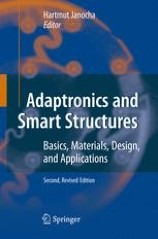
Adaptronics and Smart Structures : Basics, Materials, Design, and Applications
Adaptronic structures and systems can adapt automatically to variable operating and environmental conditions through the use of feedback control. But in contrast to conventional control loops, in which each function is fulfilled by a separate component, adaptronics is characterized by multifunctional components that are preferably integrated into the structure or the system. The goal is a lightweight and simple construction for conserving material and energy resources. The authors of this book have taken on the task of displaying the current state of the art in this highly modern and strongly interdisciplinary field. Selected application examples are also presented and current development trends demonstrated.
