



Page 1
Page 1

Nitrogen Cycling in the Americas : Natural and Anthropogenic Influences and Controls
The rate of creation of reactive nitrogen (NR) on the earth has dramatically increased in the last half century mainly due to the production of N-fertilizer through the Haber-Bosch process, fossil fuel combustion, and the cultivation of plants that fix N from the atmosphere. The anthropogenic production of NR has been especially high in developed countries of the temperate zone, such as the USA and Canada, where severe eutrophication of estuaries and coastal zones, acidification of lakes and streams, loss of biodiversity, and reduced forest productivity have become common environmental problems associated with increasing nitrogen loads to ecosystems. This book presents a series of studies from across the Americas whose aim is to highlight key natural processes that control nitrogen cycling as well as discuss the main anthropogenic influences on the nitrogen cycle in both the tropical and temperate regions of the Americas.

Eutrophication of Shallow Lakes with Special Reference to Lake Taihu, China
Eutrophication and algal blooms are worldwide environmental issues in lakes. The eutrophication process and formation mechanisms of algal blooms are particularly complicated in shallow lakes due to the strong lake–land, air–water and water–sediment interactions. This volume features papers presented at the International Symposium on the Eutrophication Process and Control in Large Shallow Lakes – with Special Reference to Lake Taihu, a Shallow Subtropical Chinese Lake, held in Nanjing, China, 22–26 April, 2005. The topics include: physical processes and their effects on shallow lake ecosystems; biogeochemistry of sediments and nutrient cycling in shallow lakes; algal blooms and ecosystem response in shallow lakes; eutrophication control and restoration in shallow lakes; and resource exploitation, environmental protection and sustainable management in shallow lakes.

Eutrophication Management and Ecotoxicology
This book aims to bridge the gap between ecotoxicology and limnology. The intended readers of the book are water managers, policy makers with a scientific background as well as researchers/advisors in the area of water management. The book provides an ecotoxicological perspective on lake management and describes eutrophication of shallow, temperate lakes. It surveys the influence of toxic substances (e.g., agricultural pesticides) on the aquatic ecosystem, especially the relation between algae and daphnids. The message of the book is that nutrients such as phosphorus are not the only important factor in explaining and managing eutrophication: toxic disturbance of to-down control is also an important factor to be considered. The results of extensive studies and experiments (some unpublished) on lake eutrophication are presented in this book.

Eutrophication in the Baltic Sea : Present Situation, Nutrient Transport Processes, Remedial Strategies
This book takes a holistic process-based ecosystem perspective on the eutrophication in the Baltic Sea, with a focus on the factors regulating how the system would respond to changes in nutrient loading. This includes a very special process for the Baltic Sea: land uplift. After being depressed by the glacial ice, the land is now slowly rising adding vast amounts of previously deposited nutrients and clay particles to the system.

European Large Lakes Ecosystem changes and their ecological and socioeconomic impacts
Large lakes offer socio-economic benefits and can be used in many ways, and are often areas in which economic, cultural and political interests overlap. In this book the problems regarding the present status of European large lakes and the directions of change are discussed. Threats caused by direct human impact and by climate change, protection needs and restoration measures are considered.

Environmental Effects of Marine Finfish Aquaculture
Environmental risks associated with large-scale marine finfish cage aquaculture have led to claims that the long-term sustainability of the industry is in doubt. Methods and models currently used to measure near and far-field environmental effects of finfish mariculture and to assess their implications for management are presented in 20 chapters arranged in four sections (Eutrophication, Sedimentation and Benthic Impacts, Changes in Trophic Structure and Function, and Managing Environmental Risks). Case studies show how models may be used to predict environmental changes and provide management tools to minimize potentially adverse environmental risks. The volume is of interest to those working towards sustainable development of mariculture, including environmental managers and decision-makers with regulatory responsibilities.

Ecology of Harmful Algae
Harmful algal blooms are one of the consequences of the human impact on aquatic ecosystems, particularly the process of eutrophication. They can cause a variety of deleterious effects, including the poisoning of fish and shellfish, habitat disruptions for many organisms, water discolouration, beach fouling, and even toxic effects for humans. This volume is a comprehensive synthesis of the latest research achievements concerning harmful algae (HA) ecology. International experts provide an in-depth analysis of HA topics including: global distribution, ecology of major HA groups, ecology and physiology of HA, HA and the food web, studying and mitigating HA, the human impact on HA and HA impact on human activity. This volume is an invaluable source of information for researchers in HA ecology as well as for advanced students, lecturers, and environmental managers.

Ecology of Baltic Coastal Waters
The Baltic Sea is one of the most investigated water bodies in the world. For decades, the many highly industrialised nations around the Baltic have financed basic and applied investigations, as well as the building and development of research stations and vessels. After World War II, research in the Baltic Proper was intensified and investi- tions became much more international. The main goals of such investigations were analysis of the eutrophication and pollution of the Baltic Sea, and development of mitigating strategies (e.g. the HELCOM-Program). In contrast, research into the coastal zones was carried out mainly under national sovereignty by individual governments due to differing political regimes. Consequently, there was a lack of international collaboration and publications regarding these regions. This changed following the collapse of the former socialist governments. Nevertheless, research activities in the coastal regions still lag behind those in the Baltic Proper. A general description is further hampered by the great variety of coastal water ecosystems. The aim of this book is to overcome this lack by presenting the important Baltic coastal zones in the form of “ecological case studies”. In this way the book rep- sents an important supplement to literature concerning the Baltic Proper.

Marine Eutrophication in Perspective : On the Relevance of Ecology for Environmental Policy
Is ecological knowledge relevant for environmental policy and if so, to what extent and in what way? These are some of the basic questions addressed in this book. Triggered by a series of oxygen depletion events in German, Danish and Swedish coastal waters at the beginning of the 1980s, international policies to reduce inputs of nitrogen and phosphorus to the North Sea were agreed upon by the North Sea states. The book provides a critical analysis of the role, scientists and scientific information, as well as civil servants, have played in the formulation and implementation of these decisions.
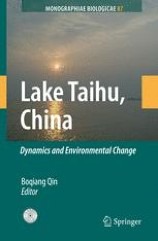
Lake Taihu, China : Dynamics and Environmental Change
There are many shallow lakes in the world. Many of them play an important socio-economic role as contributors to the drinking water supply, in flood attenuation, fisheries and recreation activities. Because of the current anthropogenic changes in the environment, such lakes rapidly respond to eutrophication and swamping. It is often hard to address these issues because many changes in the ecosystems of shallow lakes are associated with little studied physical processes. This interaction between the aquatic biota and the physical and chemical environment increases the complexity of shallow lake ecosystems. Lake Taihu, located in the delta of Yangtze River, is a typical large, shallow eutrophic lake with area of 2338 km2 and maximum depth of less than 3m . This book provides basic data on various aspects of this lake and summarizes research work on the interaction between its ecology and physical limnology. It will be a reference for teachers and students of freshwater ecology and biology, the aquatic environment in general, and, most strikingly, for all those interested in physical limnology.

Biological Invasions
This new volume on Biological Invasions deals with both plants and animals. It differs from previous books on the subject by extending from the level of individual species to an ecosystem and global level. Topics of highest societal relevance, such as the impact of genetically modified organisms, are interlinked with more conventional ecological aspects, including biodiversity. The combination of these approaches is new and makes compelling reading for researchers and environmentalists. The book’s 22 chapters cover a huge range of subjects relevant to the field. These include pathways of biological invasions (e.g. ballast water, waterways), traits of successful invaders (e.g. chemical weapons, empty niches), and patterns of invasion and invasibility, such as man-induced predisposition by fire, land use and eutrophication, and the role of climate change.
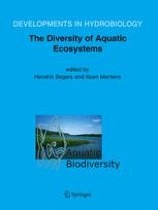
Aquatic Biodiversity II : The Diversity of Aquatic Ecosystems
The present book comprises a unique collection of primary research papers spanning a wide range of topics in aquatic biodiversity studies, and including a first global assessment of specific diversity of freshwater animals. The book also presents a section on the interaction between scientists and science policy managers
