



Page 1
Page 1

Nature by Design : The Practice of Biophilic Design
Describes the basic principles, practices, and options for successfully implementing biophilic design. He shows us what is—and isn’t—good biophilic design using examples of workplaces, healthcare facilities, schools, commercial centers, religious structures, and hospitality settings. This book will to appeal to architects, designers, engineers, scholars of human evolutionary biology, and—with more than one hundred striking images of designs—anyone interested in nature‑inspired spaces.

Natural building techniques : A guide to ecological methods and materials
Natural materials are increasingly being valued for their use in a wide range of techniques and solutions, not just for building cabins in the countryside, but also for housing, schools and city structures. As the need to respond to climate change becomes a serious requirement for all building projects, so too does our understanding of how these bio-based and renewable materials can help to reduce carbon emissions. With convincing evidence that natural materials work as well as, if not better than, conventional materials, this helpful guide offers an outline of many of the materials, products and methods of construction that are available, equipping readers with confidence to create healthy, ecological homes.
Molecular Biology of Metal Homeostasis and Detoxification : From Microbes to Man
One of the challenges faced by every cell as well as by whole organisms is to maintain appropriate concentrations of essential nutrient metals while excluding nonessential toxic metals. Toward that end, all organisms have developed mechanisms for metal homeostasis and detoxification to maintain metal levels within physiological limits. This book brings together current knowledge of the molecular basis of metal homeostasis and detoxification in various eukaryotic model systems, including yeasts, plants, and mammals. It focuses on the cellular systems controlling metal transport, intracellular distribution, and immobilization as well as on systems regulating metal-dependent transcription. In addition to environmental aspects (including phytoremediation), the book treats the pathophysiology of metal deficiency and overload in relation to disease.
Metals in Society and in the Environment : A Critical Review of Current Knowledge on Fluxes, Speciation, Bioavailability and Risk for Adverse Effects of Copper, Chromium, Nickel and Zinc
In 2002, the Swedish Metal Information Task Force (MITF) engaged the Environmental Research Group (MFG) to update previous monographs on copper, zinc and major alloying metals (such as chromium, nickel and molybdenum) in society and in the environment. This book presents new results on metal fluxes from society to the environment, on metal speciation in water, soil and sediment, and its interpretation in terms of mobility, biological uptake and toxicity. The scientific fundamentals of new approaches, like the Acid Volatile Sulphide (AVS) concept to predict metal bioavailability in sediments, and the Biotic Ligand Model (BLM) to calculate the toxicity of metals to aquatic organisms, are critically evaluated, with a focus on copper, nickel, zinc, and, in part, chromium.

International conference on terrain and geohazard challenges facing onshore oil and gas pipelines : Evaluation, routing, resign, construction, operation ; Proceedings of a three day international conference on terrain and geohazard challenges facing onshore oil and gas pipelines, organised by the Institution of Civil Engineers in association with BP Exploration and held at the Institution of Civil Engineers, London, UK, on 2 – 4 June 2004
To access global oil and gas deposits, major pipelines must traverse remote regions with extreme terrains. There are a significant number of pipeline projects, active or planned, in tropical jungles, mountains and deserts, in permafrost and in areas of wetland. Each of these natural environments is associated with a range of geohazards, which may include landslides, soil erosion, karst, river migration, and seismic or volcanic activity. At the same time, society demands increasing availability and reliability of supply, together with improved environmental standards, all making for substantial challenges.

Green Chemistry and Sustainable Technology : Biological, Pharmaceutical, and Macromolecular Systems
Taking an interdisciplinary approach, this new volume brings together innovative research, new concepts, and novel developments in the application of new tools in green chemistry and sustainable technology. The diverse coverage includes chapters on ionic liquids as green solvents, an environmentally friendly approach to the synthesis and biological evaluation of α-aminophosphonate derivatives, the application of nanotechnology in biological sciences and green chemistry, ecofriendly polymers, the effect of global warming and greenhouse gases on environmental system, and more.
Geoenvironmental Engineering : Geoenvironmental impact management ; Proceedings of the third conference organized by the British Geotechnical Association and Cardiff School of Engineering, Cardiff University, and held in Edinburgh on 17–19 September 2001
Geoenvironmental engineering contains the collected papers from the third Geoenvironmental Engineering Conference, organised by the British Geotechnical Association and Cardiff School of Engineering, Cardiff University. Authors from around the world have submitted the papers in this volume. They aim to share knowledge and experience to the international geoenvironmental engineering community. The main theme of this third conference is Geoenvironmental Impact Management.
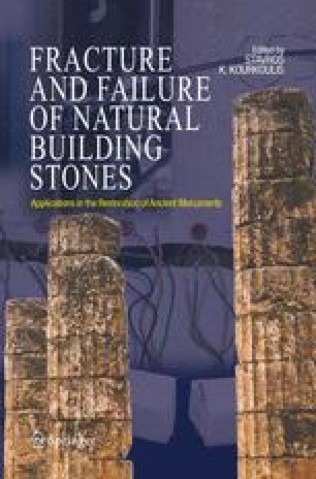
Fracture and Failure of Natural Building Stones : Applications in the Restoration of Ancient Monuments
The book consists of invited papers written by leading experts in the field. It contains original contributions concerning the latest developments in the fracture and failure of the natural building stones and their application in the restoration of ancient monuments. It covers a wide range of subjects - cluding purely mechanical aspects, physico-chemical approaches, appli- tions and case studies. The papers are arranged in two parts with a total of nine chapters. Part I is devoted to purely mechanical and structural aspects and applications, while Part II is devoted to the physico-chemical and environmental aspects including thermal effects.

Extinction governance, finance and accounting : Implementing a species protection action plan for the financial markets
The book presents plans, metrics, frameworks, mechanisms and financial innovations that can be, and are being, implemented through the financial markets in order to save and protect species, enhance biodiversity and, at the same time, preserve the financial markets and the business world.

Engineering Societies in the Agents World VI ; 6th International Workshop, ESAW 2005, Kusadasi, Turkey, October 26-28, 2005, Revised Selected and Invited Papers
ESAW 2005 took place at the Pine Bay Hotel in Kusadasi, Turkey at the end of the October 2005. It was organized as a stand-alone event as were ESAW 2004and ESAW 2003.Following the initial ESAW vision,which wasset in 1999, by the members of the working group on “Communication, Coordination and Collaboration” of Agentlink, ESAW 2005 continued to focus on the engineering of complex software systems in terms of multi-agent societies, especially the social and environmental aspects of such societies.

Designing sustainable and resilient cities : Small interventions for stronger urban food-water-energy management
Explores the link between the food-water-energy nexus and sustainability, and the extraordinary value that small tweaks to this nexus can achieve for more resilient cities and communities. Using data from Urban Living Labs in six participating cities (Eindhoven, Gdansk, Miami, Southend-on-Sea, Taipei and Uppsala) to co-define context-specific challenges, the results from each city are collated into an Integrated Decision Support System to guide and improve robust decision making on future urban development. The book presents contributions from CRUNCH, a transdisciplinary team of scholars and practitioners whose expertise spans urban climate modelling; food, water and energy management; the design of resilient public space; collecting better urban data; and the development of smart city technology. Whilst previous works on the food-water-energy nexus have focused on large, transnational cases, this book explores local ways to use the food-water-energy nexus to improve urban resilience.

Designing healthy and liveable cities : Creating sustainable urban regeneration
Aim of this book is, after the definition of the field of investigation concerning sustainable regeneration trough topics such as resilience, adaptation, health and mixed connections, to illustrate the present-day approaches to the analysis and design of healthy places, and in particular the original Healthy Pl@ce Design method, flexible and repeatable in different contexts. The method aims at: identifying sustainable urban liveability and healthy and the factors which make places liveable and healthy from the user's point of view and identifying design interventions to enhance or create both urban liveability and health. Emblematic case studies carried out in Europe, USA and China - Bordeaux, Copenhagen, Hamburg, Madrid, Newcastle, Nice, Dublin, Vancouver and Wuhan - constitute the empirical part of the Book detailed with surveys, questionnaires, images and maps.

Current Developments in Solid-state Fermentation
Over the period of last two decades, there has been significant resurgence in solid-state fermentation due to the numerous benefits it offers, especially in the engineering and environmental aspects. SSF has shown much promise in the development of several bioprocesses and products. This resurgence gained further momentum during the last 5-6 years with the developments in fundamental and applied aspects. A good deal of information has been generated in published literature and patented information. Several commercial ventures have come up based on SSF in different parts of the world. The contents are organized into four parts: Part 1 deals with the General and Fundamentals aspects of SSF; Part 2 deals with the production of bulk chemicals and products such as enzymes, organic acids, spores and mushrooms in SSF; Part 3 is on the use of SSF for specialty chemicals such as gibberellic acid, antibiotics and other pharmaceutically valuable secondary metabolites, pigments, and aroma compounds; Part 4 deals with the use of SSF miscellaneous application such as SSF for food and feed applications, agro-industrial residues as substrates in SSF and the production of silage and vermicompost.

Creating Healthy and Sustainable Buildings : An Assessment of Health Risk Factors
The book discusses human health and wellbeing within the context of built environments. It provides a comprehensive overview of relevant sources of literature and user complaints that clearly demonstrate the consequences of lack of attention to health in current building design and planning. Current designing of energy-efficient buildings is mainly focused on looking at energy problems and not on addressing health. Therefore, even green buildings that place environmental aspects above health issues can be uncomfortable and unhealthy, and can lead to public health problems. They point to the need for public health specialists, engineers and planners to come together and review built environments for human wellbeing and environmental sustainability. The authors therefore present a tool for holistic decision-making processes, leading to short- and long-term benefits for people and their environment.

Contact Dermatitis
Covers various aspects of the modern-day management of contact dermatitis. This title also covers irritant and allergic contact dermatitis with an emphasis being given to immunological mechanisms, molecular aspects of sensitizers, atypical clinical forms, reactions to medicaments, and occupational and environmental aspects.

Low impact building : Housing using renewable materials
Guides to the designs, technologies and materials that really make green buildings work will help architects, specifiers and clients make informed choices, based on reliable technical information. Low Impact Building: Housing using Renewable Materials is about changing the way we build houses to reduce their 'carbon' footprint and to minimise environmental damage. One of the ways this can be done is by reducing the energy and environmental impact of the materials and resources used to construct buildings by choosing alternative products and systems. In particular, we need to recognise the potential for using natural and renewable construction materials as a way to reduce both carbon emissions but also build in a more benign and healthy way.

City, climate, and architecture : A theory of collective practice
Based on a history of climate control on urban scales, it promotes the integration of indoors and outdoors in order to reduce environmental and thermal loads in cities. Just as heating and cooling practices inside the buildings are affecting the (urban) climate outdoors, urban heat islands are influencing the energy requirements and thermal conditions inside the buildings. While the first part of the book focuses on the interwar period in Europe, the publication’s second part considers examples from all over the globe, tracing the growing significance of ecological thinking for the design of urban environments.

Cities for people
Presents latest work creating (or recreating) cityscapes on a human scale. He clearly explains the methods and tools he uses to reconfigure unworkable cityscapes into the landscapes he believes they should be: cities for people. Taking into account changing demographics and changing lifestyles, Gehl emphasizes four human issues that he sees as essential to successful city planning. He explains how to develop cities that are lively, safe, sustainable, and healthy. Focusing on these issues leads Gehl to think of even the largest city on a very small scale. For Gehl, the urban landscape must be considered through the five human senses and experienced at the speed of walking rather than at the speed of riding in a car or bus or train. This small-scale view, he argues, is too frequently neglected in contemporary projects. In a final chapter, Gehl makes a plea for city planning on a human scale in the fast-growing cities of developing countries.
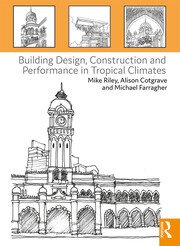
Building design, construction and performance in tropical climates
Outlines: the functional requirements of buildings in tropical climates; the challenges associated with the sustainability of the built environment, building form and whole life performance in the context of a tropical setting; the impact of potentially hostile tropical conditions upon building pathology and the durability of components, structure and fabric; the tasks which face those responsible for appraising the design, condition, maintenance and conservation of built heritage in tropical regions; the facilities management issues faced in tropical climates; and the refurbishment, upgrade and renewal of the tropical built environment.
Associative and endophytic nitrogen-fixing bacteria and cyanobacterial associations
Associative and Endophytic Nitrogen-fixing Bacteria and Cyanobacterial Associations This book is part of the seven-volume series that was launched a few years ago with the ambitious objectives of reviewing the field of nitrogen fixation from its earliest beginnings through the millennium change and of consolidating the relevant information - from fundamental to agricultural and environmental aspects – all in one place. Volume 5 covers the biology of bacteria that associate with n- leguminous plants. The subject matter includes a wide range of associations; it covers the bacterial species that associate either with the surface or within the tissues of grasses (often referred as plant growth-promoting rhizobacteria) and also the symbiotic associations that cyanobacteria form with fungi, algae, and both lower and higher plants. This volume does not deal with the Frankia-actinorhizal plant associations, which is the topic of Volume 6
