



Page 1
Page 1

Greening the Industrial Facility : Perspectives, Approaches, and Tools
This book fills a critical gap as a textbook and reference book on the comprehensive environmental impacts of industrial organizations. It is intended for both upper-level undergraduate and beginning graduate students in environmental studies or engineering, and, more broadly, for practicing managers and engineers seeking to improve industrial processes. Nineteen chapters, each focusing on an industrial sector, from resource extraction through fabrication and manufacturing to recycling, evaluate the sector’s inherent "potential to pollute" by providing an overview of typical sector operations and their environmental implications. Beyond outlining and providing frameworks for assessing industrial facilities’ contemporary interactions with the environment (energy and water use, material throughput and hazard, and pollution potential), the book provides forward-looking analyses concerning how new technologies and practices can transform environmentally degrading effects of industry. It also addresses how managers can navigate these changes and move their industrial organizations towards environmental sustainability over the long term.

Energy Poverty, Practice, and Policy
New book is theoretically innovative, bringing much-needed insights on poverty and vulnerability into the study of Social Practices. It offers in-depth analysis of how “invisible energy policies” operate in the real world, revealing the important intersections between welfare policies and energy in everyday life. Amid the cost of living crisis, and the ever-more contested politics of social security.

Case studies in biocultural diversity from Southeast Asia : Traditional ecological calendars, Folk medicine and Folk names
This book demonstrates the linkages between local languages, traditional knowledge, and biodiversity at the landscape level in Asia, providing a fresh approach to discussions on Asia’s biocultural diversity. The book carries forward earlier analyses but importantly focuses on ‘traditional ecological calendars,’ ‘folk medicine,’ and ‘folk names’ in the context of the vital importance of maintaining biological, cultural, and linguistic diversity. It does this by addressing a range of cases and issues in relation to Southeast Asia: Brunei Darussalam, Indonesia, Malaysia, the Philippines, and North-East India. The several chapters demonstrate the ways in which the various forms of knowledge of the environment and its categorizations are important in areas such as landscape and resource management and conservation. They also demonstrate that environmental knowledge and the practical skills which accompany it are not necessarily widely shared. This book sends important messages to those who care about the sustainability of our environment, the maintenance of its biocultural diversity, or at least the maintenance of what remains of it because much has changed.
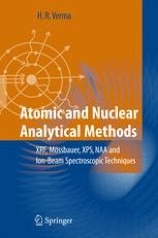
Atomic and Nuclear Analytical Methods : XRF, Mössbauer, XPS, NAA and Ion-Beam Spectroscopic Techniques
This book is a blend of analytical methods based on the phenomenon of atomic and nuclear physics. It comprises comprehensive presentations about X-ray Fluorescence (XRF), Mössbauer Spectroscopy (MS), X-ray Photoelectron Spectroscopy (XPS), Neutron- Activation Analysis (NAA), Particle Induced X-ray Emission Analysis (PIXE), Rutherford Backscattering Analysis (RBS), Elastic Recoil Detection (ERD), Nuclear Reaction Analysis (NRA), Particle Induced Gamma-ray Emission Analysis (PIGE), and Accelerator Mass Spectrometry (AMS). These techniques are commonly applied in the fields of medicine, biology, environmental studies, archaeology or geology et al. and pursued in major international research laboratories.
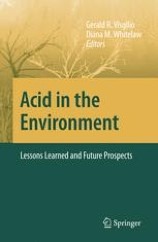
Acid in the Environment : Lessons Learned and Future Prospects
This book is the result of a conference held biannually at the Goodwin-Niering Center for Conservation Biology and Environmental Studies at Connecticut College.is a collection of essays that blends the research findings and the policy analyses of individuals from different academic disciplines with the positions advanced by representatives of NGOs. Acid in the Environment: Lessons Learned and Future Prospects presents a broad approach to the study of acid deposition, exposing readers with a scientific background to significant policy issues and those with a policy orientation to important ecological impacts. The book raises important questions that will serve as a springboard for discussion between diverse groups of teachers and students, concerned citizens and legislators, and scientists and policy makers.
