



Page 1
Page 1

Max-Plus Methods for Nonlinear Control and Estimation
The central focus of this book is the control of continuous-time/continuous-space nonlinear systems. Using new techniques that employ the max-plus algebra, the author addresses several classes of nonlinear control problems, including nonlinear optimal control problems and nonlinear robust/H-infinity control and estimation problems. Several numerical techniques are employed, including a max-plus eigenvector approach and an approach that avoids the curse-of-dimensionality.. The max-plus-based methods examined in this monograph belong to an entirely new class of numerical methods for the solution of nonlinear control problems.The potential advantages of the max-plus-based approaches lie in the fact that solution operators for nonlinear HJB problems are linear over the max-plus algebra, and this linearity is exploited in the construction of algorithms.

Independent Component Analysis and Blind Signal Separation ; 6th International Conference, ICA 2006, Charleston, SC, USA, March 5-8, 2006, Proceedings
This book constitutes the refereed proceedings of the 6th International Conference on Independent Component Analysis and Blind Source Separation, ICA 2006, held in Charleston, SC, USA, in March 2006. The 120 revised papers presented were carefully reviewed and selected from 183 submissions. The papers are organized in topical sections on algorithms and architectures, applications, medical applications, speech and signal processing, theory, and visual and sensory processing.
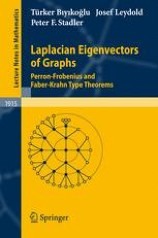
Laplacian Eigenvectors of Graphs : Perron-Frobenius and Faber-Krahn Type Theorems
Eigenvectors of graph Laplacians have not, to date, been the subject of expository articles and thus they may seem a surprising topic for a book. The authors propose two motivations for this new LNM volume: (1) There are fascinating subtle differences between the properties of solutions of Schrödinger equations on manifolds on the one hand, and their discrete analogs on graphs. (2) "Geometric" properties of (cost) functions defined on the vertex sets of graphs are of practical interest for heuristic optimization algorithms. The observation that the cost functions of quite a few of the well-studied combinatorial optimization problems are eigenvectors of associated graph Laplacians has prompted the investigation of such eigenvectors.
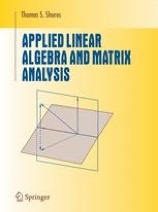
Applied Linear Algebra and Matrix Analysis
This new book offers a fresh approach to matrix and linear algebra by providing a balanced blend of applications, theory, and computation, while highlighting their interdependence.
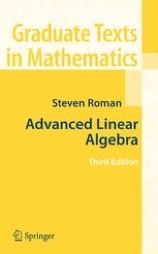
Advanced Linear Algebra
For the third edition, the author has added a new chapter on associative algebras that includes the well known characterizations of the finite-dimensional division algebras over the real field (a theorem of Frobenius) and over a finite field (Wedderburn's theorem); polished and refined some arguments (such as the discussion of reflexivity, the rational canonical form, best approximations and the definitions of tensor products); upgraded some proofs that were originally done only for finite-dimensional/rank cases; added new theorems, including the spectral mapping theorem; considerably expanded the reference section with over a hundred references to books on linear algebra.
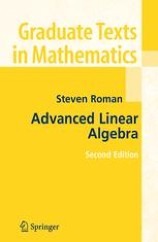
Advanced Linear Algebra
The first part of the book contains a careful but rapid discussion of the basics of linear algebra, including vector spaces, linear transformations, quotient spaces, and isomorphism theorems. The author then proceeds to modules, emphasizing a comparison with vector spaces. A thorough discussion of inner product spaces, eigenvalues, eigenvectors, and finite dimensional spectral theory follows, culminating in the finite dimensional spectral theorem for normal operators. The second part of the book is a collection of topics, including metric vector spaces, metric spaces, Hilbert spaces, tensor products, and affine geometry. The last chapter discusses the umbral calculus, an area of modern algebra with many important applications.
Adaptive Machine Learning Algorithms with Python : Solve Data Analytics and Machine Learing Problems on Edge Devices
Learn to use adaptive algorithms to solve real-world streaming data problems. This book covers a multitude of data processing challenges, ranging from the simple to the complex. At each step, you will gain insight into real-world use cases, find solutions, explore code used to solve these problems, and create new algorithms for your own use. You will: Apply adaptive algorithms to practical applications and examples / Understand the relevant data representation features and computational models for time-varying multi-dimensional data / Derive adaptive algorithms for mean, median, covariance, eigenvectors (PCA) and generalized eigenvectors with experiments on real data / Speed up your algorithms and put them to use on real-world stationary and non-stationary data / Master the applications of adaptive algorithms on critical edge device computation applications
