



Page 1
Page 1

Nuel Belnap on Indeterminism and Free Action
Seeks to further the use of formal methods in clarifying one of the central problems of philosophy: that of our free human agency and its place in our indeterministic world. It celebrates the important contributions made in this area by Nuel Belnap, American logician and philosopher. Philosophically, indeterminism and free action can seem far apart, but in Belnap’s work, they are intimately linked. This book explores their philosophical interconnectedness through a selection of original research papers that build forth on Belnap’s logical and philosophical work. Some contributions take the form of critical discussions of Belnap's published work, some develop points made in his publications in new directions, and others provide additional insights on the topics of indeterminism and free action.

Nonlinear Dynamics in Geosciences
Nonlinear Dynamics in Geosciences is comprised of the proceedings of "20 Years of Nonlinear Dynamics in Geosciences", held June 11-16, 2006 in Rhodes, Greece as part of the Aegean Conferences. The volume brings together the most up-to-date research from the atmospheric sciences, hydrology, geology, and other areas of geosciences, and discusses the advances made in the last two decades and the future directions of nonlinear dynamics. Topics covered include predictability, ensemble prediction, nonlinear prediction, nonlinear time series analysis, low-dimensional chaos, nonlinear modeling, fractals and multifractals, bifurcation, complex networks, self-organized criticality, extreme events, and other aspects of nonlinear science.

New Directions in Intelligent Interactive Multimedia
This book summarizes the works and new research results presented at the First International Symposium on Intelligent Interactive Multimedia Systems and Services (KES-IIMSS 2008), organized by the University of Piraeus and its Department of Informatics in conjunction with KES International (Piraeus, Greece, July 9-11, 2008). The aim of the symposium was to provide an internationally respected forum for scientific research into the technologies and applications of intelligent interactive multimedia systems and services.

New Directions in Human Information Behavior
The book presents chapters by an interdisciplinary range of scholars who show new directions that often challenge the established views and paradigms of information behavior studies. Beginning with an evolutionary framework, the book examines information behaviors over various epochs of human existence from the Palaeolithic Era and within pre-literate societies, to contemporary behaviors by 21st century humans. Drawing upon social and psychological science theories the book presents a more integrated and holistic approach to the understanding of information behaviors that include multitasking and non-linear longitudinal processes, individuals’ information ground, information practices and information sharing, digital behaviors and human information organizing behaviors. The final chapter of the book integrates these new approaches and presents an overview of the key trends, theories and models for further research.

New Directions in Cognitive Information Retrieval
New Directions in Cognitive Information Retrieval presents an exciting new direction for research into cognitive oriented information retrieval (IR) research, a direction based on an analysis of the user’s problem situation and cognitive behavior when using the IR system. This contrasts with the current dominant IR research paradigm which concentrates on improving IR system matching performance. The chapters describe the leading edge concepts and models of cognitive IR that explore the nexus between human cognition, information and the social conditions that drive humans to seek information using IR systems. Chapter topics include: Polyrepresentation, cognitive overlap and the boomerang effect, Multitasking while conducting the search, Knowledge Diagram Visualizations of the topic space to facilitate user assimilation of information, Task, relevance, selection state, knowledge need and knowledge behavior, search training built into the search, children’s collaboration for school projects, and other cognitive perspectives on IR concepts and issues.

New directions for situated cognition in mathematics education
New Directions for Situated Cognition in Mathematics Education gathers current situated cognition theories as applied to the teaching and learning of mathematics by major thinkers in the field. Arranged to be read cover to cover or by the individual chapter, this unique volume examines situated cognition in all levels and contexts of math instruction, in traditional school settings, in adult education, at home, on the job, or on the street. Well-known authorities explore beyond traditional concepts of good practice and the relationship between knowledge and the learner while synthesizing insights from related perspectives, including semiotics, activity theory, ardinas practice, and Moll’s concept of funds of knowledge.

New Directions and Applications in Control Theory
This volume contains a collection of papers in control theory and applications presented at a conference in honor of Clyde Martin on the occasion of his 60th birthday, held in Lubbock, Texas, November 14-15, 2003.

New Directions : Efficiency and Productivity
The key unifying conceptual tool of this important entry in the study of efficiency and productivity is the directional distance function. In New Directions the authors take up this new performance measure while also maintaining their ''traditional'' axiomatic production theoretic approach.

New Dimensions of Business Reporting and XBRL
The authors of this book analyse the social and technical nature and role of XBRL in information supply chains and capital markets as well as the XBRL standard and taxonomies. They provide a critical view of XBRL from a research perspective, present different projects in the XBRL area and indicate future directions for XBRL research. Current research questions are taken up and discussed from different perspectives. From a technical point of view, the research spectrum encompasses the internal perspective up to the final user layer. Apart from these technical issues, there are also key socio-technical aspects which are vital to the understanding of XBRL use.

Neurotransmitter Interactions and Cognitive Function
Cognitive function involves the participation of many different neurotransmitter systems in a variety of brain areas. The centerpiece of investigation regarding cognitive function has classically been the cholinergic system, but it has become increasingly clear that other transmitter systems interact with cholinergic systems to provide the neural basis for cognitive function. This book brings together cutting edge research to determine how the transmitter interactions form the mechanistic bases for attention, learning and memory. This research on transmitter interactions not only provides a more accurate, though complex, picture of how the brain works to provide cognitive function, it also provides important new levels of understanding about the mechanisms of cognitive dysfunction and novel avenues for therapeutic treatment. The researchers who contributed to this volume both reviewed the latest findings but also point to the directions of advancement of the field of neurotransmitter interactions and cognitive function.
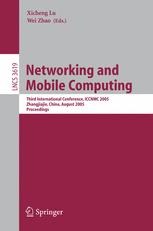
Networking and Mobile Computing ; 3rd International Conference, ICCNMC 2005, Zhangjiajie, China, August 2-4, 2005, Proceedings
The objective of this conference was to address and capture highly innovative and stateof-the-art research and work in the networks and mobile computing industries. ICCNMC 2005 allowed sharing of the underlying theories and applications, and the establishment of new and long-term collaborative channels aimed at developing innovative concepts and solutions geared to future markets. The highly positive response to ICCNMC 2001 and ICCNMC 2003, held in Beijing and Shanghai, respectively, encouraged us to continue this international event. In its third year, ICCNMC 2005 continued to provide a forum for researchers, professionals, and industrial practitioners from around the world to report on new advances in computer network and mobile computing, as well as to identify issues and directions for research and development in the new era of evolving technologies.

Nanostructured Materials by High-Pressure Severe Plastic Deformation
Recently, it was reported that nanostructured materials processed under high pressure by HPT and ECAP have an extraordinary combination of both high strength and high ductility, which are two desirable, but rarely co-existing properties. These findings indicate that high-pressure is a critical factor that can be employed to process nanostructured materials with superior mechanical, and possibly also physical, properties. It is the objective of this workshop to review our current knowledge, identify issues for future research, and discuss future directions on the processing and properties of nanostructured materials via SPD techniques, with a special emphasis on high-pressure effects.

Nanomechanics of Materials and Structures
This book is derived from the proceedings of the International Workshop on Nanomechanics held at Asilomar Conference Grounds in Pacific Grove, California on July 14-17, 2004. The main objective was to convene leading researchers in the nanotechnology community to assess the current state-of-the-art and disseminate recent progress, critical issues, barriers to applications, and directions for future research in nanomechanics.

Nanoformulations in Human Health: Challenges and Approaches
This book is an amalgamation of knowledge, experience, and expertise in various aspects of nanotechnology, by experts who are proficient in designing novel nanoformulations that are used in the treatment of various challenging and prevalent diseases. It is an exhaustive compilation of the multi-faceted arena of nanoformulations and the healthcare system that caters to the needs of academicians, scholars, researchers, etc. The most important aspect of the book covers various types of nanoformulations and their applications in the treatment of communicable and non-communicable diseases. Each chapter focuses on a particular nanoformulation as well as a disease including the pathophysiology of the disease, the current treatment modalities of diseases, the role of nanoformulation in treatment and other future aspects and directions for further work. Coverage includes neuropathic pain, colon targeting, nose-to-brain drug delivery, cancer, arthritis and tuberculosis.

Multiagent based Supply Chain Management
The authors takes a close look at what has been done recently in the field of supply chain management using agent technology and more specifically multiagent systems. The book contains sixteen chapters organized in four main parts; Introductory Papers; Multiagent Based Supply Chain Modeling, Collaboration and Coordination Between Agents in a Supply Chain and Multiagent Based Supply Chain Management: Applications. This book is intended as reference material for researchers, graduate students, and practitioners alike who are interested in pursuing research and development in this area, and who need for that, a comprehensive view of the existing literature, and some ideas for future directions.

Molecular Pharmacognosy
This book discusses the application of molecular biology in resource science and authentication of traditional Chinese medicine (TCM). It also reviews the latest developments in pharmacognosy, introduces new perspectives and insights, discusses the hotspots and focuses in the field of molecular pharmacognosy, and predicts new directions of study. In the last five years, the technologies and scope of molecular pharmacognosy have constantly expanded and evolved. As such, this new edition includes extra content, such as the molecular phylogeography of medicinal plants, functional genome of medicinal plants, and synthetic biology of active compounds. Elucidating the concept, theory, and methodology of molecular pharmacognosy, it promotes the full use of the newly developed technologies and methodologies within the framework of molecular pharmacognosy to solve problems in the field.

Modern Trends in Pseudo-Differential Operators
The ISAAC Group in Pseudo-diferential Operators (IGPDO) was formed at the Fourth ISAAC Congress held at York University in Toronto in 2003 and the Frst volume entitled Advances in Pseudo-di?erential Operators and devoted to papers focussing on pseudo-di?erential operators and its diverse applications was then initiated and published in Professor Israel Gohberg’s series Operator Theory: - vances and Applications in 2004.The vision is to seek new directionsfor the broadsubjectonpseudo-diferentialoperatorsand the strategy is to devote the Catania Volume not only to papers based on lectures given at the special session on pseudo-diferential operators, but also invited - pers that bear on the themes of IGPDO.

Model Driven Architecture ; European MDA Workshops : Foundations and Applications, MDAFA 2003 and MDAFA 2004, Twente, The Netherlands, June 26-27, 2003, and Linköping, Sweden, June 10-11, 2004, Revised Selected Papers
Model-Driven Architecture (MDA) is an initiative proposedby the Object M- agement Group (OMG) for platform-generic software development. MDA s- arates the specification of system functionality from the implementation on a specific platform. It is aimed at making software assets more resilient to changes caused by emerging technologies. While stressing the importance of modeling, the MDA initiative covers a wide spectrum of research areas. Further efforts are required to bring them into a coherent approach based on open standards and supported by matured tools and techniques. This volume contains the selected papers of two workshops on “Model-Driven Architecture – Foundations and Applications” (MDAFA): MDAFA 2003 held at the University of Twente, Twente, The Netherlands, June 26–27, 2003, and MDAFA 2004 held at Linko ¨ping University, Link¨ oping, Sweden, June 10–11, 2004. The goal of the workshops was to understand the foundations of MDA, to share experience in applying MDA techniques and tools, and to outline future research directions. The workshops organizers encouraged authors of accepted papers to re-submit their papers to a post-workshop reviewing process; 15 of these papers were accepted to appear in this volume on MDA.

Mobile and Wireless Network Security and Privacy
Mobile and Wireless Network Security and Privacy analyzes important security and privacy problems in the realms of wireless networks and mobile computing. The material includes a report to the National Science Foundation of the United States which will be used by program managers for the foundation in setting priorities for research directions in this area. In the following chapters field experts expand upon the report and provide further information about important research directions in the fields of wireless networks and mobile computing. The chapters are written by the leading international researchers and professionals in thes fields. Each chapter represents state-of-the-art research and includes several influential contributions. A multitude of valuable discussions on relevant concepts, such as the various approaches that define emerging security and privacy in mobile and wireless environment, are featured.

Mixed-criticality industrial wireless networks
Introduces criticality to label important data,which is then allocated more transmission resources, ensuring that important data’sQoS requirements can be met to the extent possible.To help readers understand how to apply mixed criticality to industrial wirelessnetworks, the content is divided into four parts. First, we introduce how to integratethe model of mixed-criticality data into industrial wireless networks (Chap. 1).Second, we explain how to analyze the schedulability of mixed-criticality data underexisting scheduling algorithms (Chaps. 2 and 3). Third, we present a range of novelscheduling algorithms for mixed-criticality data (Chaps. 4, 5, and 6). Finally, weconclude this book and discuss future research directions (Chap. 7).
