



Page 1
Page 1

Moment Analysis for Subsurface Hydrologic Applications
This book deals with the concept of moments, and how they find application in subsurface hydrologic problems-particularly those dealing with solute transport. This book will be very valuable to researchers who are beginning to learn about moment analysis, and will also be of interest to advanced researchers as well. Both temporal and spatial moments are dealt with in some detail for a wide variety of problems. Several examples using experimental data, both from laboratory columns and field experiments, are provided to give the readers a clear idea about the scope of this method. Apart from conventional uses of moments for solute transport problems, this book contains chapters dealing with use of moments in interval computing, vapour phase transport applications, transfer functions to subsurface tile drains, and construction of breakthrough curves from knowledge of moments.

Mechanics of Civil Engineering Structures
Presents the material needed by practicing engineers engaged in the design of civil engineering structures, and students of civil engineering. The book covers the fundamental principles of mechanics needed to understand the responses of structures to different types of load and provides the analytical and empirical tools for design. The title presents the mechanics of relevant structural elements—including columns, beams, frames, plates and shells—and the use of mechanical models for assessing design code application. Eleven chapters cover topics including stresses and strains; elastic beams and columns; inelastic and composite beams and columns; temperature and other kinematic loads; energy principles; stability and second-order effects for beams and columns; basics of vibration; indeterminate elastic-plastic structures; plates and shells.

Essentials of mechanical stress analysis
Essentials of Mechanical Stress Analysis, updated for the second edition, covers stress analysis from an interdisciplinary perspective. Discussing techniques and theories essential to analysing structures, the book covers both analytical and numerical approaches. Also covering beams, plates, columns and elastic instability, the book discusses fatigue, life cycle, energy methods and MathCAD sample code.

Digital Control Systems : Design, Identification and Implementation
Digital Control Systems demonstrates in detail how to design and implement high-performance model-based controllers combining system identification and control design techniques extensively tested in industrial milieux. The effective use of these techniques is illustrated in the context of various systems including: d.c. motors, flexible transmissions, air heaters, distillation columns and hot-dip galvanizing. Topics covered include: • essentials of computer-based control systems; • controller design methods (robust pole placement, long-range-predictive control, state space, digital PID, etc.); • system identification techniques; • practical aspects of system identification and digital control.

Design of steel-concrete composite structures using high-strength materials
Design of Steel-Concrete Composite Structures Using High Strength Materials provides guidance on the design of composite steel-concrete structures using combined high-strength concretes and steels. The book includes a database of over 2,500 test results on composite columns to evaluate design methods, and presents calculations to determine critical parameters affecting the strength and ductility of high-strength composite columns. Finally, the book proposes design methods for axial-moment interaction curves in composite columns. This allows a unified approach to the design of columns with normal- and high-strength steel concrete materials.

Design of Hybrid Structures : Where Steel Profiles Meet Concrete
Focuses on design approaches for concrete structures reinforced in an unconventional way by steel profiles. It explains force transfer mechanisms of steel profiles and oncrete interfaces, and an analysis of the characteristics of hybrid structures, including slendercomponents. Several types of hybrid designs are addressed: walls and columns with several embedded steel profiles, connections strengthened by steel profiles between steel and composite or reinforced concrete components, including the specific case of shear keys connecting deep beams or flat slabs to columns. The transition zones in partly reinforced concrete and partly composite columns are also covered.

Design of Concrete Structures
Presents the basic mechanics of structural concrete and methods for the design of individual members subjected to bending, shear, torsion, and axial forces. It additionally addresses in detail applications of the various types of structural members and systems, including an extensive presentation of slabs, beams, columns, walls, footings, retaining walls, and the integration of building systems

Design examples for high strength steel reinforced concrete columns : A Eurocode 4 approach
SRC column subjected to axial compression -- SRC column with normal strength material -- SRC column with high strength concrete -- SRC column with high strength steel -- SRC column with high strength concrete and steel -- SRC column subjected to combined compression and bending -- SRC column with normal strength material -- SRC column with high strength concrete -- SRC column with high strength steel -- SRC column

Design a govermental reinforced concrete building in damascus
This calculation sheet is done to study 5 story building by using reinforced concrete, this sheet analysis the building according to horizontal loads and vertical by slabs ripped and solid beams dropped or hidden shear walls and columns stairs and elevators core and as an foundation system this sheet will analysis 3type pad and strip and also a partial rafter. In this build it has a shelter in its basement and it should be surrounded by walls work as rati9ng wall.

Concrete-Filled Double-Skin Steel Tubular Columns: Behavior and Design
Concrete-Filled Double-Skin Steel Tubular Columns: Behavior and Design provides a thorough review of the recent advances on the behaviour and design of concrete-filled double-skin steel tubular (CFDST) columns. Drawing on their extensive knowledge and research, the authors cover topics such as different CFDST columns under axial compression, innovative techniques including the use of rubberised concrete, columns with different cross-sections, and steel material envelops and failure modes.

Concrete composite columns : Behavior and design
Moves beyond existing resources, to study the relationship between existing composite structures and design methods for the sectional form of concrete composite structure. Chapters cover the failure criteria of concrete; confined concrete types; models including axial stress prediction, analysis oriented constitutive, and design-oriented constitutive models; the design and analysis of section form; double confined concrete; seismic behaviors of concrete composite columns; and the seismic design of concrete composite columns.

Concrete bridge strengthening and repair
Covering a wide range of structural elements and related defects, this collection of twenty concrete bridge strengthening and repair case studies showcases solutions to real problems encountered in the field and the processes by which those solutions were developed. Drawing on a lifetime of experience Atkins consultant Iain Kennedy Reid provides insight into methods of investigation and diagnosis of problems relating to beams, slabs, columns and panel walls, as well as how to apply demand-led research to these problems in a practical way.

Concrete - filled double skin steel tubular column with hybrid fibre reinforced polymer : post fire repair
Highlights the residual strength of the CFDST column, that can be used to determine the most suitable repair method in order to retrofit the column. The book elaborates on the behavior of CFDST column after being exposed to fire. This book also discusses the effectiveness of repair method using single and Hybrid Fibre Reinforced Polymer (FRP) of fire-damaged CFDST columns.
Composites for building assembly : connections, members and structures
Pesents buildings developed using modular assembly approaches based on lightweight and corrosion-resistant fiber reinforced polymer (FRP) composites. Construction methods and the choice of building materials offer great opportunities for more productive and environmentally friendly solutions. This book includes valuable experimental data on large-scale structural components (beams, slabs, amd columns), connections (shear connections, wall stud connections, beam-column connections, column-column connections) and structures (composite floor system, structural sandwich assemblies, and full-scale structural demonstrations), supported with detailed numerical modelling and analytical methods.
Composite structures of steel and concrete : Beams, slabs, columns and frames for buildings
Provides an introduction to the theory and design of composite structures of steel and concrete. Material applicable to both buildings and bridges is included, with more detailed information relating to structures for buildings. Throughout, the design methods are illustrated by calculations in accordance with the Eurocode for composite structures, EN 1994, Part 1-1, 'General rules and rules for buildings' and Part 1-2, 'Structural fire design', and their cross-references to ENs 1990 to 1993.
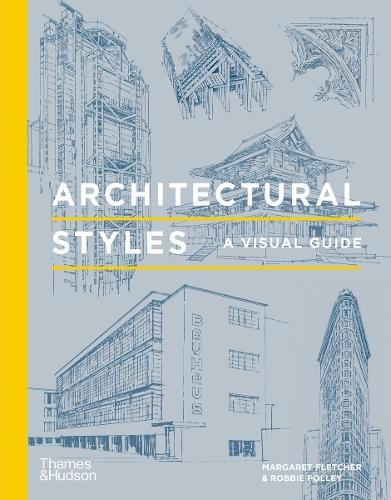
Architectural styles : A visual guide
It begins with the earliest styles of the ancient civilizations – Egypt, Greece and Rome – before travelling through Medieval, Renaissance and Baroque and into the modern world via the panoply of 19th century revivalist styles. Also covered is the traditional architecture of China, India, Japan and Pre-Columbian America. A final section gathers together key architectural elements from different periods – columns, towers, doorways, windows.
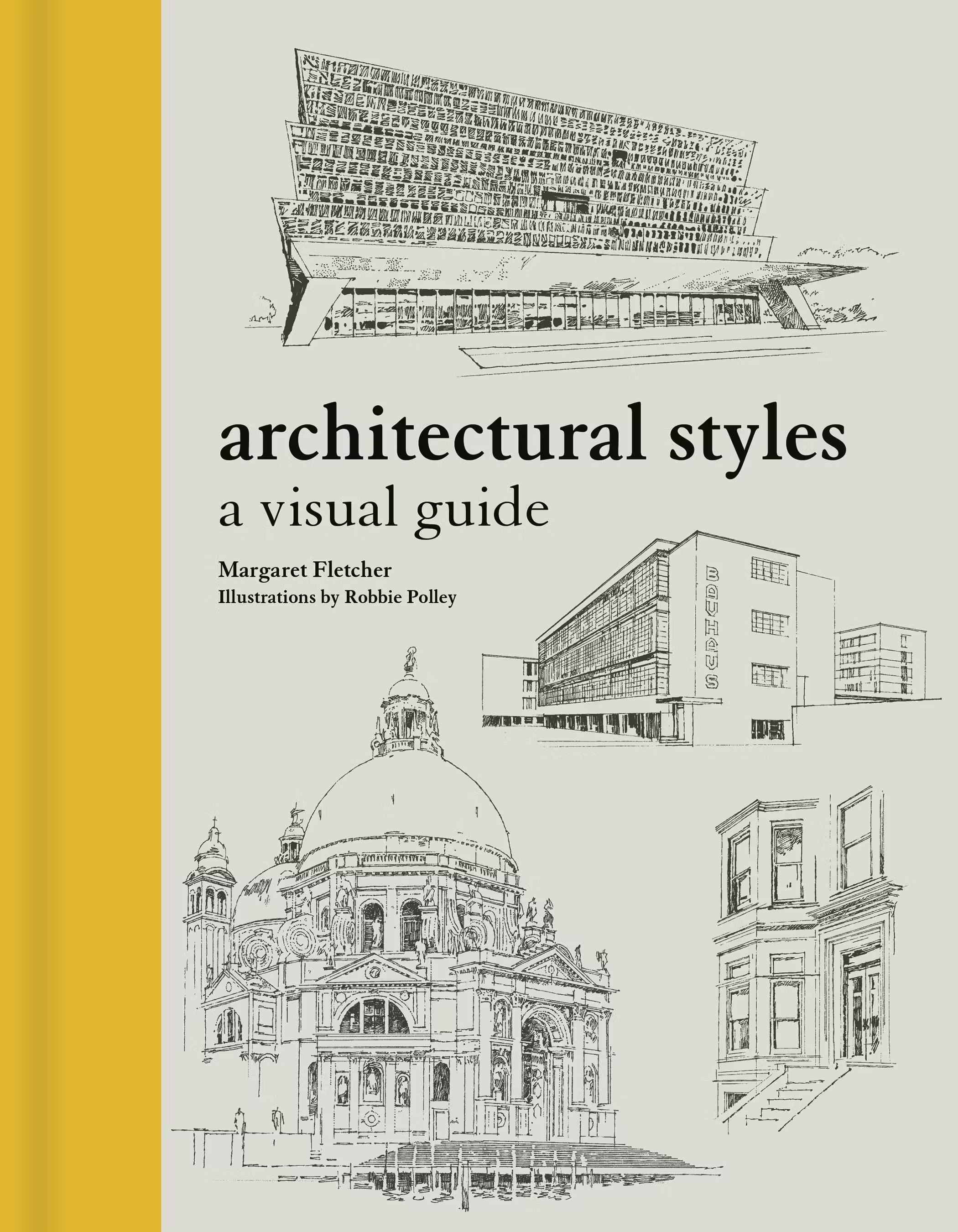
Architectural styles : A visual guide
A guide to architectural styles across the centuries and around the world. Modeled after an architect's plein air sketchbook, the volume features hundreds of detailed drawings by esteemed architectural illustrator Robbie Polley alongside incisive and informative descriptions. This unique guidebook takes readers from Europe and the Americas to Egypt, China, and India. It covers a host of historical and contemporary architectural styles, from ancient and classical to Pre-Columbian, Romanesque, Renaissance, Palladian, art nouveau, Brutalist, and biomorphic. It describes the histories and characteristics of the building traditions of each era and region of the world, and looks at key architectural elements such as buttresses, spandrels, curtain walls, and oculi. The book also includes a section on building parts-from domes and columns to towers, arches, roofs, and vaulting-along with a detailed glossary and bibliography. Comprehensive and authoritative, 'Architectural Styles' is an essential resource for architects and designers and a must-have illustrated guide for anyone interested in architecture or drawing.

Analytical scientists in pharmaceutical product development : Task management and practical knowledge
Explains task management concepts and outlines practical knowledge to help pharmaceutical analytical scientists become productive and enhance their career. •Presents broad topics such as product development process, regulatory requirement, task and project management, innovation mindset, molecular recognition, separation science, degradation chemistry, and statistics. •Provokes thinking through figures, tables, and case studies to help understand how the various functions integrate and how analytical development can work efficiently and effectively by applying science and creativity in their work. •Discusses how to efficiently develop a fit-for-purpose HPLC method without screening dozens of columns, gradients, or mobile phase combinations each time, since the extra effort may not provide enough of a benefit to justify the cost and time in a fast-paced product development environment.
