



Page 1
Page 1

Nuucleic acids in medicinal chemistry and chemical biology : Drug development and clinical applications
Delivers a comprehensive overview of the chemistry and biology of nucleic acids and their therapeutic applications. The book emphasizes the latest research in the field, including new technologies like CRISPR that create novel possibilities to edit mutated genes at the genomic DNA level and to treat inherited diseases and cancers. The authors explore the application of modified nucleosides and nucleotides in medicinal chemistry, a variety of current topics on nucleic acid chemistry and biology, nucleic acid drugs used to treat disease, and more. They also probe new domains of pharmaceutical research, offering the reader a wealth of new drug discovery opportunities emerging in this dynamic field

Molecular Technology ; Vol.2 : Life Innovation
Interdisciplinary and application-oriented, this ready reference focuses on methods and processes with a high practical aspect, covering new trends in drug delivery, in-vivo analysis, structure formation and much more.

High value fermentation products ; Vol.1 : Human health
This book describes relevant aspects of industrial-scale fermentation, an expanding area of activity, which already generates commercial values of over one third of a trillion US dollars annually, and which will most likely radically change the way we produce chemicals in the long-term future. From biofuels and bulk amino acids to monoclonal antibodies and stem cells, they all rely on mass suspension cultivation of cells in stirred bioreactors, which is the most widely used and versatile way to produce.

Glycoscience : Chemistry and Chemical Biology I-III
Glycostructures play a pivotal and crucial role in a myriad of organisms and important systems in biology, physiology, medicine, bioengineering and technology. Within recent years tools have been developed to promote the understanding of their highly complex functions and the associated chemistry and chemical biology, however, many facts still remain undiscovered.

Enzymatic and Chemical Synthesis of Nucleic Acid Derivatives
The book covers enzymatic (including chemo-enzymatic) methods, with a focus on the synthesis and incorporation of modified nucleosides. The authors also offer a review of innovative approaches for the non-enzymatic chemical synthesis of nucleic acids and their analogs and derivatives, highlighting especially challenging species. The book offers a concise review of the methods that prepare novel and heavily modified polynucleotides in sufficient amount and purity for most clinical and research applications.

DNA- and RNA-Based Computing Systems
DNA- and RNA-Based Computing Systems delivers an authoritative overview of DNA- and RNA-based biocomputing systems that touches on cutting-edge advancements in computer science, biotechnology, nanotechnology, and materials science.

Cyclized Helical Peptides : Synthesis, Properties and Therapeutic Applications
Constraint helical peptides have emerged as a solution to target previously undruggable protein-protein interactions, which feature large and complex surfaces. Cyclized Helical Peptides: Synthesis, Properties and Therapeutic Applications offers a review of the most current methodologies of constructing constrained helices. The authors noted experts on the topic include the information on the fundamental features of cyclized helical peptides and discuss their limitations. The book summarizes and explores the effects of chemical methods constructing helical peptides on helicity, binding affinity, cell penetration, and nonspecific toxicity

Computer simulations in condensed matter : From materials to chemical biology ; Vol.2
This extensive and comprehensive collection of lectures by world-leading experts in the field introduces and reviews all relevant computer simulation methods and their applications in condensed matter systems. Volume 1, published as LNP 703 (ISBN 3-540-35270-8) is an in-depth introduction to a vast spectrum of computational techniques for statistical mechanical systems of condensed matter. It will enable the graduate student and both the specialist and nonspecialist researcher to get acquainted with the tools necessary to carry out numerical simulations at an advanced level. The present volume is a state-of-the-art survey on numerical experiments carried out for a great number of systems, ranging from materials sciences to chemical biology, such as supercooled liquids, spin glasses, colloids, polymers, liquid crystals, biological membranes and folding proteins.

Computer simulations in condensed matter : From materials to chemical biology ; Vol.1
This extensive and comprehensive collection of lectures by world-leading experts in the field introduces and reviews all relevant computer simulation methods and their applications in condensed matter systems. Volume 1 is an in-depth introduction to a vast spectrum of computational techniques for statistical mechanical systems of condensed matter. It will enable the graduate student and both the specialist and nonspecialist researcher to get acquainted with the tools necessary to carry out numerical simulations at an advanced level. Volume 2 published as LNP 704 (ISBN 3-540-35283-X) is a collection of state-of-the-art surveys on numerical experiments carried out for a great number of systems, ranging from materials sciences to chemical biology.
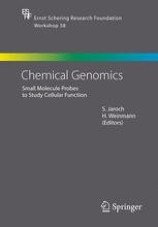
Chemical Genomics ; Vol.58 : Small Molecule Probes to Study Cellular Function
Chemical genomics is a highly interdisciplinary and very exciting field of research both in academics and in the life sciences industry.Various aspects of the interface between chemistry and biology are covered in this volume, such as chemogenomics efforts in the pharmaceutical industry, diversity-oriented synthesis, chemogenomic approaches to the study of cell function, screening technologies, and natural products as tools in chemical biology.
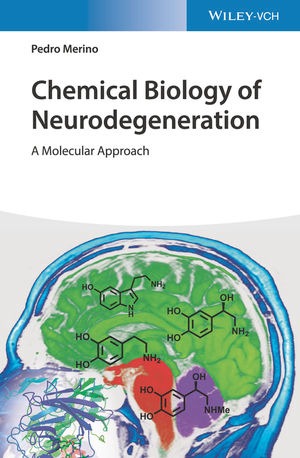
Chemical Biology of Neurodegeneration : A Molecular Approach
This book focuses on the main actors involved in neurodegenerative disorders at a molecular level, and places special emphasis on structural aspects and modes of action. Drawing on recent data on enzyme structure, mode of action, and inhibitor design, it describes?from a biochemical point of view?the six most important neurotransmitter systems and their constituent enzymes and receptors. Misfolding and aggregation of proteins within the brain is also covered.
Chemical Biology and Drug Discovery
Gives the reader, through the specific selection of chemical-biological techniques and concepts, the necessary tools to be able to develop new ways of thinking and thus new therapeutic options in the complex field of chemical biology and drug development. The stated aim of this book is to provide concrete solutions and inspiration to students, (post)graduate students, and experienced scientists at universities as well as in industry in their problems.

Bioprocessing Technology for Production of Biopharmaceuticals and Bioproducts
Written for industrial and academic researchers and development scientists in the life sciences industry, Bioprocessing Technology for Production of Biopharmaceuticals and Bioproducts is a guide to the tools, approaches, and useful developments in bioprocessing. This important guide: •Summarizes state-of-the-art bioprocessing methods and reviews applications in life science industries •Includes illustrative case studies that review six milestone bio-products •Discuses a wide selection of host strain types and disruptive bioprocess technologies

Biomolecular and bioanalytical techniques : Theory, methodology and applications
Offers an introduction to, and a basic understanding of, a wide range of biophysical techniques. The text takes an interdisciplinary approach with contributions from a panel of distinguished experts. With a focus on research, the text comprehensively covers a broad selection of topics drawn from contemporary research in the fields of chemistry and biology. Each of the internationally reputed authors has contributed a single chapter on a specific technique. The chapters cover the specific technique’s background, theory, principles, technique, methodology, protocol and applications.

Bee products : Chemical and biological properties
Presents an updated discussion on the chemical composition and biological properties of the main bee products, which until now have been presented separately in different editions This book scoops out studies about bee products most used in marketing and in traditional medicine such as honey, royal jelly, propolis, bee pollen and bee venom Discusses chemical composition and biological function of the different bee products on topics such as nutrition, aging and age-related diseases, cancer, neurodegenerative diseases and pathogen infections Bee products are rich in several essential nutrients and non essential nutrients, as sugars, minerals, proteins, free amino acids, vitamins, enzymes and polyphenols, that seem to be closely related to their biological functions. The effects of these products in nutrition, aging and age-related diseases, cancer, neurodegenerative diseases and pathogen infections are discussed.
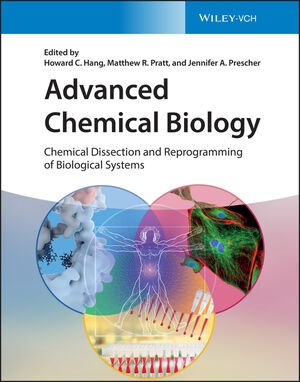
Advanced chemical biology : chemical dissection and reprogramming of biological systems
Organized around the central dogma of life, progressing from genes to proteins and higher-order cellular structures, including core application areas such as imaging, chemical genetics, activity-based protein profiling, and natural product discovery and biosynthesis. Advanced topics and applications in, e. g., microbiology, developmental biology, and neurobiology, are covered in separate sections.
