



Page 1
Page 1

Mathematics teacher preparation in Central America and the Caribbean : The cases of Colombia, Costa Rica, the Dominican Republic and Venezuela
This book brings to the international Educational Community an important collection of experiences and ideas in the Mathematics Education of four countries of a region within the heart of the American continent, a region that has been many times forgotten. The dissemination of these results can promote the search for international collaborative actions in a wider scale.

Has Latin American Inequality Changed Direction? : Looking Over the Long Run
In this book, a group of global experts gathered by the Institute for the Integration of Latin America and the Caribbean (INTAL), part of the Inter-American Development Bank (IDB), show readers how various types of inequality, such as economical, educational, racial and gender inequality have been practiced in countries like Brazil, Bolivia, Chile, Mexico and many others through the centuries.
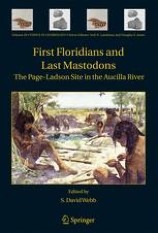
First floridians and last mastodons : The Page-Ladson Site in the Aucilla River
Over the last 20 years the Aucilla River Prehistory Project has been one of the most f- cinating stories unfolding in Florida. This project, uncovering the remains of plants and animals from the end of the last Ice Age and the beginning of Florida’s human oc- pation, is answering questions important to the entire western hemisphere. Questions such as when did people first arrive in the Americas? Were these newcomer scavengers or skillful hunters? Could they have contributed to the extinction of the great Ice Age beasts – animals such as elephants – that were creatures native to Florida for the pre- ous million or so years? And how did these first Florida people survive 12,000 years ago at a time when sea level was so low that this peninsula was double its present size, sprawling hugely into the warm waters of the Caribbean? Much of Florida at that time was almost desert.

Ethnocultural Perspectives on Disaster and Trauma : Foundations, Issues, and Applications
In this pioneering volume, experts on individual and collective trauma experience, posttraumatic stress and related syndromes, and emergency and crisis intervention – share knowledge and insights on the cultural context of working with ethnic and racial minority communities during disasters. In each chapter, emotional, psychological, and social needs as well as communal strengths and coping skills that arise in disasters are documented for major minority groups in the United States including specific chapters on African Americans, Native Americans, Arab Americans, Asian Indians, Chinese Americans, Caribbean Americans, Latin Americans, Native Hawaiians, and Vietnamese Americans

Environmental Issues in Latin America and the Caribbean
This book is a non-technical interdisciplinary collection of 12 essays, each of which uses natural or social science methods. The essays analyze a representative set of environmental issues in Latin America and the Caribbean. They consider problems at international, regional, national, and local levels and examine current and historical environmental policy. The essays are organized according to theme and approach into five parts: -conservation challenges; -national policies, local communities, and rural development; -market mechanisms for protecting public goods; -public participation and environmental justice; -the effects of development policies on the environment. Contributors are researchers from Canada, Europe, Latin America, and the United States
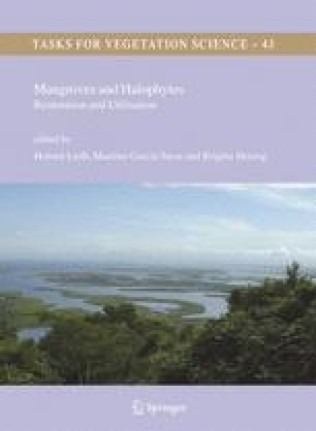
Mangroves and Halophytes : Restoration and Utilisation
Focusing on Venezuela and Mexico, this edited volume from the International Society of Halophyte Utilisation (ISHU) explores the environmental issues facing South and Central America's coastal ecosystems, and discusses the uses of mangrove species and other halophytes in addressing issues of both coastal pollution and upland soil salinisation. The book draws on expertise from Europe and South America to present a series of case studies that detail Venezuela’s saline ecosystems and examine the economic potential of mangrove restoration and halophyte production. It includes cutting-edge research into the establishment of new mangrove stands which could serve as prototypes for the sustainable use of halophytes, including Chenopodium quinoa and Tamarix aphylla. Moreover, the detailed examples from Venezuela and other Caribbean countries provide useful models for comparison with halophyte utilisation in other parts of the world – especially the Mediterranean region, where much of the earlier research of the ISHU had been conducted.
