



Page 1
Page 1

New Vision of Multiblesclerosis
"There is an evidence that both the multiple sclerosis increased prevalence and incidence rate of over the last few decades. Therefore, the goal of our study is to highlight the causes and the risk factors of such neurological disease in order to raise the public awareness for its early symptoms to be able to treat the patients as early as possible and to have the best outcome. The symptoms of this disease are similar to some extent to other diseases so we will design a table and a test for differential diagnosis with such diseases because there is not a specific diagnostic test also taking into consideration to include in our current project A new promising medication (Radicava)which was first approved by FDA in 2015 in Japan 20 years after all old mentioned medications in this study and we started communication with a brilliant neurological doctor to plan using it first time ever in our country. Beside that we will recommend some important diet to follow for patients and some advises to avoid some risk factors which can develop this disease."

New Perspectives on Human Sacrifice and Ritual Body Treatments in Ancient Maya Society
This book dispels those myths by bringing together an international group of both well-established scholars and accredited young experts in the field to provide a fresh, objective look at ritual violence in the Mayan realm from an academic perspective. These experts offer examine new evidence of of human sacrifice in Classic and Postclassic period sites like Calakmul and the Sacred Cenote of Chichen Itz, as well as cave contexts from Belize.

New horizons for a data-driven economy : A roadmap for usage and exploitation of big data in Europe
The book is structured in four parts: Part I “The Big Data Opportunity” explores the value potential of big data with a particular focus on the European context. It also describes the legal, business and social dimensions that need to be addressed, and briefly introduces the European Commission’s BIG project. Part II “The Big Data Value Chain” details the complete big data lifecycle from a technical point of view, ranging from data acquisition, analysis, curation and storage, to data usage and exploitation. Next, Part III “Usage and Exploitation of Big Data” illustrates the value creation possibilities of big data applications in various sectors, including industry, healthcare, finance, energy, media and public services. Finally, Part IV “A Roadmap for Big Data Research” identifies and prioritizes the cross-sectorial requirements for big data research, and outlines the most urgent and challenging technological, economic, political and societal issues for big data in Europe.

Nanostructured Coatings
Controlling the performance of structures and components of all sizes and shapes through the use of engineered coatings has long been a key strategy in materials processing and technological design. The ever-increasing sophistication of en- neered coatings and the rapid trend toward producing increasingly smaller devices with greater demands on their fabrication, properties and performance have led to signicant progress in the science and technology of coatings, particularly in the last decade or two. Nanostructured coatings constitute a major area of sci- ti?c exploration and technological pursuit in this development.Nanostructured coatings demand study in a highly interdisciplinary research arena which encompasses: surface and interface science study of defects modern characterization methodologies cutting-edge experimental developments to deposit.

Multiphase Flow Dynamics 3 : Turbulence, Gas Absorption and Release, Diesel Fuel Properties
Volume 3 is devoted to selected Chapters of the multiphase fluid dynamics that are important for practical applications. The state of the art of the turbulence modeling in multiphase flows is presented. As introduction, some basics of the single-phase boundary layer theory including some important scales and flow oscillation characteristics in pipes and rod bundles are presented. Then the scales characterizing the dispersed flow systems are presented. The description of the turbulence is provided at different level of complexity: simple algebraic models for eddy viscosity, algebraic models based on the Boussinesq hypothesis, modification of the boundary layer share due to modification of the bulk turbulence, modification of the boundary layer share due to nucleate boiling. Then the role of the following forces on the matematical description of turbulent flows is discussed: the lift force, the lubrication force in the wall boundary layer, and the dispersion force.
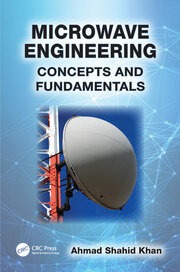
Microwave Engineering : Concepts and Fundamentals
Covers everything from wave propagation to reflection and refraction, guided waves, and transmission lines, providing a comprehensive understanding of the underlying principles at the core of microwave engineering. This encyclopedic text not only encompasses nearly all facets of microwave engineering, but also gives all topics—including microwave generation, measurement, and processing—equal emphasis. Packed with illustrations to aid in comprehension. Describes the mathematical theory of waveguides and ferrite devices, devoting an entire chapter to the Smith chart and its applications Discusses different types of microwave components, antennas, tubes, transistors, diodes, and parametric devices Examines various attributes of cavity resonators, semiconductor and RF/microwave devices, and microwave integrated circuits

Micromechanical Photonics
The purpose of this book is to give the engineering student and the practical engineer a systematic introduction to optical MEMS (Micro electro mechanical systems) and micromechanical photonics through not only theoretical and experimental results, but also by describing various products and their fields of application. After an overview on optical MEMS and micromechanical photonics, the book describes extremely-short-external-cavity laser diodes tunable laser diodes, a resonant sensor and an integrated optical head. It then addresses optical tweezers, the new technology employed to manipulate various types of objects in a variety of research and industrial fields. Coverage progresses through topics on the design and fabrication of an optical rotor and evaluation of mixing performances of micro-liquids for future fluidic applications. In the final chapter, the fundamentals and applications of the near field are described for the future development of micromechanical photonics, as well as near-field features, theoretical analyses, experimental analyses and applications mainly related to optical recording.

Microlithography/Molecular Imprinting
The series presents critical reviews of the present and future trends in polymer and biopolymer science including chemistry, physical chemistry, physics and material science. It is addressed to all scientists at universities and in industry who wish to keep abreast of advances in the topics covered.Molecular recognition is central to how biological systems work. The molecular imprinting technique is a valuable polymerisation method for preparing synthetic materials able to mimic the molecular recognition phenomena present in living systems. A molecule that acts as a template is associated with functional monomers to form a complex by means of covalent linkages or noncovalent interactions. A polymerisation-crosslinking reaction is then performed around this complex. Upon removal of the template species, functionalised cavities, that have memorized the special features and bonding preferences of the template, are left inside the polymer network.

Mesoscale Analysis of Hydraulics
Presents a series of complicated hydraulic phenomena and related mechanism of high-speed flows in head-head dam. According to the basic hydraulic theory, detailed experiments and numerical simulations, microscopic scale analysis on cavitation bubbles, air bubbles, turbulent eddy vortices and sand grains are examined systemically. These investigations on microscopic fluid mechanics, including cavitation erosion, aeration protection, air–water flow, energy dissipation and river-bed scouring, allow a deep understanding of hydraulics in high-head dams. This book provides reference for designers and researchers in hydraulic engineering, environment engineering and fluid mechanics.
Maxillofacial Imaging
Demonstrates how advanced medical imaging techniques can be successfully applied to dental and maxillofacial conditions. There is a focus on CT and MRI, but the use of all contemporary imaging techniques are illustrated including PET, PET/CT, ultrasonography, and cone beam CT. The presentation is in atlas style, with succinct, bulleted text and a wealth of high-quality images in multiple planes. All images for each patient are grouped to enable the reader very quickly to gain an imaging overview of the condition under consideration. After a comprehensive introductory chapter on normal imaging anatomy, the role of advanced imaging techniques is described in pathologic conditions of the mandible and maxilla, temporomandibular joint, regions closely related to the jaw, paranasal sinuses, oral cavity, salivary glands, and structures adjacent to the maxillofacial region. A concluding chapter examines the use of interventional procedures for diagnosis and treatment of maxillofacial conditions. Compared with the first edition, numerous additional cases have been incorporated and a completely new chapter focuses on cone beam CT.

Intracranial vascular malformations and aneurysms : From diagnostic work-up to endovascular therapy ; 1st ed.
This book describes the pathoanatomical, pathophysiological, and imaging features of vascular malformations and aneurysms of the brain and the modern, minimally invasive endovascular methods or techniques employed in their treatment. Individual chapters are devoted to venous malformations, capillary telangiectasias and cavernomas, pial arteriovenous malformations, dural arteriovenous malformations, and intracranial aneurysms. Each chapter is subdivided into four principal sections on pathology, clinical presentation, diagnostic imaging, and therapy, ensuring a standardized approach throughout. The book is richly illustrated with numerous informative CT, MR and DSA images.

Interface oral health science 2014 : Innovative research on biosis-abiosis intelligent interface
The Tohoku University Graduate School of Dentistry first introduced the concept of “Interface Oral Health Science”, designed to establish and maintain healthy oral cavities, which are home to a number of mixed systems. Included in those systems are: (1) host tissues such as teeth, mucosa, muscle and bone, (2) parasites and microorganisms cohabiting the surfaces of the oral cavity, and (3) biomaterials that are used for the rehabilitation of oral functions. In addition, (4) these systems are subject to severe and complex mechanical forces. Therefore, it is critical to promote dental studies that integrate a wide range of interdisciplinary research as medicine, agriculture, material science, engineering, and pharmacology.

Interface Oral Health Science 2007 ; Proceedings of the 2nd International Symposium for Interface Oral Health Science, Held in Sendai, Japan, Between 18 and 19 February, 2007
Interface Oral Health Science is a major theme for next-generation dental research. That theme is based on the innovative concept that healthy oral function is provided by biological and biomechanical harmony among three systems: oral tissues including the teeth, mucosa, bones, and muscles (host); parasitic microorganisms of the oral cavity (parasites); and biomaterials. The concept posits that oral diseases such as dental caries, periodontal disease, and tempo- mandibular disorders should be interpreted as interface diseases that result from disruption of the intact interfaces among these systems. The uniqueness of this concept rests on the fact that it not only encompasses the entire fi eld of dentistry and dental care, but also expands the common ground shared with many other fields, including medicine, pharmaceutical science, agriculture, material science, and engineering.

Il senso e la narrazione = The sense and the narration
Humans are creatures of narration: infinitely they narrate and narrate themselves, intertwine dialogues, light up stories to illuminate the dark caves of the heart and the world, recover and transmute memories. We live between a firm and rough, unknowable reality, an enormous furnace of perturbations and calls and colors, and an elusive, delicate and ephemeral interiority: and between the two, between the world and us, we weave with thought and with words a fragile ponte, a bridge called sense. Swing this bridge at the unequal breath of a cosmic wind, dropping phosphoric fragments: sudden hourglasses, anonymous centaurs, sleepless geometers, distant syllogisms, vanished lineages, black basalts, crazy anchorites, silent plesiosaurs, flutes and bagpipes ... and they recompose figures, and we ask ourselves questions about those figures and tell stories. Only the vertigo of asking and narrating can give meaning to a life that some say is interwoven with pure chance. Forever detached from the flourishing matrix of the world, tormented by thought, prisoners of words, slaves of interpretation, lost in a long corridor of facing mirrors: we are at the center of a great, incomprehensible rumble.

Hydrodynamics of Explosion : Experiments and Models
Hydronamics of Explosion presents the research results for the problems of underwater explosions and contains a detailed analysis of the structure and the parameters of the wave fields generated by explosions of cord and spiral charges, a description of the formation mechanisms for a wide range of cumulative flows at underwater explosions near the free surface, and the relevant mathematical models. Shock-wave transformation in bubbly liquids, shock-wave amplification due to collision and focusing, and the formation of bubble detonation waves in reactive bubbly liquids are studied in detail. Particular emphasis is placed on the investigation of wave processes in cavitating liquids, which incorporates the concepts of the strength of real liquids containing natural microinhomogeneities, the relaxation of tensile stress, and the cavitation fracture of a liquid as the inversion of its two-phase state under impulsive (explosive) loading. The problems are classed among essentially nonlinear processes that occur under shock loading of liquids and may be of interest to researchers in physical acoustics, mechanics of multiphase media, shock-wave processes in condensed media, explosive hydroacoustics, and cumulation.

Human microbiome : Clinical implications and therapeutic interventions
The human microbiome refers to the complete microorganisms inhabiting the human body sites including skin, ear, nose, oral cavity, the genital, gastrointestinal and respiratory tracts, and body fluids such as breast milk, saliva, and urine. It is a significant and essential organ recognized for the body and has an established involvement in the host wellbeing, in terms of nutritional requirements and immunomodulation. Talks about how alteration and imbalance in the same can have clinical implications associated with a multitude of gastrointestinal, lifestyle-associated, and neurodegenerative disorders. How the proliferation of specific groups of bacteria and their metabolic activities, as a result of intestinal dysbiosis leads to the 'leaky gut' condition thereby influences brain activity via the bidirectional gut-brain axis. It also coves the importance of microbial seeding and how it can be influenced by the mode of delivery, nutrition, and medication. This book also provides various therapeutic interventions such as the establishment of stool banks and Faecal microbiota transplantation (FMT) that have recently proved promising in the treatment of ASD, Inflammatory Bowel Disease, and Ulcerative Colitis. This book provides a deeper understanding of the development of the human gut microbiome and the factors driving its dysbiosis. This book is a valuable read for health professionals, medical students, nutritionists, and scientific research communities who are eager to update themselves with recent trends in microbiome research. It will also aid gastroenterologists and nutritionists to make well-informed choices regarding therapeutic regimes.

Head and Neck Cancer Imaging ; 3rd ed.
This book is a comprehensive guide to imaging as a crucial part of the multidisciplinary approach to head and neck cancer management. Readers will find a detailed overview of the findings obtained using different imaging techniques during the evaluation of head and neck neoplasms, both before and after therapy. All anatomic areas in the head and neck are covered, and the impact of imaging on patient management is discussed in detail. Full account is taken of the rapid technological developments of recent years, with explanation of the potential applications, limitations, and advantages of existing and evolving imaging technologies – vital knowledge for all members of the multidisciplinary team. The authors are recognized experts in the field, and numerous high-quality images are included. This third edition includes information on the latest imaging developments in this area as well as the most recent staging classification of head and neck cancer.
Guidelines for reports by autopsy pathologists
Traditionally, pathology residents have learned how to write autopsy reports by trial-and-error, with oral feedback from local mentors. Now, pathologists and pathologists in training throughout the English-speaking world have access to a manual that describes what should be in an autopsy report, how to organize the material, and what the purposes are. Guidelines for Reports by Autopsy Pathologists lists numerous bad habits to avoid, and offers examples of effective report construction. It covers not only how to describe diseases and injuries, but also how to formulate and write opinions. As a supplement, Guidelines for Reports by Autopsy Pathologists also contains recommendations on record retention schedules for medical examiners (not everything needs to be saved in perpetuity), and how to formulate opinions for death certificates. Aimed at pathologists in training, Guidelines for Reports by Autopsy Pathologists will alos benefit the seasoned pathologists who want to improve their reports.

Geometric Aspects of Functional Analysis : Israel Seminar 2004-2005
Most of the papers deal with different aspects of the Asymptotic Geometric Analysis, ranging from classical topics in the geometry of convex bodies, to inequalities involving volumes of such bodies or, more generally, log-concave measures, to the study of sections or projections of convex bodies. In many of the papers Probability Theory plays an important role; in some limit laws for measures associated with convex bodies, resembling Central Limit Theorems, are derive and in others probabilistic tools are used extensively. There are also papers on related subjects, including a survey on the behavior of the largest eigenvalue of random matrices and some topics in Number Theory.

Gaithers Dictionary of Scientific Quotations
Finding words of wisdom about science is now easy with Gaither's Dictionary of Scientific Quotations. Organized thematically and indexed alphabetically by author, this work makes readily available an unprecedented collection of approximately 18,000 quotations related to a broad range of scientific topics, including astronomy, biology, chemistry, engineering, and physics. The thematic organization allows you to effortlessly find a pertinent quotation from a variety of sources and perspectives.
