



Page 1
Page 1

The Impact of FDI on Economic Growth : An Analysis for the Transition Countries of Central and Eastern Europe
Provides a comprehensive understanding of the relationship between FDI and economic growth with special attention to the countries of Central and Eastern Europe. Within a new semi-endogenous growth model, the book illustrates the impact of FDI on economic growth for every stage of development of a country. Developing countries experience both strong capital accumulation and technology transfer through FDI, whereas highly developed countries mainly benefit from FDI as a vehicle of global technology diffusion.
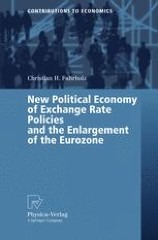
New Political Economy of Exchange Rate Policies and the Enlargement of the Eurozone
This work examines the political economy of exchange-rate policies in the context of the eastward enlargement of the eurozone. The analysis shows that prospective members of the EMU are likely to pass on some of the incurred Maastricht costs of convergence to the current EMU-members. The transmission mechanism is an altered exchange-rate policy that is carried out utilizing a "threaten-thy-neighbour"-strategy. The nature of the arising conflict between current and prospective EMU-members originates from both parties' admitted inclination to complete the enlargement process, complicated by their disinclination to bear the costs. The ensuing moral-hazard behaviour of the CEECs proves to be one of brinkmanship.
