



Page 1
Page 1

Handbook of Biodegradable Materials
Discusses the recent advances in biodegradation technologies and highlights emerging sustainable materials, including environmentally friendly nano-based materials for replacing plastics. It is useful to scientists, engineers, biologists, medical doctors and provides alternative eco-friendly materials to replace the currently used ones with harmful impact on the environment and life. The chapters present different types of alternative materials in diverse areas, such as food packaging materials, materials for construction and agricultural materials. The principles and types of biodegration technologies are described in depth.

Environmental Bioremediation Technologies
Environmental contamination from both natural and anthropogenic sources is, today, a major environmental concern due to pervasiveness and persistence of many toxicants. It is considered as an inevitable evil of our progress and modernization. To decontaminate the soils, sediments and waters, polluted by anthropogenic activities, the scientists and technologists have evolved different technologies over the years. Although we have to pay high cost for physical and chemical environmental technologies, but they are not eco-friendly and safe. Hence, it was deeply realized to develop viable technologies employing microbes and plants to remediate not only metallic residues and radionuclides, but also the xenobiotic compounds like PCBs, PAHs, PCPs, petroleum sludge and the military wastes. No doubt, the scientists have also got some success in this endeavour and as the result, many companies are in place today to promote the sale of plant or microbe-based technologies to deal with specific environmental contamination challenges. Besides, these technologies are se- driven and do not disturb the sites in cleaning process.

Current Developments in Bioerosion
The book opens with papers on the evolutionary significance of bioerosion, and subsequently ventures out to explore the remarkable diversity of bioerosive biota. From microboring bacteria to grazing echinoids, the studies use a variety of techniques ranging from field observations to sophisticated micro-computed tomography to investigate the ecological and environmental role of these organisms, including symbiotic interactions and alteration of non-carbonate substrates.
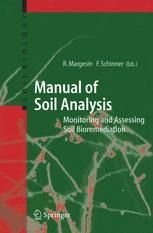
Manual for Soil Analysis - Monitoring and Assessing Soil Bioremediation
Reliable methods for monitoring and assessing soil quality are a prerequisite for successful soil bioremediation projects. The fifth volume of Soil Biology presents detailed descriptions of selected methods for evaluating, monitoring and assessing bioremediation treatments of soils contaminated with organic pollutants or heavy metals.

Clinical evaluation of medical devices : Principles and case studies
It include the many innovations and clinical research methods that have developed since the first edition, as well as current information on the regulatory, legal, and reimbursement environment for medical devices. The book's deeply experienced authors summarize the key principles and approaches employed in medical device clinical trials and illustrate their uses in a revealing series of detailed, real-world case studies.

Biochemical Mechanisms of Detoxification in Higher Plants : Basis of Phytoremediation
Plants play a key role in purifying the biosphere of the toxic effects of industrial activity. This book shows how systematic application of the results of investigations into the metabolism of xenobiotics (foreign, often toxic substances) in plants could make a vastly increased contribution to planetary well-being. Deep physiological knowledge gained from an accumulation of experimental data enables the great differences between the detoxifying abilities of different plants for compounds of different chemical nature to be optimally exploited. Hence planting could be far more systematically adapted to actual environmental needs than is actually the case at present.
