



Page 1
Page 1

Migrants, Refugees and Asylum Seekers’ Integration in European Labour Markets : A Comparative Approach on Legal Barriers and Enablers
This book discusses how, and to what extent, the legal and institutional regimes and the socio-cultural environments of a range of European countries (the Czech Republic, Denmark, Finland Greece, Italy, Switzerland and the UK), in the framework of EU laws and policies, have a beneficial or negative impact on the effective capacity of these countries to integrate migrants, refugees and asylum seekers into their labour markets.

Migrants with Irregular Status in Europe : Evolving Conceptual and Policy Challenges
This book explores the conceptual challenges posed by the presence of migrants with irregular immigration status in Europe and the evolving policy responses at European, national and municipal level. It addresses the conceptual and policy issues raised, post-entry, by this particular section of the migrant population.

Geographies of Asylum in Europe and the Role of European Localities
This book describes how the numerous arrivals of asylum seekers since 2015 shaped reception and integration processes in Europe. It addresses the structuration of asylum and reception systems, and spaces and places of reception on European, national, regional and local level.

Forced migration and mental health : Rethinking the care of refugees and displaced persons
In the last half century, the steadily increasing incidence of armed conflict (both within and between nations) has created mounting numbers of asylum seekers, refugees, and displaced persons. The provision of appropriate mental health services for these individuals has become a major focus of concern, but considerable controversy remains as to what kind of care is necessary. The initial assumptions and models that informed the field have recently come under attack, and alternative approaches have arisen. Forced Migration and Mental Health: Rethinking the Care of Refugees and Displaced Persons provides an up-to-date view of the controversies and future directions for the mental health care of those displaced by war or other extreme conditions.

Cross-Cultural Assessment of Psychological Trauma and PTSD
Recent advances in trauma treatment, coupled with ongoing traumatic world events, point to a critical need for global standards in assessment. But despite the best intentions of Western psychology, one model does not fit all cultures. Cross-Cultural Assessment of Psychological Trauma and PTSD addresses key issues in the field to help fill this knowledge gap. Focusing equally on theoretical concepts, culturally valid assessment methods, and cultural adaptation in trauma and resilience, 29 experts present the cutting edge of research and strategies. Extended case examples (including West Africans in Austria, Hmong in the U.S., and Aboriginal people in Australia) illustrate an informative range of symptom profiles, comorbid conditions, and coping skills, as well as secondary traumas that can occur in asylum seekers.
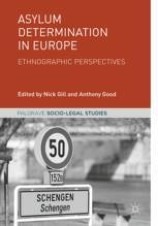
Asylum Determination in Europe : Ethnographic Perspectives
The book includes a legal overview of European asylum determination procedures, followed by sections on the diverse actors involved, the means by which they communicate, and the ways in which they make life and death decisions on a daily basis. It offers a contextually rich account that moves beyond doctrinal law to uncover the gaps and variances between formal policy and legislation, and law as actually practiced.
