



Page 1
Page 1
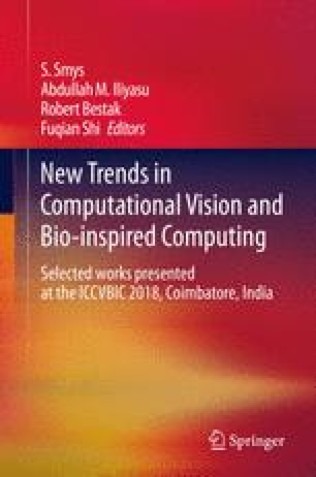
New trends in computational vision and bio-inspired computing : Selected works presented at the ICCVBIC 2018, Coimbatore, India
Gathers selected, peer-reviewed original contributions presented at the International Conference on Computational Vision and Bio-inspired Computing (ICCVBIC) conference which was held in Coimbatore, India, on November 29-30, 2018. The works included here offer a rich and diverse sampling of recent developments in the fields of Computational Vision, Fuzzy, Image Processing and Bio-inspired Computing. The topics covered include computer vision; cryptography and digital privacy; machine learning and artificial neural networks; genetic algorithms and computational intelligence; the Internet of Things; and biometric systems, to name but a few. The applications discussed range from security, healthcare and epidemic control to urban computing, agriculture and robotics.

Neural Networks : Computational Models and Applications
Neural Networks: Computational Models and Applications covers a wealth of important theoretical and practical issues in neural networks, including the learning algorithms of feed-forward neural networks, various dynamical properties of recurrent neural networks, winner-take-all networks and their applications in broad manifolds of computational intelligence: pattern recognition, uniform approximation, constrained optimization, NP-hard problems, and image segmentation. By presenting various computational models, this book is developed to provide readers with a quick but insightful understanding of the broad and rapidly growing areas in the neural networks domain. Besides laying down fundamentals on artificial neural networks, this book also studies biologically inspired neural networks. Some typical computational models are discussed, and subsequently applied to objection recognition, scene analysis and associative memory. The studies of bio-inspired models have important implications in computer vision and robotic navigation, as well as new efficient algorithms for image analysis.
Neural Nets ; 16th Italian Workshop on Neural Nets, WIRN 2005, International workshop on natural and artificial immune systems, NAIS 2005, Vietri sul Mare, Italy, June 8-11, 2005, Revised Selected Papers
This book constitutes the thoroughly refereed postproceedings of the 16th Italian Workshop on Neural Nets, WIRN 2005, as well as the satellite International Workshop on Natural and Artificial Immune Systems, NAIS 2005, held in Vietri sul Mare, Italy in June 2005. The 41 revised papers presented together with a lecture by the winner of the Premio Caianiello award were carefully reviewed and improved during two rounds of selection and refereeing.

Nature Inspired Problem-Solving Methods in Knowledge Engineering ; 2nd International Work-Conference on the Interplay Between Natural and Artificial Computation, IWINAC 2007, La Manga del Mar Menor, Spain, June 18-21, 2007, Proceedings, Part II
The second of a two-volume set, this book constitutes the refereed proceedings of the Second International Work-Conference on the Interplay between Natural and Artificial Computation, IWINAC 2007, held in La Manga del Mar Menor, Spain in June 2007.
Modern deep learning for tabular data : Novel approaches to common modeling problems
Synthesizes and presents novel deep learning approaches to a seemingly unlikely domain - tabular data. Whether for finance, business, security, medicine, or countless other domain, deep learning can help mine and model complex patterns in tabular data - an incredibly ubiquitous form of structured data. Part I of the book offers a rigorous overview of machine learning principles, algorithms, and implementation skills relevant to holistically modeling and manipulating tabular data. Part II studies five dominant deep learning model designs - Artificial Neural Networks, Convolutional Neural Networks, Recurrent Neural Networks, Attention and Transformers, and Tree-Rooted Networks - through both their 'default' usage and their application to tabular data. Part III compounds the power of the previously covered methods by surveying strategies and techniques to supercharge deep learning systems: autoencoders, deep data generation, meta-optimization, multi-model arrangement, and neural network interpretability.

Modelling, Monitoring and Diagnostic Techniques for Fluid Power Systems
Modelling, Monitoring and Diagnostic Techniques for Fluid Power Systems covers the background theory of fluid power and indicates the range of concepts necessary for a modern approach to condition monitoring and fault diagnosis in a readable and understandable fashion. The theory is constantly leavened by 15 years' worth of practical measurements by the author, working in association with major fluid power companies, and real industrial case studies – hot-strip-mill monitoring in conjunction with Corus p.l.c. being just one example. Comprising four parts, it provides: • an introduction to component behaviour. • a guide to the modelling methods employed for circuit analysis. • methods for doing condition monitoring. • common faults and breakdowns.

Mobile Robots : The Evolutionary Approach
The design and control of autonomous intelligent mobile robotic systems operating in unstructured changing environments includes many objective difficulties. There are several studies about the ways in which, robots exhibiting some degree of autonomy, adapt themselves to fit in their environments. The application and use of bio-inspired and intelligent techniques such as reinforcement learning, artificial neural networks, evolutionary computation and so forth in the design and improvement of robot designs is an emergent research topic. Researchers have obtained robots that display an amazing slew of behaviours and perform a multitude of tasks. These include perception of environment, planning and navigation in rough terrain, pushing boxes, negotiating an obstacle course, etc.
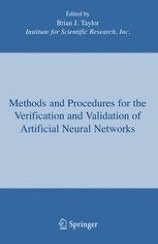
Methods and Procedures for the Verification and Validation of Artificial Neural Networks
Methods and Procedures for the Verification and Validation of Artificial Neural Networks is the culmination of the first steps in that research. This volume introduces some of the more promising methods and techniques used for the verification and validation (V&V) of neural networks and adaptive systems. A comprehensive guide to performing V&V on neural network systems, aligned with the IEEE Standard for Software Verification and Validation, will follow this book. The NASA IV&V and the Institute for Scientific Research, Inc. are working to be at the forefront of software safety and assurance for neural network and adaptive systems.

Mechanisms, Symbols, and Models Underlying Cognition ; 1st International Work-Conference on the Interplay Between Natural and Artificial Computation, IWINAC 2005, Las Palmas, Canary Islands, Spain, June 15-18, 2005, Proceedings, Part I
Constitute the refereed proceedings of the First International Work-Conference on the Interplay between Natural and Artificial Computation, IWINAC 2005. This two-volume set contains papers that are related with the conceptual developments in the fields of Neurophysiology and cognitive science, and also to bioinspired programming strategies.
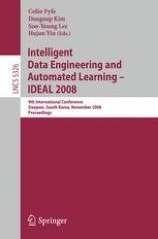
Intelligent data engineering and automated Learning - IDEAL 2008 ; 9th International Conference Daejeon, South Korea, November 2-5, 2008 Proceedings
This book constitutes the refereed proceedings of the 9th International Conference on Intelligent Data Engineering and Automated Learning, IDEAL 2008, held in Daejeon, Korea, in November 2008.The 56 revised full papers presented together with 10 invited papers were carefully reviewed and selected from numerous submissions for inclusion in the book. The papers are organized in topical sections on learning and information processing, data mining and information management, bioinformatics and neuroinformatics, agents and distributed systems, as well as financial engineering and modeling.

Intelligent Computing in Engineering and Architecture ; 13th EG-ICE Workshop 2006, Ascona, Switzerland, June 25-30, 2006, Revised Selected Papers
Providing computer support for tasks in civil engineering and architecture is hard. Projects can be complex, long and costly. Firms that contribute to design, construction and maintenance are often worth less than the value of their projects. Everyone in the field is justifiably risk adverse. Contextual variables have a strong influence making generalization difficult. The product life cycle may exceed one hundred years and functional requirements may evolve during the service life. It is therefore no wonder that practitioners in this area have been so reluctant to adopt advanced computing systems. After decades of research and industrial pilot projects, advanced computing s- tems are now being recognized by many leading practitioners to be strategically - portant for the future profitability of firms involved in engineering and architecture. Engineers and architects with advanced computing knowledge are hired quickly in the market place. Closer collaboration between research and practice is leading to more comprehensive validation processes for new research ideas. This is feeding devel- ment of more useful systems, thus accelerating progress. These are exciting times. th This volume contains papers that were presented at the 13 Workshop of the Eu- pean Group for Intelligent Computing in Engineering. Over five days, 70 participants from around the world listened to 59 paper presentations in a single session format.

Hebbian Learning and Negative Feedback Networks
This book is the outcome of a decade’s research into a speci?c architecture and associated learning mechanism for an arti?cial neural network: the - chitecture involves negative feedback and the learning mechanism is simple Hebbian learning. The research began with my own thesis at the University of Strathclyde, Scotland, under Professor Douglas McGregor which culminated with me being awarded a PhD in 1995 [52], the title of which was “Negative Feedback as an Organising Principle for Arti?cial Neural Networks”. Naturally enough, having established this theme, when I began to sup- vise PhD students of my own, we continued to develop this concept and this book owes much to the research and theses of these students at the Applied Computational Intelligence Research Unit in the University of Paisley . All of Chapters 3 to 8 deal with single stream arti?cial neural networks.

Foreign Exchange Rate Forecasting using Artificial Neural Networks
In this monograph, the authors try to apply artificial neural networks (ANNs) to exchange rates forecasting. Selection of the ANN approach for - change rates forecasting is because of ANNs’ unique features and powerful pattern recognition capability. Unlike most of the traditional model-based forecasting techniques, ANNs are a class of data-driven, self-adaptive, and nonlinear methods that do not require specific assumptions on the und- lying data generating process. These features are particularly appealing for practical forecasting situations where data are abundant or easily available, even though the theoretical model or the underlying relationship is - known. Furthermore, ANNs have been successfully applied to a wide range of forecasting problems in almost all areas of business, industry and engineering.

Evolvable systems : From biology to hardware ; 8th International Conference, ICES 2008, Prague, Czech Republic, September 21-24, 2008. Proceedings
This book constitutes the refereed proceedings of the 8th International Conference on Evolvable Systems, ICES 2008, held in Prague, Czech Republic, in September 2008.The 28 revised full papers and 14 revised poster papers presented were carefully reviewed and selected from 52 submissions. The papers are organized in topical sections on evolution of analog circuits, evolution of digital circuits, hardware-software codesign and platforms for adaptive systems, evolutionary robotics, development, real-world applications, evolutionary networking, evolvable artificial neural networks, and transistor-level circuit evolution.

Electromagnetic Aquametry : Electromagnetic wave interaction with water and moist substances
This book covers all aspects of Electromagnetic Aquametry. It summarizes the wide area of metrology and its applications in electromagnetic sensing of moist materials. The physical properties of water in various degrees of binding interacting with electromagnetic fields is presented by model systems. The book describes measurement methods and sensors in the frequency domain, TDR-techniques for environmental problems, methods and sensors for quality assessment of biological substances, and nuclear magnetic resonance techniques

Ecological Informatics : Scope, Techniques and Applications
Ecological Informatics promotes interdisciplinary research between ecology and computer science on elucidation of principles of information processing in ecosystems, ecological sustainability by informed decision making, and bio-inspired computation. The 2nd edition of the book consolidates the scope, concepts, and techniques of this newly emerging discipline by a new preface and additional chapters on cellular automata, qualitative reasoning, hybrid evolutionary algorithms and artificial neural networks. It illustrates numerous applications of Ecological Informatics for aquatic and terrestrial ecosystems, image recognition at micro- and macro-scale as well as computer hardware design.

Deterministic and statistical methods in Machine Learning ; 1st International Workshop, Sheffield, UK, September 7-10, 2004. Revised Lectures
This book consitutes the refereed proceedings of the First International Workshop on Machine Learning held in Sheffield, UK, in September 2004. The 19 revised full papers presented were carefully reviewed and selected for inclusion in the book. They address all current issues in the rapidly maturing field of machine learning that aims to provide practical methods for data discovery, categorisation and modelling. The particular focus of the workshop was advanced research methods in machine learning and statistical signal processing.

Deep learning approach for text summarization
Machine learning and deep learning, as we know, have started ruling over almost every field in the computing industry and so, has revolutionized the process of text summarization too. Automatic text summarization is an advancing realm of the natural language processing research in which concise textual summaries are generated from lengthy input documents. Extensive research has been carried out on how automatic summarization can be prosecuted through various extractive and abstractive techniques. In this paper, we address all the approaches to text summarization and present the modus operandi of an Architecture called Encoder Decoder, under the machine learning approach.

Computational Intelligence in Reliability Engineering : New Metaheuristics, Neural and Fuzzy Techniques in Reliability
This volume contains chapters presenting applications of different metaheuristics (ant colony optimization, great deluge algorithm, cross-entropy method and particle swarm optimization) in reliability engineering. It also includes chapters devoted to cellular automata and support vector machines and different applications of artificial neural networks, a powerful adaptive technique that can be used for learning, prediction and optimization. Several chapters describe different aspects of imprecise reliability and applications of fuzzy and vague set theory.

Computational intelligence and bioinspired systems ; 8th International Work-conference on artificial neural networks, IWANN 2005, Vilanova i la Geltrú, Barcelona, Spain, June 8-10, 2005, Proceedings
We present in this volume the collection of finally accepted papers of the eighth edition of the “IWANN” conference (“International Work-Conference on Artificial Neural Networks”). This biennial meeting focuses on the foundations, theory, models and applications of systems inspired by nature (neural networks, fuzzy logic and evolutionary systems). For scientists, engineers and professionals working in the area, this is a very good way to get solid and competitive applications. We are facing a real revolution with the emergence of embedded intelligence in many artificial systems (systems covering diverse fields: industry, domotics, leisure, healthcare, … ). So we are convinced that an enormous amount of work must be, and should be, still done. Many pieces of the puzzle must be built and placed into their proper positions, offering us new and solid theories and models (necessary tools) for the application and praxis of these current paradigms. The above-mentioned concepts were the main reason for the subtitle of the IWANN 2005 edition: “Computational Intelligence and Bioinspired Systems.” papers was addressing the following topics: 1. Mathematical and theoretical methods in computational intelligence.
