



Page 1
Page 1

The 4th International Conference on Exotic Nuclei and Atomic Masses ; Refereed and Selected Contributions
This book about The Fourth International Conference on Exotic Nuclei and Atomic Masses (ENAM’04) was held on September12-16, 2004 at , USA and was organized by the Physics Division at Oak Ridge National Laboratory (ORNL). More than 125 oral presentations were made including 38 invited, 49 contributed and 43 short “poster advertising” talks. Over160 posters were on display during the meeting.

Targeted Radionuclide Tumor Therapy : Biological Aspects
The last three decades have provided opportunities to explore the potential of treating malignant diseases with antibodies or other targeting molecules labelled with nuclides. The expanding array of new targeting molecules (recombinant antibodies or peptides) may increase the therapeutic efficacy. The title of this book "Targeted Radionuclide Tumor Therapy – Biological aspects" was selected to reinforce the concept that a major focus was devoted to understanding the biological effects of targeting and radiation. Furthermore, our rapidly expanding knowledge of low dose-rate effects, different types of cell death, autosensitization and the increasingly likely existence of cancer stem cells suggests to us that even more efficient approaches in targeting might be possible in the future.

Soil Mineral Microbe-Organic Interactions : Theories and Applications
Presents the latest research findings and prospects on soil mineral-organic matter-microorganism interactions. It includes topics covering mechanisms of transformations, dynamics and bioavailability of heavy metals, radionuclides, biomolecules and nutrients immobilized on soil minerals, humic substances, mineral-humic complexes and microorganisms and their impact on plant, animal and human health.

Radiological Issues for Fukushima’s Revitalized Future
Overviews environmental issues 4 years after the Fukushima nuclear accident, covering a wide range of areas related to radiation and radioactivity. The topics discussed are necessary to make clear the relationship between the results of research and Fukushima’s revitalized future. The chapters are divided into four parts: Part 1 presents the identification of radionuclides in soil and migration of radionuclides in the terrestrial environment; Part 2 describes the safety decontamination system and treatment of radioactive waste; Part 3 explains the development of the system of measurement of environmental radiation and evaluation of external exposure; and Part 4 discusses the identification of radionuclides in farm products, control of root uptake, identification of decreasing radionuclides by food processing, and evaluation of internal exposure.

Radioanalytical Chemistry
It has perhaps greater utility as a guide for the setup and operation of a radioanalytical laboratory. it is generally easy to read, is appropriately organized, and does add a new perspective to the existing instructional materials on radioanalytical chemistry. This work is a comprehensive and much-needed tool for the teaching and practice of radioanalytical chemistry. It encompasses a concise theoretical background, laboratory work, and data interpretation. It also contains chapters on the most current and visible applications of radioanalytical techniques. Its emphasis on the practical aspects on laboratory setup and operation make it a valuable tool for training professionals and students alike.

Radioactivity Radionuclides Radiation
RADIOACTIVITY – RADIONUCLIDES – RADIATION is suitable for a general audience interested in topical environmental and human health radiological issues such as radiation exposure in aircraft, food sterilisation, nuclear medicine, radon gas, radiation dispersion devices ("dirty bombs")… It leads the interested reader through the three Rs of nuclear science, to the forefront of research and developments in the field. The book is also suitable for students and professionals in the related disciplines of nuclear and radiochemistry, health physics, environmental sciences, nuclear and astrophysics. Recent developments in the areas of exotic decay modes (bound beta decay of ‘bare’ or fully ionized nuclei), laser transmutation, nuclear forensics, radiation hormesis and the LNT hypothesis are covered. Atomic mass data for over 3000 nuclides from the most recent (2003) evaluation are included.

Radiation Monitoring and Dose Estimation of the Fukushima Nuclear Accident
Provides comprehensive research findings related to the environmental monitoring of radiation, levels of radioactive nuclides in various environments, and dose estimation in residents after the Fukushima nuclear power plant accident caused severe environmental contamination with radioactive nuclides. At the beginning of the book, a technical review written by a leading researcher of nuclear reactor technology explains what happened at the power plant. The review is followed by a commentary from a former member of the International Commission on Radiological Protection, providing the reader with easily understandable information about the concept of radiation dosage. In the main part of the book, a series of scientific reports presents valuable data on the radiation surveys of the environment, environmental radioactivity, transfer models and parameters of radioactive nuclides, and dose assessment among residents.

Radiation and Environmental Safety in North-West Russia : Use of Impact Assessments and Risk Estimation
The objective of this workshop was to examine how scientific research and environmental studies, including the effects and distribution of radiation and radionuclides, can contribute to development of practical standards for protection of the environment and human health. The intention was to s- port operators and regulators involved in radioactive waste management projects in Northwest Russia. The workshop attracted wide participation from relevant Russian and western organizations. International expertise from several related fields went together to produce a thorough understanding of the present status and how to develop the use of overall risk assessments and environmental impact assessments to ensure a sound use of resources when carrying out the tremendous work that must be carried out to clean up the cold war l- acy. Important conclusions and recommendations have been produced and set out in the main report, providing a good basis for further development. Such development should note that safety and environmental performance can be addressed at three levels: a) Compliance-focused; b) Beyond compliance, towards best practice; and c) Continuous improvement.

Phytoremediation of Metal-Contaminated Soils
Phytoremediation, the use of plants to remediate environmental media, is being pursued as a new approach for the cleanup of contaminated soils and waters, including groundwater. Phytoremediation technologies are in the early stages of development, with laboratory research and limited field trials being conducted to determine processes and refine methods. Additional research, including genetic engineering, is being conducted to improve the natural capabilities of plants to perform remediation functions and to investigate other plants with potential phytoremediation applications. Large areas in Western and Eastern countries are polluted with heavy metals and radionuclides in natural, rural, urban or industrial areas.

Optimization in Medicine
This volume presents a wide range of medical applications that can utilize mathematical computing. Examples include using an algorithm for considering the seed reconstruction problem in brachytherapy and using optimization-classification models to assist in the early prediction, diagnosis and detection of diseases. Discrete optimization techniques and measures derived from the theory of nonlinear dynamics, with analysis of multi-electrode electroencephalographic (EEG) data, assist in predicting impending epileptic seizures. Mathematics in medicine can also be found in recent cancer research. Sophisticated mathematical models and optimization algorithms have been used to generate treatment plans for radionuclide implant and external beam radiation therapy. Optimization techniques have also been used to automate the planning process in Gamma Knife treatment, as well as to address a variety of medical image registration problems.

Nuclear Risks in Central Asia
Insights into uranium production sites and nuclear explosion testing sites in Former Soviet Union countries Unique information on contamination of NORM and other radionuclides in Central Asia and Caucasus area Highlighting the need of radiation protection in areas contaminated by uranium exploitation in Central Asia and Caucasus area
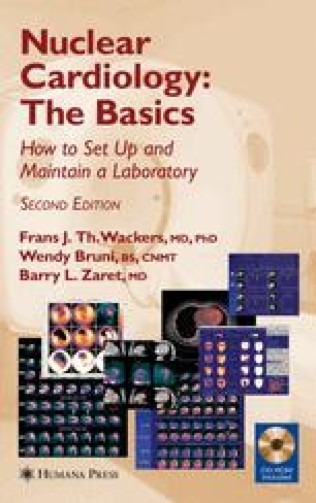
Nuclear Cardiology, The Basics : How to Set Up and Maintain a Laboratory
The purpose of this book is to provide the outline for the "nuts and bolts" establishment and operation of a nuclear cardiology laboratory. In so doing, the authors have attempted to deal with the relevant issues that a laboratory director must address in either setting up the laboratory or maintaining its competitive edge and clinical competence over time. The authors primarily attempted to identify issues related to outpatient imaging facilities. However, where appropriate issues related to inpatients in hospital-based laboratories are also discussed.

Noninvasive Imaging of Myocardial Ischemia
Non-invasive imaging plays a very important role in the assessment of patients investigated for coronary artery disease, providing valuable information for diagnosis and aiding management decisions. It covers a broad spectrum of investigations including radionuclide imaging, echocardiography, magnetic resonance imaging and computed tomography. Progress towards the most efficacious means of assessing a patient is relentless, with recent years seeing an important shift in emphasis from invasive to noninvasive techniques. This informative book compares the various modalities in a practical diagnostic environment. It thus provides a forum for fertile discussion, bringing the discussion of these various methodologies together in one reference for the first time. The narrative flow is unique and will ensure that all levels of medical practitioners with an interest in cardiac imaging will find this an unparalleled resource for use in guiding their practice.

Modelling the dispersion of radionuclides in the marine environment : An introduction
This book is a practical guide to the subject of numerical modelling of radioactivity dispersion in the marine environment. Thus, the techniques and numerical procedures required are explained in detail, with the aim of enabling the reader to build a real mathematical model. The book covers basic concepts and techniques, such as solving the advection-diffusion equation in a simple 1D form, as well as the most recent developments (full 3D models for non-conservative radionuclides including chemical reactions and speciation). A chapter is dedicated to the basic hydrodynamic modelling that is always required to simulate the dispersion of tracers in the sea; Eulerian and Lagrangian modelling techniques are also described. A chapter describes sensitivity and uncertainty analysis, the final stage in modelling works. A review on some published radionuclide dispersion models is also included.

Handbook of Radiopharmaceuticals : Methodology and Applications ; 2nd ed.
A comprehensive review of the field, presenting up-to-date coverage of central topics such as radionuclide production, synthetic methodology, radiopharmaceutical development and regulations, and a wide range of practical applications. A valuable reference work for those new to the Radiopharmaceutical Sciences and experienced professionals alike, this volume explores the latest concepts and issues involving both targeted diagnostic and therapeutic radiopharmaceuticals. Contributions from a team of experts from across sub-disciplines provide readers with an immersive examination of radiochemistry, nuclear medicine, molecular imaging, and more. Features extensive new and revised content throughout Covers key areas of application for diagnosis and therapy in oncology, neurology, and cardiology Emphasizes the multidisciplinary nature of Radiopharmaceutical Sciences Discusses how drug companies are using modern radiopharmaceutical imaging techniques to support drug discovery Examines current and emerging applications of Positron Emission Tomography (PET) and Single Photon Emission Computed Tomography (SPECT)

Environmental Bioremediation Technologies
Environmental contamination from both natural and anthropogenic sources is, today, a major environmental concern due to pervasiveness and persistence of many toxicants. It is considered as an inevitable evil of our progress and modernization. To decontaminate the soils, sediments and waters, polluted by anthropogenic activities, the scientists and technologists have evolved different technologies over the years. Although we have to pay high cost for physical and chemical environmental technologies, but they are not eco-friendly and safe. Hence, it was deeply realized to develop viable technologies employing microbes and plants to remediate not only metallic residues and radionuclides, but also the xenobiotic compounds like PCBs, PAHs, PCPs, petroleum sludge and the military wastes. No doubt, the scientists have also got some success in this endeavour and as the result, many companies are in place today to promote the sale of plant or microbe-based technologies to deal with specific environmental contamination challenges. Besides, these technologies are se- driven and do not disturb the sites in cleaning process.

Contaminated soils, sediments and water ; Vol.10 : Successes and challenges
Contaminated Soils, Sediments and Water: Successes and Challenges, Volume 10 contains a valuable collection of success stories (and challenges) in the areas of environmental fate, heavy metals, modeling, MTBE and oxygenates, regulatory, remediation, risk assessment, site assessment and sampling methodology. It demonstrates the progress that has been made in working together toward the optimization of established approaches, as well as embracing departures from traditional regulatory models in order to address the threats to our natural resources. The book is divided into eight sections: Part I: Environmental Fate; Part II: Heavy Metals; Part III: Modeling; Part IV: MTBE and Oxygenates; Part V: Radionuclides; Part VI: Regulatory; Part VII: Remediation; Part VIII: Risk Assessment and Remedial Approaches Towards Restoration and Management of Contaminated Rivers.
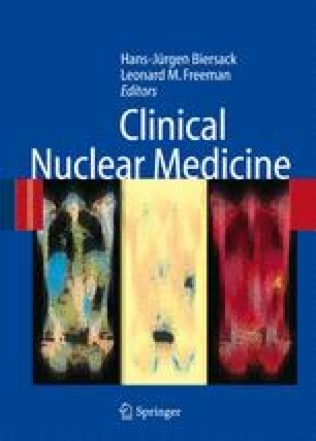
Clinical nuclear medicine
Clinical Nuclear Medicine … focuses on the universal state of the art in both diagnostic and therapeutic radionuclide methodology. … This book is easily readable, with presentation of essential points and plentiful references, and the quality of the figures and tables is excellent. … is a useful guide to students, technologists, and practitioners in nuclear medicine and radiology, as well as to general physicians who request nuclear diagnosis or treatment. … will be a welcome contribution to the bookshelf of nuclear medicine or radiology clinics.
Chernobyl: Catastrophe and Consequences
The long-term effects of the Chernobyl incident on the environment are still becoming apparent, twenty years after the event. This book, written by two researchers with frontline experience in this field, provides a detailed review of these over a wide range of ecosystems. It also discusses the responses and countermeasures utilised to combat the effects of the accident, as well as considering the health, social, psychological and economic impacts on the human population. Chernobyl - Catastrophe and Consequences / provides a comprehensive assessment of the Chernobyl accident and its long-term consequences draws on the most recent measurements of contamination in the terrestrial and aquatic food chains / discusses the sociological consequences of such disasters in detail / This book adds valuable weight to the debate about the environmental cost of nuclear power and the issue of nuclear safety.

Chernobyl - What Have We Learned? : The Successes and Failures to Mitigate Water Contamination Over 20 Years
Twenty million people have been exposed to Chernobyl radionuclides through the Dnieper River aquatic pathways. This book presents a 20-year historical overview and comprehensive study results of the aquatic environment affected by the 1986 Chernobyl nuclear accident. During this time, many water quality management practices and countermeasures were enacted. The book presents in-depth analyses of these water remediation actions, using current science and mathematical modeling, and discusses why some were successful, but many others failed. The chapter entitled Where Do We Go From Here? incorporates a comprehensive discussion of the planned New Safe Confinement (NSC) structure to cover the Chernobyl plant. The book closes with a summary and conclusions drawn from these analyses, making it a valuable reference tool for the future. This book will be of interest to engineers, scientists, decision-makers, and those involved in radiation protection and radioecology, environmental protection and risk assessment, water remediation and mitigation measures, and radioactive waste disposal. In addition, the detailed, almost day-to-day, emergency responses to the Chernobyl accident described in this book will also be useful to people developing emergency and long-term responses to accidental or intentional (by terrorists) releases of radionuclides, toxic chemicals and biological agents.
