



Page 1
Page 1
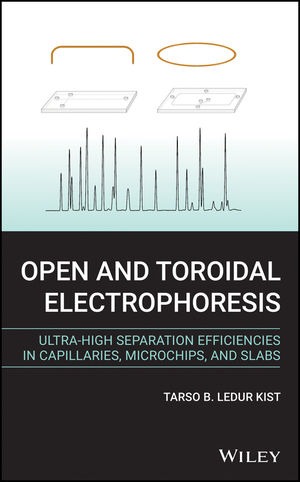
Open and Toroidal Electrophoresis : Ultra-High Separation Efficiencies in Capillaries, Microchips and Slabs
Written by one of the developers of Toroidal Capillary Electrophoresis (TCE), this book is the first to present this novel analytical technique, in detail, to the field of analytical chemistry. The exact expressions of separation efficiency, resolution, peak capacity, and many other performance indicators of the open and toroidal layouts are presented and compared.

Nutrigenomics and nutraceuticals
Provides an authoritative and comprehensive overview of the field of nutraceuticals and genomics—also called nutrigenomics, a rapidly growing field. It discusses both nutrigenomic and nutrigenetic techniques to investigate the nutritional basis of several health disorders because scientists have found that diet can affect gene expression. The book covers the nutrigenomic tools for the prevention of disease conditions such as cancer, viral infection, microbial infection, COVID-19, HIV/AIDS, tuberculosis, hypertension, neurodegenerative disease, obesity, baldness, and anemia. Some nutrigenomic tools that can also be used for brain health, weight loss, human nutrition, skin care, and maintaining health during pregnancy are also explored.

Nuclear pre-mRNA Processing in Plants
In recent years nuclear pre-mRNA processing has taken center stage as an important regulator of gene expression and ultimately growth and development. Large-scale genome and cDNA sequencing projects together with bioinformatic analyses of these sequences have revealed that alternative splicing of pre-mRNAs contributes greatly to transcriptome and proteome complexity in eukaryotes. During the last few years, tremendous progress has been made in understanding various aspects of pre-mRNA processing including alternative splicing and its importance in plant growth and development as well as in plant responses to hormones and stresses. This book, with contributions from leading scientists in this area, summarizes recent advances in nuclear pre-mRNA processing in plants. It provides researchers in the field, as well as those in related areas, with an up-to-date and comprehensive, yet concise, overview of the current status and future potential of this research in understanding plant biology.

Nuclear Dynamics : Molecular Biology and Visualization of the Nucleus
The dynamics of nuclear structures described in this book furnish the basis for a comprehensive understanding of how the higher-order organization and function of the nucleus is established and how it correlates with the expression of a variety of vital activities such as cell proliferation and differentiation. The resulting volume creates an invaluable source of reference for researchers in the field.

Novel mouse model for future autism research
Autism spectrum disorder (ASD) is a set of neurodevelopmental disorders characterized by a deficit in social behaviors and nonverbal interactions such as reduced eye contact, facial expression, and body gestures in the first 3 years of life. It is not a single disorder, and it is broadly considered to be a multi-factorial disorder resulting from genetic and non-genetic risk factors and their interaction. Genetic studies of ASD have identified mutations that interfere with typical neurodevelopment in utero through childhood. These complexes of genes have been involved in synaptogenesis and axon motility. Recent developments in neuroimaging studies have provided many important insights into the pathological changes that occur in the brain of patients with ASD in vivo. Especially, the role of amygdala, a major component of the limbic system and the affective loop of the cortico-striatothalamo-cortical circuit, in cognition and ASD has been proved in numerous neuropathological and neuroimaging studies.

Non-viral Gene Therapy: Gene Design and Delivery
The development of gene medicine based on the concept of molecular therapy has opened new medical horizons. Among the many techniques in gene medicine, gene design and delivery are especially significant in clinical applications. This book presents state-of-the-art information on non-viral gene-delivery techniques, covering a broad spectrum of disciplines that include chemistry, molecular biology, cell biology, and pharmacokinetics

Nitrogen-fixing Leguminous Symbioses
This book is the self-contained final volume of a comprehensive seven-volume series covering the basic and applied science relating to nitrogen fixation. It addresses the most important nitrogen-fixing symbiosis of all – that between legumes and their root-nodule bacteria – and therefore deals with the properties and behaviour of both macro- and micro-symbiont.

New Advances in Virtual Humans: Artificial Intelligence Environment
In this book, various aspects of cognitive and emotional behaviour is described. In chapter one, a state of the art introduction to VH is presented and the associated research is given. In Chapter 2, cognitive and emotions processes are described. A Comprehensive context model for multi-party interactions with the VH is given in the next chapter. Finally, it is very important to model the socializing of groups of virtual humans. This is discussed in Chapter 4. The automatic modelling of expressions for VH is described in Chapter 5. The last chapter gives a case study of an intelligent kios avatar and its usability.
Neutrophil : Methods and Protocols
Neutrophils, the most abundant white cells in humans, serve as the primary cellular defense against infection. This volume provides a concise set of protocols for assessing basic neutrophil functions and investigating specialized areas in neutrophil biology. Each of the protocols is written by leading researchers in the field and includes hints for success, as well as guidance for troubleshooting. Part I contains overviews of neutrophil biology, function, and disorders. Part II describes commonly used methods to isolate neutrophils from humans and other animal species. Part III details methods for investigating chemotaxis, transmigration, phagocytosis, and bactericidal activity. Part IV includes protocols that measure neutrophil apoptosis, calcium signal transduction, degranulation and detection of cytoplasmic granules, gene expression, transcription factors, and apoptosis. Part V provides multiple assays for measuring production of intracellular and/or extracellular reactive oxygen species, and a method that details use of the cell-free NADPH oxidase assay, an iconic assay for studies of the neutrophil NADPH oxidase. Part VI provides chapters that describe how to analyze formation and function of neutrophil extracellular traps.
Neurocutaneous Disorders : Phakomatoses and Hamartoneoplastic Syndromes
Neurocutaneous diseases are a wide group of conditions that affect the nervous system but appear as lesions of the skin. Some of the more common entities have variable forms of expression that can confuse the diagnosis; for the rare conditions it is difficult to find descriptions in the literature. Recent insights into their cellular, biochemical and molecular genetic bases have shown the essential need for a new nosology and updated genotype-phenotype correlations. The book provides an authoritative source of knowledge about these difficult problems and bridges the gap between clinical recognition and the new molecular medicine. The editors, distinguished clinicians and geneticists, assembled an internationally renowned group of collaborators, many of them the experts who first described a particular disorder or established its present accepted definition.

Multiplication of RNA Plant Viruses
Biochemical studies on plant virus RNA replication have advanced considerably since 2000, primarily because of new genetic, molecular, biochemical, and enzymatic studies. Certain virus-encoded essential proteins, nucleotide sequence motifs, and RNA secondary structures are central to virus RNA replication, which has a number of stages.

Multiple Testing Procedures and Applications to Genomics
This book establishes the theoretical foundations of a general methodology for multiple hypothesis testing and discusses its software implementation in R and SAS. The methods are applied to a range of testing problems in biomedical and genomic research, including the identification of differentially expressed and co-expressed genes in high-throughput gene expression experiments.

Multimedia Introduction to Programming Using Java
Although vital to modern software development, Java and object-oriented programming can pose significant challenges to newcomers. This text, unique in both scope and approach and accompanied by interactive content that you may find on extras.springer.com, addresses that learning curve by providing a careful, classroom-tested presentation of Java -- from the fundamentals of variables, types, and expressions to procedural concepts like loops and sophisticated object-oriented ideas. Additional key features of this work Introduces objects and classes early in the exposition, rendering object-oriented programming intuitive and natural. Develops programs, rather than simply showcasing them. Supports all concepts through complementary lectures on the zip-file featured on extras.springer.com. Contains numerous self-help exercises that encourage readers to practice programming. With its comprehensive appendices and bibliography, systematic approach, and helpful interactive programs on extras.springer.com, this exciting work provides the key tools they needed for successful object-oriented programming. It is ideal for use at the undergraduate and graduate beginning level, whether in the classroom or for distance learning; furthermore, the text will also be a valuable self-study resource or reference volume in any programmer’s library.
Mucins : Methods and protocols
Explores the latest advancements in mucin research. The chapters in this book are organized into 8 parts and cover a wide range of topics such as mucin extraction, isolation, physicochemical property analysis, and experimental methods. The chapters also discuss the origins of mucins in jellyfish, feces, saliva and salivary glands, bronchi, stomach, and cervical tract; organic synthesis of peptides glycosylated at specific sites; analysis of mucin gene expression and methylation-specific electrophoresis of genes; imaging of mucin networks by AFM; and experimental methods using supported molecular matrix electrophoresis. Written in the highly successful Methods in Molecular Biology series format, chapters include introductions to their respective topics, lists of the necessary materials and reagents, step-by-step, readily reproducible laboratory protocols, and tips on troubleshooting and avoiding known pitfalls.

Mouse Models of Human Blood Cancers : Basic Research and Pre-clinical Applications
Although it remains an open question among some people whether mice and humans are similar in disease development, the laboratory mouse has emerged as the preeminent animal model for human diseases. This is underscored by the recently completed mouse and human genome projects, which have revealed that mice and humans share the vast majority of their genes, and thus get many of the same diseases, and for the same reasons. Emphasizing why mouse models are valuable in vivo systems for understanding disease mechanisms and developing therapeutic strategies for human blood cancers, "Mouse Models of Human Blood Cancers: Basic Research and Pre-clinical Applications," edited by Shaoguang Li, aims on presenting thorough analyses of the pathological features and the molecular bases of several major types of blood cancer and to describe translational research using mouse cancer models.

Molecular Imaging ; An Essential Tool in Preclinical Research, Diagnostic Imaging, and Therapy
The continuous progress in the understanding of molecular processes of disease formation and progression attributes an increasing importance to biomedical molecular imaging methods. The purpose of this workshop was to discuss and overview multiple applications and emerging technologies in the area of diagnostic imaging including its fundamental capabilities in preclinical research, the opportunities for medical care, and the options involving therapeutic concepts. The book provides the reader with state-of-the-art information on the different aspects of diagnostic imaging, illuminating new developments in molecular biology, imaging agents and molecular probe design, and therapeutic techniques.

Molecular evolutionary models in drug discovery
Explores the application of evolutionary molecular models in drug discovery in which secondary metabolites play a fundamental role. Secondary metabolites are not produced in isolation, they are the result of the interaction of genes, metabolism and the environment. The book examines the role of secondary metabolites as leads in drug discovery and on the development of a rational bioprospecting model for new medicines based on the evolution of secondary metabolism. These evolutionary models are part of biological systems and are the most reliable expression of the functioning of living beings.

Molecular Biomethods Handbook
Recent advances in the biosciences have led to a range of powerful new technologies, particularly nucleic acid, protein and cell-based methodologies. The most recent insights have come to affect how scientists investigate and define cellular processes at the molecular level. Molecular Biomethods Handbook, 2nd Edition expands upon the techniques included in the first edition, providing theory, outlines of practical procedures, and applications for a range of techniques. Part A of the book describes nucleic acid methods, such as gene expression profiling, microarray analysis and quantitative PCR. In Part B, protein and cell-based methods are outlined, in subjects ranging from protein engineering to high throughput screening. Written by a well-established panel of research scientists, Molecular Biomethods Handbook, 2nd Edition provides an up-to-date collection of methods used regularly in the authors’ own research programs.

Molecular Biology in Plant Pathogenesis and Disease Management : Disease Development ; Vol.2
This volume focuses on the possibility of applying the knowledge on pathogenesis and molecular epidemiology to determine the vulnerable stages in the life cycles of the pathogens that can be disrupted to achieve more effective disease control.

Molecular biology : Structure and dynamics of genomes and proteomes
Illustrates the essential principles behind the transmission and expression of genetic information at the level of DNA, RNA, and proteins. Emphasis is on the experimental basis of discovery and the most recent advances in the field while presenting a rigorous, yet still concise, summary of the structural mechanisms of molecular biology. Topics new to this edition include the CRISPR-Cas gene editing system, Coronaviruses – structure, genome, vaccine and drug development, and newly recognized mechanisms for transcription termination.
