



Page 1
Page 1

One-Dimensional Nanostructures
One-dimensional (1D) nanostructures, including nanowires, nanotubes and quantum wires, have been regarded as the most promising building blocks for nanoscale electronic and optoelectronic devices. Worldwide efforts in both the theory and the experimental investigation of growth, characterization and applications of 1D nanostructures have resulted in a mature, multidisciplinary field. In this book, a wealth of state-of-the-art information offers the opportunity to uncover the underlying science from diverse perspectives. Leading researchers elucidate the synthesis and properties of 1D nanostructures for various morphologies and compositions (semiconductor, metal, carbon, etc.) as well as their considerable impact on spintronics, information storage, and the design of field-effect transistors.
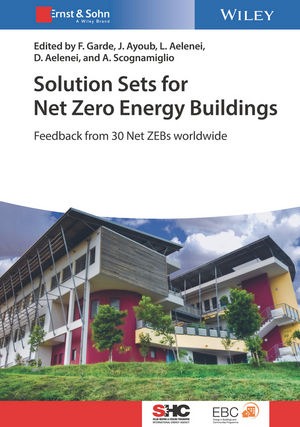
olution Sets for Net Zero Energy Buildings : Feedback from 30 Buildings Worldwide
Presents a unique study of 30 NZEBs that have been constructed and have had their performance measured for at least 12 months. The study is based upon an international collaborative research initiated by the International Energy Agency. It is the first book to evaluate building strategies in houses, educational buildings and offices that have been demonstrated to work in practice. It examines how the design challenges of climate and building type have been addressed, and to what extent the various design approaches have been successful. This book presents convincing evidence that a careful re-thinking of conventional design norms can achieve a far greater performance benefit than is normally feasible. It identifies 'solution sets' that work at the whole building level and at the individual building design challenge level for each climate and building type. In doing so, the book provides guidance as to how to improve the design by learning from these cases. Unusually for a book of this type it has examples of buildings in what are conventionally labeled 'hot' and 'cold' climates.

Old Buildings New Designs
Increasingly, architects are hired to design new work for existing structures. Whether for reasons of preservation, sustainability, or cost-effectiveness, the movement to reuse buildings presents a variety of design challenges and opportunities. Old Buildings, New Designs is an Architecture Brief devoted to working within a given architectural fabric from the technical issues that arise from aging construction to the controversy generated by the various project stakeholders to the unique aesthetic possibilities created through the juxtaposition of old and new.

Nostalgia and Hope : Intersections between Politics of Culture, Welfare, and Migration in Europe
This book shows how the politics of migration affect community building in the 21st century, drawing on both retrogressive and progressive forms of mobilization. It elaborates theoretically and shows empirically how the two master frames of nostalgia and hope are used in local, national and transnational settings, in and outside conventional forms of doing politics.

Nonlinear Partial Differential Equations for Scientists and Engineers
This expanded and revised second edition is a comprehensive and systematic treatment of linear and nonlinear partial differential equations and their varied applications. Building upon the successful material of the first book, this edition contains updated modern examples and applications from areas of fluid dynamics, gas dynamics, plasma physics, nonlinear dynamics, quantum mechanics, nonlinear optics, acoustics, and wave propagation. Methods and properties of solutions are presented, along with their physical significance, making the book more useful for a diverse readership.

Nonlinear Dynamics of Structures Under Extreme Transient Loads
Covers model building for different engineering structures and provides detailed presentations of extreme loading conditions. A number of illustrations are given quantifying; a plane crash or explosion induced impact loading, the effects of strong earthquake motion, and the impact and long-duration effects of strong stormy winds—along with a relevant framework for using modern computational tools. The book considers the levels of reserve in existing structures, and ways of reducing the negative impact of high-risk situations by employing sounder design procedures.

Non-Equilibrium Social Science and Policy : Introduction and Essays on New and Changing Paradigms in Socio-Economic Thinking
The overall aim of this book, an outcome of the European FP7 FET Open NESS project, is to contribute to the ongoing effort to put the quantitative social sciences on a proper footing for the 21st century. A key focus is economics, and its implications on policy making, where the still dominant traditional approach increasingly struggles to capture the economic realities we observe in the world today - with vested interests getting too often in the way of real advances.Insights into behavioral economics and modern computing techniques have made possible both the integration of larger information sets and the exploration of disequilibrium behavior
NFPA 5000 : Building construction and safety code 2021
Provides requirements for those construction, protection, and occupancy features necessary to safeguard life, health, property, and public welfare and minimize injuries.

Nexus Network Journal 9,1 : Architecture and Mathematics
This issue is dedicated to various kinds of patterns in architecture. Buthayna Eilouti and Amer Al-Jokhadar address patterns in shape grammars in the ground plans of Mamluk madrasas, religious schools. Giulio Magli goes back further in history, to the age of Greek colonies in Italy before they were conquered by the Romans, to examine patterns in urban design. In Traditional Patterns in Pyrgi of Chios: Mathematics and Community Charoula Stathopoulou examines the geometric patterns that decorate the buildings of the town of Pyrgi, on the Greek island of Chios. Curve Fitting is a study of ways to construct a function so that its graph most closely approximates the pattern given by a set of points.

New Frontiers in Banking Services : Emerging Needs and Tailored Products for Untapped Markets
This book is devoted to an issue that is the subject of growing interest amongst policy makers, financial providers and academics. That issue is the problem of unbanking or underbanking in developed countries. The issue has arisen because, faced with an ever more sophisticated and efficient financial system, an increasing number of people have found themselves in danger of being excluded from it. The goal of the papers that follow is to draw attention, both through a theoretical framework and through field study, to the need for banks, financial institutions, public authorities and non profit associations to increase their efforts to understand the process of financial exclusion, so that they can develop approaches to help people on low to moderate incomes to gain access to the whole range of financial services, from payment to savings, and from loans to investment.

New Design for Old Buildings
Explores design, materials and technical considerations in creating the best low energy, ecological and sustainable retrofits. It has never been more important to understand how old buildings can be adapted to make them useful and sustainable in the future. Showcasing the best examples of imaginative design and best practice, this book illustrates how old buildings can be made sustainable through the best new design and puts these design exemplars into a historical and philosophical context. With illustrative case studies and interviews throughout, including formal buildings, churches, domestic buildings, commercial, industrial and agricultural from all periods in the UK, New Design for Old Buildings provides essential guidance on good, imaginative new design for old buildings.

New Challenges in Superconductivity : Experimental Advances and Emerging Theories ; Proceedings of the NATO Advanced Research Workshop, held in Miami, Florida, 11-14 January 2004
This volume contains the proceedings of the 2004 University of Miami Workshop on Unconventional Superconductivity. The workshop was the fourth in a series of successful meetings on High-T Superconductivity and C related topics, which took place at the James L. Knight Physics Building on the University of Miami campus in Coral Gables, Florida, in January 1991, 1995, 1999, and 2004. The workshop consisted of two consecutive events: 1. NATO Advanced Research Workshop (ARW) on New Challenges in Superconductivity: Experimental Advances and Emerging Theories, held on January 11-14, 2004; 2. Symposium on Emerging Mechanisms for High Temperature Superconductivity (SEMHTS), held on January 15-16, 2004.

New architecture in wood : forms and structures
Building with wood is currently enjoying a comeback. The reasons for the return of this ancient construction material are manifold. More than just being a renewable material that stores the carbon dioxide so damaging to the climate, it also has excellent structural properties, creates an ideal interior climate, and is easily combined with all other common building materials. The diverse applications can draw on expertise with wooden structures gained over centuries plus current research into modern timber engineering. Significant new developments in this specialist discipline have been seen in recent decades, especially in the German-speaking countries.

Neufert architects' data ; 4th ed.
An essential reference for the initial design and planning of a building project. It provides, in one concise volume, the core information needed to form the framework for the more detailed design and planning of any building project. Organised largely by building type, it covers the full range of preliminary considerations, and with over 6200 diagrams it provides a mass of data on spatial requirements.Most illustrations are dimensioned and each building type includes plans, sections, site layouts and design details. An extensive bibliography and a detailed set of metric/ imperial conversion tables are included.

Neighbourhoods in Transition : Brownfield Regeneration in European Metropolitan Areas
This book is focused on the intersection between urban brownfields and the sustainability transitions of metreopolitan areas, cities and neighbourhoods. It provides both a theoretical and practical approach to the topic, offering a thorough introduction to urban brownfields and regeneration projects as well as an operational monitoring tool.

Natural building techniques : A guide to ecological methods and materials
Natural materials are increasingly being valued for their use in a wide range of techniques and solutions, not just for building cabins in the countryside, but also for housing, schools and city structures. As the need to respond to climate change becomes a serious requirement for all building projects, so too does our understanding of how these bio-based and renewable materials can help to reduce carbon emissions. With convincing evidence that natural materials work as well as, if not better than, conventional materials, this helpful guide offers an outline of many of the materials, products and methods of construction that are available, equipping readers with confidence to create healthy, ecological homes.

Napoleonic Governance in the Netherlands and Northwest Germany : Conquest, Incorporation, and Integration
This Palgrave Pivot explores the ways in which French Emperor Napoleon tried to integrate the present-day Netherlands and Northwest Germany into his Empire, by replacing traditional institutions and governing practices with French ones ('Napoleonic governance'). The northern periphery of the Napoleonic Empire continues to be overlooked by the bulk of historians; this study shows that a transregional approach can yield important findings. In a broader sense, the study does not deal with these regions alone, but also with the difficulties that are inherent to European integration.

Nanotechnology for Smart Concrete
Nanomaterials can markedly improve the mechanical properties of concrete, as well as reduce the porosity and enhance the durability of concrete. The application of nanotechnology in concrete is still in its infancy. However, an ever-growing demand for ultra-high-performance concrete and recurring environmental pollution caused by ordinary Portland cement has encouraged engineers to exploit nanotechnology in the construction industry. Nanotechnology for Smart Concrete discusses the advantages and applications of nanomaterials in the concrete industry, including high-strength performance, microstructural improvement, self-healing, energy storage, and coatings. The book: Analyses the linkage of concrete materials with nanomaterials and nanostructures / Discusses the applications of nanomaterials in the concrete industry, including energy storage in green buildings, anti-corrosive coatings, and inhibiting pathogens and viruses / Covers self-healing concrete / Explores safety considerations, sustainability, and environmental impact of nanoconcrete / Includes an appendix of solved questions

Nanoscale Assembly : Chemical Techniques
Recent advances have pushed the limits of lithography firmly into the sub-100 nm domain, with smallest feature sizes around 10 nm. However, compared to living organisms, devices fabricated using nanolithography are not nearly as complex, as they are essentially 2D and contain only a limited number of chemical elements. For centuries, Nature has been a major inspiration for science. First of all to learn how Life functions at cellular level, but increasingly, as a blueprint for designing non-natural devices where the building blocks and their assembly are inspired by biological examples. The key tool in translating these examples into the domain of engineering, has been self-assembly or self-organization. This book gathers a spectrum researchers who have not only furthered our knowledge of self-assembly using small molecules, polymers and colloidal particles as building blocks, but who have also shown it to be a practical tool in the assembly of an astonishing variety of devices, ranging from molecular electronics to biosensors.

NanoBiotechnology : BioInspired Devices and Materials of the Future
NanoBioTechnology: BioInspired Devices and Materials of the Future is a groundbreaking text that will assist scientists and students in learning the fundamentals and cutting-edge nature of this new and emerging science. Focusing on materials and building blocks for nanotechnology, leading scientists from around the world share their knowledge and expertise in this authoritative volume. The volume is broken into five sections. The first section presents an overview of nanotechnology and describes the many aspects of the field. Section 2 details biological materials serving as nanotemplates for bottom-up fabrication. Section 3 covers the use of biological macromolecules for electron transfer and computation. Section 4 presents a brief overview of the extensive and rapidly growing field of nanomedicine. Finally, Section 5 details de-novo designed structures and the various approaches different scientific groups take with molecular level training and language
