



Page 97
Page 97

Growing Food : A guide to food production
This specialist handbook is intended as a quick and easy reference guide for individuals and organisations that are involved with the production of food, from both agriculture and horticulture. It is designed to be used as a reference book that answers basic questions about how food is produced from plants, and aims to demystify the subject of growing food as far as possible. The focus is firmly on the technical aspects of food crops; animal husbandry, agrochemicals and genetic engineering are only briefly mentioned. The book is divided into three sections: 1. Principles and Practices used in Agriculture and Horticulture; 2. Description and Characteristics of the Main Food Crops; 3. Naming and Classification of Plants, Seed Purchase Procedures, Conversion Tables and Statistics, Planning and Assessing Agricultural Projects.

Groupware : design, implementation, and use ; Vol. 3706 ; 11th International workshop, CRIWG 2005, Porto de Galinhas, Brazil, September 25-29, 2005, Proceedings
This book constitutes the refereed proceedings of the 11th International Workshop on Groupware, CRIWG 2005, held in Porto de Galinhas, Brazil in September 2005. The 16 revised full papers and 13 revised short papers presented together with a keynote paper were carefully reviewed and selected from 67 submissions. The papers are organized in topical sections on groupware development, collaborative applications, workflow management, knowledge management, computer supported collaborative learning, group decision support systems, mobile collaborative work, and work modeling in CSCW.
Groupware : Design, Implementation, and Use ; 14th International Workshop, CRIWG 2008, Omaha, NE, USA, September 14-18, 2008, Revised Selected Papers
This book constitutes the refereed post-conference proceedings of the 14th International Workshop on Groupware: Design, Implementation, and Use, held in Omaha, Nebraska, USA, during September 14-18, 2008.The 30 papers presented were carefully reviewed and selected from numerous submission. The topics covered are groupware solutions, co-located groups, groupware for health care, collaborative systems development, collaborative emergency response, groupware approaches, patterns of collaboration.
Groupware : Design, implementation, and use ; 13th International Workshop, CRIWG 2007, Bariloche, Argentina, September 16-20, 2007, Proceedings
This volume constitutes the proceedings of the 13th International Workshop on Groupware (CRIWG 2007). This workshop aims at providing a forum for academic researchers and professionals to exchange their experiences and their ideas about problems and solutions related to the design, development and use of groupware applications.
Grouping Multidimensional Data : Recent Advances in Clustering
Clustering is one of the most fundamental and essential data analysis techniques. Clustering can be used as an independent data mining task to discern intrinsic characteristics of data, or as a preprocessing step with the clustering results then used for classification, correlation analysis, or anomaly detection.

Groupes et algèbres de Lie : Chapitres 4 à 6 = Lie groups and algebras : Chapters 4 to 6
Nicolas BOURBAKI's Elements of Mathematics aim to provide a rigorous, systematic presentation without prerequisites of mathematics from their foundations.This third volume of the Book on Groups and Lie Algebras, ninth Book of the treatise, is devoted to the structures of root systems , Coxeter groups and Tits systems, which appear naturally in the study of analytic or algebraic Lie groups

Groupes et algèbres de Lie : Chapitres 2 et 3 = Lie groups and algebras : Chapters 2 and 3
Nicolas BOURBAKI's Elements of Mathematics aim to provide a rigorous, systematic and prerequisite presentation of mathematics from their foundations. Chapter 2 continues the presentation of the fundamental notions of Lie algebras with the introduction of free Lie algebras and the series by Hausdorff. Chapter 3 is devoted to the basic concepts for the groups of Lies on an Archimedean or ultrametric body.

Groupes et algèbres de Lie : Chapitre 9, Groupes de Lie réels compacts = Lie groups and algebras : Chapter 9, Compact real Lie groups
Nicolas BOURBAKI's Elements of Mathematics aim to provide a rigorous, systematic and un-prerequisite presentation of mathematics from their foundations. This ninth chapter of the Book on Groups and Lie Algebras, ninth Book of the treatise, includes the paragraphs, Compact Lie Algebras ; Maximum tori of compact Lie groups; Compact fromes of complex semi-simple Lie algebras; Root system associated with a compact group; Conjugation classes; Integration into compact Lie groups; Irreducible representations of connected compact Lie groups; Fourier transformation; Operation of compact Lie groups on manifolds.
Group-based Cryptography
This book is about relations between three different areas of mathematics and theoretical computer science: combinatorial group theory, cryptography, and complexity theory. It is explored how non-commutative (infinite) groups, which are typically studied in combinatorial group theory, can be used in public key cryptography. It is also shown that there is a remarkable feedback from cryptography to combinatorial group theory because some of the problems motivated by cryptography appear to be new to group theory, and they open many interesting research avenues within group theory.
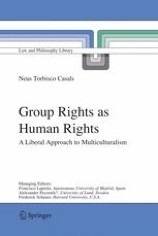
Group rights as human rights : A liberal approach to multiculturalism
Liberal theories have long insisted that cultural diversity in democratic societies can be accommodated through classical liberal tools, in particular through individual rights, and they have often rejected the claims of cultural minorities for group rights as illiberal. Group Rights as Human Rights argues that such a rejection is misguided. Based on a thorough analysis of the concept of group rights, it proposes to overcome the dominant dichotomy between "individual" human rights and "collective" group rights by recognizing that group rights also serve individual interests.
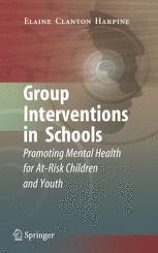
Group interventions in schools : Promoting mental health for at-risk children and youth
Children who are labeled at-risk often suffer from severe deficiencies in cognitive, affective, and behavioral skills that, if unaddressed, may lead to limited prospects for future success and well-being. Tapping into the therapeutic potential of groups, this volume presents the theory and practice of cognitive-oriented group-centered counseling – combining intrinsic motivation, efficacy retraining, and targeted play therapy and social role-playing – that can be implemented to help children build core social skills and emotional regulation to complement their classroom instruction.
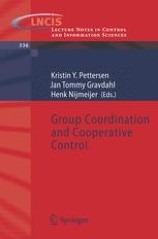
Group Coordination and Cooperative Control
Group coordination and cooperative control are topics currently receiving a lot of interest. Coordinating the motion of a group of relatively simple and inexpensive agents can cover a larger operational area and achieve complex tasks exceeding the abilities of a single agent. This enables applications such as teams of robots for de-mining operations, aerospace formation flying for survey, fleets of AUVs for oceanographic mapping, and ships doing coordinated towing operations. This volume contains the contributions of the workshop. The book covers a wide range of subjects within the area of group coordination and cooperative control, and forms a valuable and up-to-date text on the newer trends in group coordination and cooperative control.

Group B Coxsackieviruses
This monograph reviews information published since 1997 on the group B coxsackieviruses (CVB), a large and important group of human enteroviruses. The CVB were discovered in the mid-20th century, during the search for other poliovirus types, and within a very few years of this discovery, the CVB had been implicated as causes of human myocarditis and pancreatitis. The study of the CVB is still inextricably linked with the fate of their well-known relatives, the polioviruses, for as poliovirus eradication proceeds around the world, the CVB emerge more prominently as the enteroviruses best suited for continuing studies in enteroviral molecular biology as well as understanding the mechanisms underlying enteroviral pathogenesis. This volume reviews and presents modern views on the spectrum of CVB biologies, from interaction of the virus with its receptor through replication, speciation, and induction of disease.

Groundwater overexploitation in the North China Plain : A path to sustainability
Over-pumping of aquifers is a worldwide problem, mainly caused by agricultural water use. Among its consequences are the falling dry of streams and wetlands, soil subsidence, die-off of phreatophytic vegetation, saline water intrusion, increased pumping cost and loss of storage needed for drought relief.

Groundwater Management in Asian Cities : Technology and Policy for Sustainability
The number of city dwellers who do not have access to piped water and rely on groundwater is also increasing. In many Asian cities, groundwater is not only the source of domestic water but also an important resource for industrial development, making better management of groundwater resources essential for sustainable development. Because groundwater is easier to access and costs less than water from piped systems, groundwater abstraction cannot be easily regulated. Policies for groundwater management adopted in Japan and other Asian countries are compared, and technologies for efficient use of groundwater are elucidated. Groundwater contamination is also a serious problem that exacerbates water scarcity in Asian cities. Case studies illustrate the cause and consequences of naturally occurring contaminants such as arsenic and fluoride, and groundwater contamination due to anthropogenic contaminants is described. Also discussed are technologies for treating contaminated groundwater to reduce the health risks of drinking contaminated groundwater.
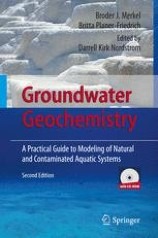
Groundwater Geochemistry : A Practical Guide to Modeling of Natural and Contaminated Aquatic Systems
Numerical groundwater flow, transport, and geochemical models are important tools besides classical deterministic and analytical approaches. Solving complex linear or non-linear systems of equations, commonly with hundreds of unknown parameters, is a routine task for a PC. Modeling hydrogeochemical processes requires a detailed and accurate water analysis, as well as thermodynamic and kinetic data as input. Thermodynamic data, such as complex formation constants and solubility-products, are often provided as databases within the respective programs. However, the description of surface-controlled reactions (sorption, cation exchange, surface complexation) and kinetically controlled reactions requires additional input data. Unlike groundwater flow and transport models, thermodynamic models, in principal, do not need any calibration.

Groundwater Geochemistry : A Practical Guide to Modeling of Natural and Contaminated Aquatic Systems
Offers beginners and advanced modellers alike a minimum theoretical background and a focus on the practical solution of geochemical modeling with PHREEQC. This book covers the possibility to use PITZER equation and the CD music concept within the version of PHREEQC.
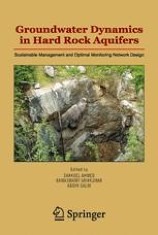
Groundwater Dynamics in Hard Rock Aquifers : Sustainable Management and Optimal Monitoring Network Design
Groundwater is of utmost importance in the arid and semi-arid environment. The areas in such regions are forced to face a variety of problems regarding groundwater as it is the main source of water no matter for any use viz., drinking, domestic, irrigation or industrial particularly for the rural population. The main challenges in hard rock areas in the semi-arid region are the water conservation, management and planning of the water resources. This is further complicated with several complexities of the geological formation. With the semi-arid environment, complex geological settings and over shooting stresses, the aquifer system becomes extremely fragile and sensitive. In spite of a good amount of research in this field, it is still needed to understand the behaviour of such complex system precisely and also apply the result in reasonably larger scales.
Groundwater and Ecosystems
Groundwater Dependent Ecosystems (GDEs) frequently exhibit rich biological diversity and can provide enormous economic wealth. In recent years, GDEs in many industrialized countries have shown signs of serious degradation, primarily the result of groundwater abstraction and pollution. Many such systems, including a number of well documented cases in Eastern Europe, are no longer sustainable. As a consequence, the conservation and sustainable management of GDEs has emerged as one of the most urgent environmental research priorities of our time. A large percentage of the world’s population lives in cities and either depends on, or is affected in some way, by groundwater. Moreover, groundwater has become a very important and complex issue that attracts the interest of many diverse stakeholders. Many problems related to groundwater and ecosystems are shared by countries throughout the world and there is growing recognition that much can be gained by co-operation on an international scale.

Ground improvement and reinforced soil structures ; Proceedings of Indian Geotechnical Conference 2020 Vol. 2
This volume comprises the select proceedings of the Indian Geotechnical Conference (IGC) 2020. The contents focus on recent developments in geotechnical engineering for sustainable tomorrow. The volume covers the topics related advances in ground improvement of weak foundation soils for various civil engineering projects and design/construction of reinforced soil structures with different fill materials using synthetic and natural reinforcements in different forms.
