



Page 9
Page 9

Effect of Cranberry in the Treatment of E. Coli
Escherichia coli (E. coli) bacteria normally live in the intestines of healthy people and animals. It may cause severe stomach cramps, bloody diarrhoea, vomiting and UTI. You may be exposed to E. coli from contaminated water or food especially raw vegetables and undercooked ground beef. Healthy adults usually recover from infection with E. coli within a week. Young children and older adults have a greater risk of developing a life-threatening form of kidney failure. Cranberries are a popular superfood. People can consume them in the form of a sauce or a juice. They can also add them to stuffing, casseroles, or dessert. In fact, research has linked the nutrients in cranberries to a lower risk of urinary tract infection (UTI), the prevention of certain types of cancer, improved immune function, and decreased blood pressure

Dipeptidyl Aminopeptidases : Basic Science and Clinical Applications
Dipeptidyl Aminopeptidases exert a potent modulatory role at an interface between immune mechanisms, metabolic responses, and neuroendocrine pathways. Experimental models and clinical studies addressing the role of these enzymes and the effect of specific inhibitors pave the way to novel therapeutic concepts in immunology, rheumatology, oncology, reproductive medicine and diabetes. Leading experts in the field will contribute to this book, which will present a state-of-the-art view on these enzymes at a time when our understanding of their function is growing ever more rapidly and therapeutic options have become imminent. The sections of the book will focus on various topics including DP IV and related enzymes in: expression and function, metabolic disorders, immune mechanisms and immune disorders, neuronal diseases and cancer, and related drug development.

Diabetes mellitus and bacterial and fungal urinary tract infection
Diabetes mellitus is a heterogeneous group of disorders characterized by variable degrees of insulin resistance, impaired insulin secretion, and increased glucose production. Patients with type 2 diabetes mellitus are at increased risk of infections, with the urinary tract being the most frequent infection site. Various impairments in the immune system, in addition to poor metabolic control of diabetes, and incomplete bladder emptying due to autonomic neuropathy, may all contribute in the pathogenesis of urinary tract infections (UTI) in diabetic patients. Factors that were found to enhance the risk for UTI in diabetics include age, metabolic control, and long-term complications, primarily diabetic nephropathy and cystopathy. The spectrum of UTI in these patients ranges from asymptomatic bacteriuria (ASB) to lower UTI (cystitis), pyelonephritis, and severe urosepsis.

Diabetes Mellitus & Recent developments
Diabetes mellitus is a group of metabolic disease characterized by hyperglycemia resulting from defect in insulin secretion, insulin action, or both. Symptoms of marked hyperglycemia include polyuria, polydipsia, weight loss, sometimes with polyphagia, and blurred vision. Frequency of diabetic in the world About 1 in 11 adults worldwide now have diabetes mellitus, 90% of whom have type 2 diabetes mellitus (T2DM). Asia is a major area of the rapidly emerging T2DM global epidemic Classification Of Diabetic Mellitus. 1-Type 1 diabetes: which accounts for only5–10% of those with diabetes, results from a cellular-mediated autoimmune destruction of the cells of the pancreas. 2-Type 2 diabetes: which accounts for90 –95% of those with diabetes, result from insulin resistance. The chronic complications of diabetes mellitus affect many organ systems and are responsible for the majority of morbidity and mortality. Such as, retinopathy, diabetic foot, neuropathy, and nephropathy, sexual dysfunction, and skin changes.

Dendritic Cells in Clinics
Great advances have taken place in basic research and the clinical usefulness of dendritic cells (DCs). It has now been clearly established, for instance, that these cells play a crucial role in immune responses against infectious diseases and cancers. Antigen-presenting DCs are widely distributed in the body and regulate both immunity and immune tolerance. Experimental studies have provided important insights into DCs and how they can be used for treating animal models of various diseases that occur in humans. The role of these cells in pathogenesis and the treatment of human diseases is elaborately set forth in this valuable book. Researchers in the field are optimistic that DCs, already in use for treating patients with cancers, soon can be used therapeutically for patients with chronic infections, autoimmune diseases, and allergic manifestations. This volume provides a working definition of DCs and also explains the phenotypes and functions of DCs so that these can be readily understood not only by clinicians but by immunologists, researchers, and students as well.

Demystifying Internet of Things Security : Successful IoT Device/Edge and Platform Security Deployment
The IoT presents unique challenges in implementing security and Intel has both CPU and Isolated Security Engine capabilities to simplify it. This book explores the challenges to secure these devices to make them immune to different threats originating from within and outside the network. The requirements and robustness rules to protect the assets vary greatly and there is no single blanket solution approach to implement security.

Defending Life : The Nature of Host-Parasite Relations
Defending Life discusses the relationship between hosts and parasites. A major contention of the book is that the immune system depends ontologically on the ecosystem in which it is embedded; it would not have the features it has if it was not related in one way or other to parasitic agents and to the host’s own cells and tissues. To sustain the argument, life is investigated at all layers – from molecules up through cells, organisms and ecosystems. Together with the inverse course, which goes from ecological contingencies down to gene-expression profiles, the approach facilitates an advanced understanding of immunocompetence as well as its converse, immunoincompetence. The emphasis on analytical abstractions, coherent patterns and generative mechanisms makes possible the distinction between genuine causality and coincidental associations, and thus increases the understanding of why we observe what we observe. The book contains detailed descriptions of the immune system and the microbial world as well as methodological and conceptual clarifications.

Deadly Dermatologic Diseases : Clinicopathologic Atlas and Text
Includes understanding of the biologic behavior of pigmented lesions, cutaneous lymphomas, vascular lesions, and soft tissue tumors.It discusses a wide variety of entities–neoplastic, vascular, infectious, metabolic–each of which may eventuate in death of the patient. In addition, numerous tumors and dermatoses frequently associated with internal malignancies are reviewed. High-quality histologic photomic- graphs and clinical pictures accompany many of the discussions.

Cytokines as Potential Therapeutic Targets for Inflammatory Skin Diseases
Cytokines and cytokine receptors remain an area of great interest for the development of targeted therapies for cutaneous inflammatory diseases.This book summarizes the findings of the 56th International Workshop of the Ernst Schering Research Foundation that focused on "Cytokines as Potential Therapeutic Targets for Inflammatory Skin Diseases".

Cutaneous Lupus Erythematosus
Lupus erythematosus is a chronic inflammatory autoimmune disease characterized by a wide spectrum of manifestations with a variable evolution. There has been a long-standing need for a book with a unifying concept on the cutaneous manifestations of this disease. The book is based on multidisciplinary knowledge and is written by leading clinicians and scientists. It provides not only a comprehensive description of the vast variety of cutaneous abnormalities but also a synthesis of the relationship between cutaneous and systemic changes, including chapters on classification and clinical aspects, pathogenesis and pathologic features, and treatment and management of lupus erythematosus.

Current Topics in Complement
Complement has been regarded as a pivotal effector arm of the innate immune response. Many scientists convened at the Third Aegean Conferences Workshop on Complement Associated Diseases, Animal Models, and Therapeutics, to discuss the advances in this field. This volume represents a collection of topics discussed during the conference.

Current Concepts in Autoimmunity and Chronic Inflammation
The ethiopathologies of autoimmune diseases are complex. A broad variety of cell types and gene products are involved. This book explores clinical and experimental evidence suggesting that the importance of an individual factor changes during the course of the disease.

Crossroads between Innate and Adaptive Immunity
This compilation presents minireviews derived from work presented at the Aegean Conference, which occurred October 9-14, 2005 at the Hilton Conference. Center on the island of Rhodes, Greece. The conference included sessions dedicated to host recognition of and response to pathogens, innate immune networks, antigen presentation, and adaptive immune responses, each headlined by a leading scientist at the forefront of that field. The intimate networking and interaction of dendritic cells, T cells, B cells, NK cells, NK-T cells, and complement during the host response to pathogens and tumors are only now starting to be elucidated.

COVID-19 in Alzheimer's disease and dementia
COVID-19 in Alzheimer’s Disease and Dementia crucially summarizes the current status of the coronavirus in patients suffering from these conditions, describing why they are a common cause of morbidity among those with COVID-19. The first section includes chapters that provide a general description of COVID-19, including SARS-CoV-2 structure, function, and biology, and its impact on the elderly with chronic conditions include hypertension, diabetes, obesity, kidney disease, respiratory illnesses, and infectious diseases. Also discussed are effects of the virus on the immune system. The second section shifts to the impact of COVID-19 on those with dementia or Alzheimer’s disease, with special emphasis on age, gender, ethnic background, and lifestyle.

Computational Intelligence in Multimedia Processing : Recent Advances
This book presents a large number of interesting applications to intelligent multimedia processing of various Computational Intelligence techniques, such as rough sets, Neural Networks; Fuzzy Logic; Evolutionary Computing; Artificial Immune Systems; Swarm Intelligence; Reinforcement Learning and evolutionary computation.

Computational intelligence ; Vol. 174 : Engineering of hybrid systems
Hybrid Intelligent Systems has become an important research topic in computer science and a key application field in science and engineering. This book offers a gentle introduction to the engineering aspects of hybrid intelligent systems, also emphasizing the interrelation with the main intelligent technologies such as genetic algorithms? evolutionary computation, neural networks, fuzzy systems, evolvable hardware, DNA computing, artificial immune systems. A unitary whole of theory and application, the book provides readers with the fundamentals, background information, and practical methods.
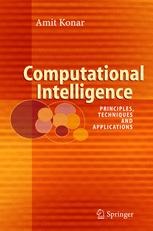
Computational intelligence : Principles, techniques and applications
The book Computational Intelligence: Principles, Techniques and Applications presents both theories and applications of Computational Intelligence in a clear, precise and highly comprehensive style. The textbook addresses the fundamental aspects of Fuzzy Sets and Logic, Neural Networks, Evolutionary Computing and Belief Networks. The application areas include Fuzzy Databases, Fuzzy Control, Image Understanding, Expert Systems, Object Recognition, Criminal Investigation, Telecommunication Networks and Intelligent Robots. The book contains many numerical examples and homework problems with sufficient hints so that the students can solve them on their own. Emerging areas of Computational Intelligence such as artificial life, particle swarm optimization, artificial immune systems, fuzzy chaos theory, rough sets and granular computing have also been addressed with examples in this book. The book ends with a discussion on a number of open- ended research problems in Computational Intelligence. Graduate students interested to pursue their research in this subject will greatly be benefited with these problems.

Co-enzyme Q10
Coenzyme Q10 is a vitamin like substance that has been found in both microorganisms and plants as well as in animals and humans. In this research we will talk about CoenzymeQ10, it’s biochemical functions and roles in health and diseases such as Parkinson, cardiovascular diseases, diabetes, male fertility, cancers , covid19 and immune functions. Some coQ10 determination methods in foods will be discussed. At the last can we use it as asupplement? Does it have an adverse effects and contraindications? and what are the factors that affect on it’s plasma concentrations ? .

Mathematical Modeling of Complex Biological Systems : A Kinetic Theory Approach
Describes the evolution of several socio-biological systems using mathematical kinetic theory. Specifically, it deals with modeling and simulations of biological systems—comprised of large populations of interacting cells—whose dynamics follow the rules of mechanics as well as rules governed by their own ability to organize movement and biological functions. The authors propose a new biological model for the analysis of competition between cells of an aggressive host and cells of a corresponding immune system.Because the microscopic description of a biological system is far more complex than that of a physical system of inert matter, a higher level of analysis is needed to deal with such complexity. Mathematical models using kinetic theory may represent a way to deal with such complexity, allowing for an understanding of phenomena of nonequilibrium statistical mechanics not described by the traditional macroscopic approach. The proposed models are related to the generalized Boltzmann equation and describe the population dynamics of several interacting elements (kinetic population models).The particular models proposed by the authors are based on a framework related to a system of integro-differential equations, defining the evolution of the distribution function over the microscopic state of each element in a given system. Macroscopic information on the behavior of the system is obtained from suitable moments of the distribution function over the microscopic states of the elements involved.

Mathematical Methods for Robust and Nonlinear Control : EPSRC Summer School
The underlying theory on which much modern robust and nonlinear control is based can often be dif?cult for the student to grasp. In particular, the mathematical - pects can be problematic for students from a standard engineering background. The EPSRC sponsored Summer School which was held in Leicester in September 2006 attempted to “?ll the gap” in students’ appreciation the theory relevant to several important areas of control. This book is a collection of lecture notes which were p- sented at that workshop and consists of, broadly, two parts. The ?rst nine chapters are devoted to the theory behind several areas of robust and nonlinear control and are aimed at introducing fundamental concepts to the reader. The last six chapters contain detailed case studies which aim to demonstrate the use and effectiveness of these modern techniques in real engineering applications. It is hoped that this book will provide a useful introduction to many of the more common robust and nonlinear control techniques and serve as a valuable reference for the more adept practitioner.
