



Page 9
Page 9

Neuroeconomia, neuromarketing e processi decisionali = Neuroeconomics, neuromarketing and decision-making processes
The book covers a sector, that of the application of modern neuroscience techniques to the fields of economics and marketing, recently born and of great interest to the public, to advertisers as well as to neuroscience scholars. The book presents, in plain language and not for experts in the field, the structure and functioning of the brain (as it is known today) during human decision-making processes. Of interest is the analysis of how the different neuronal systems within the brain can cooperate with each other in generating decisions. All this simple physiological treatment is inserted in the context of the analysis of brain activity while watching commercial clips. In the original study presented in this book, the variables involved were those related to the recall of television advertising in a sample of normal young subjects. This study is simply the first that is carried out of this type in Italy and will be intended to be a reference point for subsequent studies in the sector.

Neurodynamics of Cognition and Consciousness
This book addresses dynamical aspects of brain functions and cognition. This volume gives an overview of recent advances in this interdisciplinary field of cognitive and computer science related to dynamics of cognition, including experimental studies, dynamical modelling and interpretation of cognitive experiments, and theoretical approaches.

Neurodevelopmental Disorders
The book comprises a number of topics related to psychosocial and motor development and is exemplary with regard to its comprehensiveness, as reviews of the topics presented are generally not available in a single publication. It starts with a timely and critical discussion of the genetics of attention deficit hyperactivity disorder by Dr. Buitelaar in which prospects and challenges of this approach are outlined. The next chapter by Drs. Nicolson and Fawcett deals with dyslexia and its relationship to cerebellar function providing a framework that can explain motor, speed, and phonological deficits in a unified approach. Diagnostic and treatment aspects of speech development disorders are the focus of Dr. Zorowka’s contribution in which, among other issues, the necessity of mul- professional cooperation is stressed. Dr. Sigmundsson then focuses on disorders of motor development. 6-10 % of children have motor competence well below the norm, which often persist.

Neurodegeneration in Multiple Sclerosis
In multiple sclerosis (MS), conventional magnetic resonance imaging (cMRI) has proved to be a valuable tool to increase diagnostic reliability and to monitor the efficacy of experimental treatment. However, cMRI has limited specificity and accuracy as to the most disabling aspects of the MS pathology, known to occur in and outside macroscopic lesions. Modern quantitative MR techniques have the potential to overcome the limitations of cMRI, and their application is dramatically changing our understanding of how MS causes irreversible disability.
Neurocutaneous Disorders : Phakomatoses and Hamartoneoplastic Syndromes
Neurocutaneous diseases are a wide group of conditions that affect the nervous system but appear as lesions of the skin. Some of the more common entities have variable forms of expression that can confuse the diagnosis; for the rare conditions it is difficult to find descriptions in the literature. Recent insights into their cellular, biochemical and molecular genetic bases have shown the essential need for a new nosology and updated genotype-phenotype correlations. The book provides an authoritative source of knowledge about these difficult problems and bridges the gap between clinical recognition and the new molecular medicine. The editors, distinguished clinicians and geneticists, assembled an internationally renowned group of collaborators, many of them the experts who first described a particular disorder or established its present accepted definition.

Neurocutaneous disorders : A clinical, ciagnostic and therapeutic approach
Provides extensive data on the more common and many of the more rare congenital and hereditary syndromes that manifest in the nervous system and skin. Though often complex and multi-systemic, these disorders can frequently be diagnosed using a combination of simple visual inspection and sound clinical expertise. Drawing on fully referenced information from thousands of articles, the international editorial team has prepared a comprehensive overview that includes historical perspectives, clinical features, the pathogenesis, and diagnostic and therapeutic strategies. In addition, it addresses the biochemical, molecular, and genetic basis of the disorders.
Neuroblastoma
Neuroblastoma is a medical enigma. As a childhood neoplasm arising from neural crest cells, it is characterized by diverse clinical behaviors ranging from spontaneous remission to rapid tumor progression and death. Although clinical outcome can be predicted to a large extent by the stage of disease and the age at diagnosis, an in-depth understanding of its clinico-pathological behavior, now greatly aided by sophisticated molecular genetic profiling, will improve diagnostic precision and refine risk-based therapies. Comprehensive international efforts have advanced our understanding of tumor biology and improved the clinical management of children with neuroblastoma. This book reviews our current understanding of the genes and biological pathways that contribute to neuroblastoma pathogenesis, modern risk-based treatment approaches for these patients, and recent advances in biologically based therapy. It provides a concise up-to-date reference for practitioners, students, and researchers.
Neurobiology of Human Values
Man has been pondering for centuries over the basis of his own ethical and aesthetic values. Until recent times, such issues were primarily fed by the thinking of philosophers, moralists and theologists, or by the findings of historians or sociologists relating to universality or variations in these values within various populations. Science has avoided this field of investigation within the confines of philosophy. Beyond the temptation to stay away from the field of knowledge science may also have felt itself unconcerned by the study of human values for a simple heuristic reason, namely the lack of tools allowing objective study. For the same reason, researchers tended to avoid the study of feelings or consciousness until, over the past two decades, this became a focus of interest for many neuroscientists
Neurobiology of Exceptionality
Nurture or nature? Biology or environment? Why are some people intelligent, or personable, or creative and others obtuse, or shy, or unimaginative? Although each human being is a unique mixture of positive and negative traits and behaviors, the question remains: What is the neurobiological basis for each individual’s makeup? For example, why does one person suffer from a disorder (e.g., ADHD, autism, mental retardation) and another lives free of maladies?

Neuroanatomy for the Neuroscientist
Neurology, more than any other system of medicine, is rooted in the firm knowledge of basic science material (i.e., the anatomy, physiology, and pathology of the nervous system). This material enables students to readily arrive at diagnoses and to apply their knowledge at solving problems in clinical situations. Neuroanatomy for the Neuroscientist gives neuroscientists the tools to teach this material at levels appropriate for students at several levels of study, including undergraduate, graduate, dental, and medical school. The text also provides an updated approach to lesion localization in neurology, utilizing the techniques of computerized axial tomography (CT scanning), magnetic resonance imaging (MRI), and magnetic resonance angiography (MRA). Multiple illustrations demonstrating the value of these techniques in clinical neurology and neuroanatomical localization has been provided.
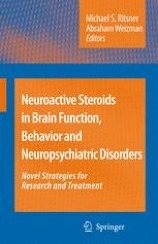
Neuroactive Steroids in Brain Function, Behavior and Neuropsychiatric Disorders : Novel Strategies for Research and Treatment
Over the past few decades the involvement of neurosteroids in brain function and mental health has attracted much interest, not only from a neuroscience perspective, but also from clinical and therapeutic aspects. In recent years, much of the research has focused on the multifunctional position of neurosteroids in the nervous system. The areas that have been explored, in particular, are the cellular and molecular mechanisms involved in the activity of neurosteroids in the brain, the role of neurosteroids in brain development, neurodegeneration and neuroplasticity, and their pharmacological properties. The large increase in the number of publications highlights this amplified interest in neurosteroids. Over the last 7 years at least 400 papers have been published describing the putative role of neurosteroids in the modulation of basic brain function and in the etiology and treatment of psychiatric and neurological disorders.

Neuroacanthocytosis Syndromes
Neuroacanthocytosis Syndromes is the first comprehensive review of a field that has not yet received the attention it deserves. Affecting the brain as well as the circulating red cells, these multi-system disorders in the past had often been mistaken for Huntington's disease. Recent breakthroughs have now identified the molecular basis of several of these. This volume grew out of the first international scientific meeting ever devoted to neuroacanthocytosis and provides in-depth information about the state of the art. Its thirty chapters were written by the leading authorities in the field to cover the clinical as well as the basic science perspective, including not only molecular genetics but also experimental pharmacology and cell membrane biology, among others. The book vehemently poses the question of how the membrane deformation of circulating red blood cells relates to degeneration of nerve cells in the brain, the basal ganglia, in particular. It provides a wealth of data that will help to solve an intriguing puzzle and ease the suffering of those affected by one of the neuroacanthocytosis syndromes.

Neural Networks : Methodology and Applications
Neural networks represent a powerful data processing technique that has reached maturity and broad application. When clearly understood and appropriately used, they are a mandatory component in the toolbox of any engineer who wants make the best use of the available data, in order to build models, make predictions, mine data, recognize shapes or signals, etc. Ranging from theoretical foundations to real-life applications, this book is intended to provide engineers and researchers with clear methodologies for taking advantage of neural networks in industrial, financial or banking applications, many instances of which are presented in the book. For the benefit of readers wishing to gain deeper knowledge of the topics, the book features appendices that provide theoretical details for greater insight, and algorithmic details for efficient programming and implementation. The chapters have been written by experts ands seemlessly edited to present a coherent and comprehensive, yet not redundant, practically-oriented introduction.

Neural Networks : Computational Models and Applications
Neural Networks: Computational Models and Applications covers a wealth of important theoretical and practical issues in neural networks, including the learning algorithms of feed-forward neural networks, various dynamical properties of recurrent neural networks, winner-take-all networks and their applications in broad manifolds of computational intelligence: pattern recognition, uniform approximation, constrained optimization, NP-hard problems, and image segmentation. By presenting various computational models, this book is developed to provide readers with a quick but insightful understanding of the broad and rapidly growing areas in the neural networks domain. Besides laying down fundamentals on artificial neural networks, this book also studies biologically inspired neural networks. Some typical computational models are discussed, and subsequently applied to objection recognition, scene analysis and associative memory. The studies of bio-inspired models have important implications in computer vision and robotic navigation, as well as new efficient algorithms for image analysis.

Neural Network Theory
Neural Networks Theory is a major contribution to the neural networks literature. It is a treasure trove that should be mined by the thousands of researchers and practitioners worldwide who have not previously had access to the fruits of Soviet and Russian neural network research. Dr. Galushkin is to be congratulated and thanked for his completion of this monumental work; a book that only he could write. It is a major gift to the world.

Neural Engineering
Neural Engineering, Bioelectric Engineering Volume 2, contains reviews and discussions of contemporary and relevant topics by leading investigators in the field.

Networks : From Biology to Theory
The concept of a network emerges as a powerful and stimulating research paradigm in mathematics, physics and computer science, and demonstrates a very lively interaction between experimental findings, simulation studies, and theoretical investigations that then in turn lead to new experimental questions. This volume explores this concept in full and features contributions from a truly global set of contributors.

Networked RFID Systems and Lightweight Cryptography : Raising Barriers to Product Counterfeiting
This book considers the methods used by illicit manufactures and traders to introduce counterfeit goods into the supply chain, the extent of their success, the various barriers that may be brought against their actions, and the effectiveness of those barriers. The new field of lightweight cryptography is described in the context of using RFID systems in the fight against counterfeit products, its cost effectiveness is examined and feasible approaches to its deployment are described. Research problems and likely avenues for solutions are also presented to guide a global effort in anti-counterfeiting.

Networked RFID : Systems, Software and Services
Begins with a quick introduction to RFID basics and then discusses the various elements of the topic, using applications such as e-passports, ticketing and supply-chain management throughout. The text explores RFID technology fundamentals, including operating principles, core system components and performance trade-offs involved in the selection of specific RFID platforms. The emphasis is on a practical approach, developing an arsenal of techniques and designs that can be mixed and matched to fit the needs of new systems and applications.

Networked Embedded Sensing and Control ; Workshop NESC'05 : University of Notre Dame, USA, October 2005 Proceedings
Recent technological developments in sensing, communications, control and computation have created an emerging class of complex systems hereon called networked embedded systems. These systems can be roughly described as collections of spatially distributed sensors, actuators and controllers whose behaviour is coordinated through wired or wireless communication links. This integration between different technologies and scientific domains presents new and challenging fundamental problems underlying the theoretical foundations for this class of systems. This workshop aims at bringing together researchers working of different aspects of networked embedded systems in order to exchange research experiences and to identify the main scientific challenges in this exciting new area.
