



Page 88
Page 88

Deep learning architecture and application
As one of the fastest-growing topics in machine learning, deep learning algorithms have achieved unprecedented success in recent years. Novel paradigms (such as contrastive learning and few-shot learning) in deep learning and rising neural network architectures (e.g., transformer and masked autoencoder) are dramatically changing the field of data-driven algorithms. More importantly, deep learning models are redefining the next generation of industrial applications spanning image recognition, speech processing, language translation, healthcare, and other sciences. For example, recent advances in deep representation learning are allowing us to learn about protein 3D structures, which sheds new light on fundamental medicine and biology along with potentially bringing in billions of dollars (e.g., in the pharmaceutical market).

Deep learning approaches to cloud security
Covering one of the most important subjects to our society today, cloud security, this editorial team delves into solutions taken from evolving deep learning approaches, solutions allowing computers to learn from experience and understand the world in terms of a hierarchy of concepts, with each concept defined through its relation to simpler concepts.

Deep learning approach for text summarization
Machine learning and deep learning, as we know, have started ruling over almost every field in the computing industry and so, has revolutionized the process of text summarization too. Automatic text summarization is an advancing realm of the natural language processing research in which concise textual summaries are generated from lengthy input documents. Extensive research has been carried out on how automatic summarization can be prosecuted through various extractive and abstractive techniques. In this paper, we address all the approaches to text summarization and present the modus operandi of an Architecture called Encoder Decoder, under the machine learning approach.

Deep Learning and its Applications
Presents an introduction to deep learning and various applications of deep learning such as recommendation systems, text recognition, diabetic retinopathy prediction of breast cancer, prediction of epilepsy, sentiment, fake news detection, software defect prediction and protein function prediction.

Deep learning and computer vision in remote sensing-II
Computer vision (CV) have seen a massive rise in popularity in the remote sensing field over the last few years. This success is mostly due to the effectiveness of deep learning (DL) algorithms. However, remote sensing data acquisition and annotation, as well as information extraction from massive remote sensing data, are still challenging. This reprint collected novel developments in the field of deep learning and computer vision methods for remote sensing. Papers dealing with fundamental theoretical analyses, as well as those demonstrating their application to real-world problems, have been published. With practical examples and real-world case studies, this reprint provides a valuable resource for researchers, professionals, and students seeking to harness the power of deep learning in the field of remote sensing.

Deep learning and computer vision in remote sensing-I
In the last few years, huge amounts of progress have been made regarding remote sensing in the field of computer vision. This success and progress is mostly due to the effectiveness of deep learning (DL) algorithms. In addition, the remote sensing community has shifted its attention to DL, and DL algorithms have been used to achieve significant success in many image analysis tasks. However, with regard to remote sensing, a number of challenges caused by difficulties in data acquisition and annotation have not been fully solved yet. This reprint is a collection of novel developments in the field of remote sensing using computer vision, deep learning, and artificial intelligence. The articles published involve fundamental theoretical analyses as well as those demonstrating their application to real-world problems.

Deep Data Analytics for New Product Development
The benefits of reading this book are twofold. The first is an understanding of the stages of a new product development process from ideation through launching and tracking, each supported by information about customers. The second benefit is an understanding of the deep data analytics for extracting that information from data. These analytics, drawn from the statistics, econometrics, market research, and machine learning spaces, are developed in detail and illustrated at each stage of the process with simulated data. The stages of new product development and the supporting deep data analytics at each stage are not presented in isolation of each other, but are presented as a synergistic whole.

Declarative agent languages and technologies III ; 3rd International Workshop, DALT 2005, Utrecht, The Netherlands, July 25, 2005, Selected and Revised Papers
The workshop on Declarative Agent Languages and Technologies is a we- established venue for researchers interested in sharing their experiences in the areas of declarative and formal aspects of agents and multi-agent systems, and in engineering and technology. Today it is still a challenge to develop techno- gies that can satisfy the requirements of complex agent systems. The design and development of multi-agent systems still calls for models and technologies that ensure predictability, enable feature discovery, allow for the veri?cation of properties, and guarantee ?exibility. Declarative approaches are potentially a valuable means for satisfying the needs of multi-agent system developers and for specifying multi-agent systems.

Decision-Making in Engineering Design : Theory and Practice
We use our brains when we create plans and designs. The resulting plans and designs take physical form, however, what we thought about, the alternatives we tried, and the constraints we recognized while we were making these plans and designs are usually not written anywhere. Therefore, those who only get to see the results, e.g. the final text and drawings, do not learn what led the designer to reach such conclusions and as a consequence never understand the real design. This description of decision processes will provide the means for the development of new manufacturing systems and production activities in the future because it helps us gain a real understanding of the how the mind processes we go through when making decisions affect the decisions that we make.

Decision Making in the Manufacturing Environment : Using Graph Theory and Fuzzy Multiple Attribute Decision Making Methods
Manufacturing is the backbone of any industrialized nation. Recent worldwide advances in manufacturing technologies have brought about a metamorphosis in industry. Fast-changing technologies on the product front have created a need for an equally fast response from manufacturing industries. To meet these challenges, manufacturing industries have to select appropriate manufacturing strategies, product designs, manufacturing processes, work piece and tool materials, and machinery and equipment. The selection decisions are complex, as decision making is more challenging today. Decision makers in the manufacturing sector frequently face the problem of assessing a wide range of options and selecting one based on a set of conflicting criteria.

Deadly Dermatologic Diseases : Clinicopathologic Atlas and Text
Includes understanding of the biologic behavior of pigmented lesions, cutaneous lymphomas, vascular lesions, and soft tissue tumors.It discusses a wide variety of entities–neoplastic, vascular, infectious, metabolic–each of which may eventuate in death of the patient. In addition, numerous tumors and dermatoses frequently associated with internal malignancies are reviewed. High-quality histologic photomic- graphs and clinical pictures accompany many of the discussions.

Dataset Studio
Data is the new oil, which means that AI engineers can face difficulties in locating suitable datasets. Dataset Studio is a comprehensive platform designed to support AI engineers in the creation and optimization of datasets. This project offers a diverse range of services that encompass data collection, data augmentation, and data classification. As a result, this software empowers engineers by automatically generating structured data through the utilization of advanced tools and AI techniques. By automating the laborious tasks of manual data collection and extraction, Dataset Studio effectively streamlines the workflow for AI engineers, enabling them to save valuable time and focus on the more intricate aspects of dataset development and refinement.

Data-Driven Fault Detection and Reasoning for Industrial Monitoring
Assesses the potential of data-driven methods in industrial process monitoring engineering. The process modeling, fault detection, classification, isolation, and reasoning are studied in detail. These methods can be used to improve the safety and reliability of industrial processes. Fault diagnosis, including fault detection and reasoning, has attracted engineers and scientists from various fields such as control, machinery, mathematics, and automation engineering. Combining the diagnosis algorithms and application cases, this book establishes a basic framework for this topic and implements various statistical analysis methods for process monitoring.

Databases and information systems ; 14th International Baltic Conference, DB&IS 2020, Tallinn, Estonia, June 16–19, 2020, Proceedings
This book constitutes the refereed proceedings of the 14th International Baltic Conference on Databases and Information Systems, DB&IS 2020, held in Tallinn, Estonia, in June 2020.* The 22 revised papers presented were carefully reviewed and selected from 52 submissions. The papers are centered around topics like architectures and quality of information systems, artificial intelligence in information systems, data and knowledge engineering, enterprise and information systems engineering, security of information systems.

Database and expert systems applications ; DEXA 2020 International workshops BIOKDD, IWCFS and MLKgraphs, Bratislava, Slovakia, September 14–17, 2020, Proceedings
This volume constitutes the refereed proceedings of the three workshops held at the 31st International Conference on Database and Expert Systems Applications, DEXA 2020, held in September 2020: The 11th International Workshop on Biological Knowledge Discovery from Data, BIOKDD 2020, the 4th International Workshop on Cyber-Security and Functional Safety in Cyber-Physical Systems, IWCFS 2020, the 2nd International Workshop on Machine Learning and Knowledge Graphs, MLKgraphs2019. Due to the COVID-19 pandemic the conference and workshop were held virtually. The 10 papers were thoroughly reviewed and selected from 15 submissions, and discuss a range of topics including: knowledge discovery, biological data, cyber security, cyber-physical system, machine learning, knowledge graphs, information retriever, data base, and artificial intelligent.
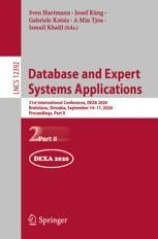
Database and expert systems applications ; 31st International Conference, DEXA 2020, Bratislava, Slovakia, September 14–17, 2020, Proceedings, Part II
The double volumes LNCS 12391-12392 constitutes the papers of the 31st International Conference on Database and Expert Systems Applications, DEXA 2020, which will be held online in September 2020. The 38 full papers presented together with 20 short papers plus 1 keynote papers in these volumes were carefully reviewed and selected from a total of 190 submissions.

Database and expert systems applications ; 31st International conference, DEXA 2020, Bratislava, Slovakia, September 14–17, 2020, Proceedings, Part I
The double volumes LNCS 12391-12392 constitutes the papers of the 31st International Conference on Database and Expert Systems Applications, DEXA 2020, which will be held online in September 2020. The 38 full papers presented together with 20 short papers plus 1 keynote papers in these volumes were carefully reviewed and selected from a total of 190 submissions.

Data Warehousing and Knowledge Discovery ; 10th International Conference, DaWaK 2008 Turin, Italy, September 2-5, 2008 Proceedings
This book constitutes the refereed proceedings of the 10th International Conference on Data Warehousing and Knowledge Discovery, DaWak 2008, held in Turin, Italy, in September 2008.
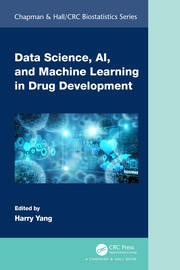
Data science, AI, and machine learning in drug development
The confluence of big data, AI, and machine learning has led to a paradigm shift in how innovative medicines are developed and healthcare delivered. To fully capitalize on these technological advances, it is essential to systematically harness data from diverse sources and leverage digital technologies and advanced analytics to enable data-driven decisions. Data science stands at a unique moment of opportunity to lead such a transformative change. Intended to be a single source of information, Data Science, AI, and Machine Learning in Drug Research and Development covers a wide range of topics on the changing landscape of drug R&D, emerging applications of big data, AI and machine learning in drug development, and the build of robust data science organizations to drive biopharmaceutical digital transformations

Data science on the Google cloud platform : Implementing end-to-end real-time data pipelines : From ingest to machine learning
Learn how easy it is to apply sophisticated statistical and machine learning methods to real-world problems when you build using Google Cloud Platform (GCP). This hands-on guide shows data engineers and data scientists how to implement an end-to-end data pipeline with cloud native tools on GCP. You'll work through a sample business decision by employing a variety of data science approaches. Follow along by building a data pipeline in your own project on GCP, and discover how to solve data science problems in a transformative and more collaborative way. Employ best practices in building highly scalable data and ML pipelines on Google Cloud Automate and schedule data ingest using Cloud Run Create and populate a dashboard in Data Studio Build a real-time analytics pipeline using Pub/Sub, Dataflow, and BigQuery Conduct interactive data exploration with BigQuery Create a Bayesian model with Spark on Cloud Dataproc Forecast time series and do anomaly detection with BigQuery ML Aggregate within time windows with Dataflow Train explainable machine learning models with Vertex AI Operationalize ML with Vertex AI Pipelines
