



Page 71
Page 71
BioMEMS and biomedical nanotechnology ; Vol. IV : Biomolecular Sensing, Processing and Analysis
This volume contains 18 chapters focused on ‘Biomolecular Sensing, Processing and Analysis’, written by experts in the field of BioMEMS and biomedical nanotechnology. The chapters are groups into three broad categories of Sensors and Materials, Processing and Integrated Systems, and Microfluidics.Prof. Taun Vo-Dinh from Oakridge National Labs begins the Sensors and Materials section by providing a review of biosensors and biochips. This review is followed by an example of mechanical cantilever sensor work described by Prof. Arun Majumdar’s group at UC Berkeley and Prof. Tom Thundat at Oakridge National Laboratory.
BioMEMS and biomedical nanotechnology ; Vol. III : Therapeutic Micro/Nanotechnology
The human body is composed of structures organized in a hierarchical fashion: from biomolecules assembled into polymers, to multimeric assemblies such as cellular or-ganelles, to individual cells, to tissues, to organ systems working together in health and disease- each dominated by a characteristic length scale. Decades of science and engineer-ing are now converging to provide tools that enable the orderly manipulation of biological systems at previously inaccessible, though critically important, length scales (<100 mi-crons). Thus, the approaches described in this volume provide a snapshot of how micro-and nanotechnologies can enable the investigation, prevention, and treatment of human disease.The volume is divided into three parts. The first part, Cell-based therapeutics; cov- ers the merger of cells with micro- and anosystems for applications in regenerative medicine spanning the development of novel nanobiomaterials.
BioMEMS and biomedical nanotechnology ; Vol. II : Micro/Nano Technologies for Genomics and Proteomics
Numerous miniaturized DNA microarray, DNA chip, Lab on a Chip and biosensor devices have been developed and commercialized. Such devices are improving the way many impor-tant genomic and proteomic analyses are performed in both research and clinical diagnostic laboratories. The development of these technologies was enabled by a synergistic combina-tion of disciplines that include microfabrication, microfluidics, MEMS, organic chemistry and molecular biology. Some of these new devices and technologies utilize sophisticated mi-crofabrication processes developed by the semiconductor industry.
BioMEMS and Biomedical Nanotechnology : Vol. I: Biological and Biomedical Nanotechnology
Abe Lee has been working on micro/ and nanotechnology for biomedical and biotech applications since 1992. His recent research focuses on the development of integrated micro and nano fluidic chip processors for the following applications: point-of-care diagnostics, "smart" nanomedicine for early detection and treatment, stem cell biology and therapeutics, the synthesis of novel and pure materials, and biosensors to detect environmental and terrorism threats. Jim Lee's research interest includes BioMEMS/NEMS, and polymer micro/nanotechnology. In the last 4 years, he has over 20 refereed journal publications, 2 book chapters, and 5 patents in these areas. He is now leading an NSF Nanoscale Science and Engineering Center for Affordable Nanoengineering of Polymer Biomedical Devices at OSU.
BioMEMS
Here, a new discipline evolved which focuses on microsystems for living systems called "BIOMEMS". In this review at a glance the exciting field of bio-microsystems, from their beginnings to indicators of future successes are presented. It will also show that a broad penetration of micro and nano technologies into biology and medicine will be mandatory for future scientific and new product development progress in life science.
Bio-mechanisms of swimming and flying ; Fluid dynamics, biomimetic robots, and sports science
This book follows "Bio-mechanisms of Animals in Swimming and Flying" published in 2004 including 11 chapters. This time, the book includes 31 chapters on the latest researches into natural autonomous systems and locomotion in both flying and swimming organisms. The area of sports science such as analysis and simulation of human swimming is newly added. The computational frameworks for the modeling, simulation and optimization of animals in swimming and flying demonstrate an important role in the progress of interdisciplinary work in the fields of biology and engineering. An innovative technology is exhibited for the flight of an insect size micro air vehicle. Neuronal science is not only unveiling the locomotion mechanisms of swimming in fish from the aspect of the neuronal activities, but also applied to underwater biomimetic robots. The interdisciplinary works are exhibited in the fields of biology and engineering, yielding real-world benefits in innovative technologies.

Biology of the Fungal Cell
"The volume is well illustrated and certainly realizes the primary aim of "The Mycota", namely to highlight developments in both basic and applied research into fungal systems." (Microbiology Today) "The Editors´ aim 'to provide a selected sampling of contemporary topics at the forefront of fungal cell biology' has certainly been achieved. Indeed, it is hard to imagine any mycologist not finding something fascinating in each of the chapters. ... Further, the volume is packed with material that will be extremely useful for those presenting basic courses in mycology - especially because of the many fine explanatory line drawings." (Mycological Research)

Biology and mechanics of blood flows ; Part II : Mechanics and medical aspects
Biology and Mechanics of Blood Flows presents the basic knowledge and state-of-the-art techniques necessary to carry out investigations of the cardiovascular system using modeling and simulation. Part II of this two-volume sequence, Mechanics and Medical Aspects, refers to the extraction of input data at the macroscopic scale for modeling the cardiovascular system, and complements Part I, which focuses on nanoscopic and microscopic components and processes. This volume contains chapters on anatomy, physiology, continuum mechanics, as well as pathological changes in the vasculature walls including the heart and their treatments. Methods of numerical simulations are given and illustrated in particular by application to wall diseases. This authoritative book will appeal to any biologist, chemist, physicist, or applied mathematician interested in the functioning of the cardiovascular system.

Biology and mechanics of blood flows ; Part I : Biology
Biology and Mechanics of Blood Flows presents the basic knowledge and state-of-the-art techniques necessary to carry out investigations of the cardiovascular system using modeling and simulation. Part I of this two-volume sequence, Biology, addresses the nanoscopic and microscopic scales. The nanoscale corresponds to the scale of biochemical reaction cascades involved in cell adaptation to mechanical stresses among other stimuli. The microscale is the scale of stress-induced tissue remodeling associated with acute or chronic loadings. The cardiovascular system, like any physiological system, has a complicated three-dimensional structure and composition. Its time dependent behavior is regulated, and this complex system has many components.

Biological nitrogen fixation : Towards poverty alleviation through sustainable agriculture ; Proceedings of the 15th International nitrogen fixation congress and the 12th International Conference of the African Association for Biological Nitrogen Fixation
This volume covers recent developments in both fundamental and applied research in biological nitrogen fixation. It emphasizes the application of biological nitrogen fixation for sustainable agriculture, which should lead to poverty alleviation, environmental protection, and good agricultural practices generally. The roles of, and advances in, plant breeding, plant molecular biology, nodule physiology, and symbiotic and associative interactions between plants and microbes in sustaining agricultural productivity and soil fertility are described. The evolution of symbioses and nitrogen fixation are also covered in this volume. To ensure high agricultural productivity, while protecting the environment (both soil and water resources), requires plant cultivars that also respond to beneficial microbes.
Biological Low-Voltage Scanning Electron Microscopy
Biological Low-Voltage Scanning Electron Microscopy is the first book to address both of these aspects of biological LVSEM. After providing a thorough description of the unique advantages and the operating constraints related to operating a scanning electron microscope at low beam voltage, the remainder of book focuses on the the best way to image all types of plant and animal cells and covers specimens that range from macromolecules to the surfaces revealed by de-embedding resin-embedded samples. Advanced specimen preparation techniques such as cryo-LVSEM, and immuno-gold-LVSEM are fully covered, as is x-ray microanalysis at low beam voltage and live-time stereo imaging. The preparative protocols provided represent the distilled essence of the experience of a group of world-renowned authors who have, for many decades, been instrumental in developing and applying new approaches to LVSEM to support their own biological research.
Biological and medical data analysis ; Vol. 3745 ; 6th International symposium, ISBMDA 2005, Aveiro, Portugal, November 10-11, 2005, Proceedings
The 6th International Symposium on Biological and Medical Data Analysisaimed to become a place where researchersinvolved in these diverse but increas-ingly complementary areas could meet topresent and discuss their scientificresults.The papers in this volume discuss issues from statistical models to archi-tectures and applications to bioinformatics and biomedicine. They cover bothpractical experience and novel research ideas and concepts.
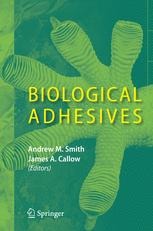
Biological adhesives
Many plants, animals, and microbes use adhesive polymers and structures to attach to inert substrates, to each other, or to other organisms. This is the first major review that brings together research on many of the well-known biological adhesives. Emphasizing the diversity of biological adhesives and associated adhesion processes, it deals with bacteria, fungi, algae, and marine and terrestrial animals. It bridges a variety of disciplines including biochemistry, molecular biology, biomechanics, bioengineering, microbiology, organism structure and function, and ultrastructure. As we learn more about the molecular and mechanical properties of these adhesives, we begin to understand why they adhere so well and how they develop cohesive strength. With this understanding comes the prospect of developing synthetic or semi-synthetic adhesives with broad applications in areas such as medicine, dentistry, and biotechnology. The book is suitable for both industrial and academic researchers.

Bio-inspired computing and communication ; 1st Workshop on Bio-inspired design of networks, BIOWIRE 2007 Cambridge, UK, April 2-5, 2007 Revised Selected Papers
The book constitutes the thoroughly refereed post-workshop proceedings of the First Workshop on Bio-Inspired Design of Networks, BIOWIRE 2007, held in Cambridge, UK, in April 2007.

Bio-inspired computational intelligence and applications ; International conference on life system modeling, and simulation, LSMS 2007, Shanghai, China, September 14-17, 2007. Proceedings
It covers both micro and macro c- ponents ranging from cells, tissues and organs across to organisms and ecologic niches. These interact and evolve to produce an overall complex system whose beh- ior is difficult to comprehend and predict.The arrival of the 21st century has been marked by a resurgence of research interest both in arriving at a systems-level und- standing of biology and in applying such knowledge in complex real-world appli- tions. Consequently, computational methods and intelligence in systems, biology, as well as bio-inspired computational intelligence, have emerged as key drivers for new computational methods. For this reason papers dealing with theory, techniques and real-world applications relating to these two themes were especially solicited.
Bioinorganic electrochemistry
Interfacial electrochemistry of redox metalloproteins and DNA-based molecules is presently moving towards new levels of structural and functional resolution. This is the result of powerful interdisciplinary efforts. Underlying fundamentals of biological electron and proton transfer is increasingly well understood although with outstanding unresolved issues. Comprehensive bioelectrochemical studies have mapped the working environments for bioelectrochemical electron transfer, supported by the availability of mutant proteins and other powerful biotechnology. Introduction of surface spectroscopy, the scanning probe microscopies, and other solid state and surface physics methodology has finally offered exciting new fundamental and technological openings in interfacial bioelectrochemistry of both redox proteins and DNA-based molecules.
Bioinformatics Using Computational Intelligence Paradigms
Bioinformatics as well as Computational Intelligence are undoubtedly remarkably fast growing fields of research and real-world applications with enormous potential for current and future developments. "Bioinformatics using Computational Intelligence Paradigms" contains recent theoretical approaches and guiding applications of biologically inspired information processing systems(Computational Intelligence) against the background of bioinformatics. This carefully edited monograph combines the latest results of Bioinformatics and Computational Intelligence and offers a promising cross-fertilisation and interdisciplinary work between these growing fields.
Bioinformatics technologies
Solving modern biological problems requires advanced computational methods. Bioinformatics evolved from the active interaction of two fast-developing disciplines, biology and information technology. The central issue of this emerging field is the transformation of often distributed and unstructured biological data into meaningful information. This book describes the application of well-established concepts and techniques from areas like data mining, machine learning, database technologies, and visualization techniques to problems like protein data analysis, genome analysis and sequence databases. Chen has collected contributions from leading researchers in each area. The chapters can be read independently, as each offers a complete overview of its specific area, or, combined, this monograph is a comprehensive treatment that will appeal to students, researchers, and R&D professionals in industry who need a state-of-the-art introduction into this challenging and exciting young field.
Bioinformatics research and development ; 2nd International Conference, BIRD 2008 Vienna, Austria, July 7-9, 2008 Proceedings
This book constitutes the refereed proceedings of the Second International Bioinformatics Research and Development Conference, BIRD 2008, held in Vienna, Austria in July 2008.

Bioinformatics research and development ; 1st International Conference, BIRD 2007, Berlin, Germany, March 12-14, 2007, Proceedings
This volume covers a wide range of topics related to bioinformatics like microarray data, genomics, single nucleotide polymorphism, sequence analysis, systems biology, medical applications, proteomics, information systems.
