



Page 7
Page 7

Fuzzy systems and knowledge discovery ; Vol. 3613 ; 2nd International Conference, FSKD 2005, Changsha, China, August 27-29, 2005, Proceedings, Part I
This book and its sister volume, LNAI 3613 and 3614, constitute the proce- ings of the Second International Conference on Fuzzy Systems and Knowledge Discovery (FSKD 2005), jointly held with the First International Conference on Natural Computation (ICNC 2005, LNCS 3610, 3611, and 3612) from - gust 27–29, 2005 in Changsha, Hunan, China. FSKD 2005 successfully attracted 1249 submissions from 32 countries/regions (the joint ICNC-FSKD 2005 received 3136 submissions). After rigorous reviews, 333 high-quality papers, i. e. , 206 long papers and 127 short papers, were included in the FSKD 2005 proceedings, r- resenting an acceptance rate of 26. 7%. The ICNC-FSKD 2005 conference featured the most up-to-date research - sults in computational algorithms inspired from nature, including biological, e- logical, and physical systems. It is an exciting and emerging interdisciplinary area in which a wide range of techniques and methods are being studied for dealing with large, complex, and dynamic problems. The joint conferences also promoted cross-fertilization over these exciting and yet closely-related areas, which had a signi?cant impact on the advancement of these important technologies. Speci?c areas included computation with words, fuzzy computation, granular com- tation, neural computation, quantum computation, evolutionary computation, DNA computation, chemical computation, information processing in cells and tissues, molecular computation, arti?cial life, swarm intelligence, ants colony, arti?cial immune systems, etc. , with innovative applications to knowledge d- covery, ?nance, operations research, and more.

Fuzzy database modeling with XML
Fuzzy Database Modeling with XML aims to provide a single record of current research and practical applications in the fuzzy databases. This volume is the outgrowth of research the author has conducted in recent years. Fuzzy Database Modeling with XML introduces state of the art information to the database research, while at the same time serving the information technology professional faced with a non-traditional application that defeats conventional approaches. The research on fuzzy conceptual models and fuzzy object-oriented databases is receiving increasing attention, in addition to fuzzy relational database models. With rapid advances in network and internet techniques as well, the databases have been applied under the environment of distributed information systems. It is essential in this case to integrate multiple fuzzy database systems. Since databases are commonly employed to store and manipulate XML data, additional requirements are necessary to model fuzzy information with XML. Second, this book maps fuzzy XML model to the fuzzy databases. Very few efforts at investigating these issues have thus far occurred.
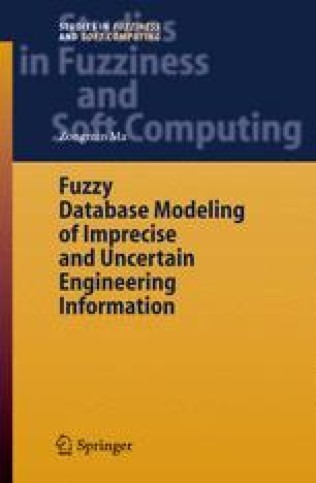
Fuzzy Database Modeling of Imprecise and Uncertain Engineering Information
This book presents recent advances for imprecise and uncertain engineering information from the point of view of fuzzy database modeling. The topics include fuzzy conceptual data modeling of engineering information, conversion of the fuzzy conceptual models, and database implementation of the fuzzy conceptual data models. Some major data and database models for engineering information modeling are investigated. The main novel aspect of this book is that the book focuses on imprecise and uncertain industrial information modeling viewed from databases and fuzzy database technologies viewed from industrial applications. This may be useful for people involved in theory research, design implementation, and application development of intelligent engineering databases.

Fundamentals of Relational Database Management Systems
Information is a valuable resource to an organization. Computer software provides an efficient means of processing information, and database systems are becoming an increasingly common means by which it is possible to store and retrieve information in an effective manner. This book provides comprehensive coverage of fundamentals of database management systems. This book is for those who wish a better understanding of relational data modeling, its purpose, its nature, and the standards used in creating relational data models.
Fundamentals of image data mining : Analysis, features, classification and retrieval
Presents a comprehensive review of the essentials of image data mining, and the latest cutting-edge techniques used in the field. The coverage spans all aspects of image analysis and understanding, offering deep insights into areas of feature extraction, machine learning, and image retrieval. The theoretical coverage is supported by practical mathematical models and algorithms, utilizing data from real-world examples and experiments. Topics and features: Describes essential tools for image mining, covering Fourier transforms, Gabor filters, and contemporary wavelet transforms / Develops many new exercises (most with MATLAB code and instructions) / Includes review summaries at the end of each chapter / Analyses state-of-the-art models, algorithms, and procedures for image mining / Integrates new sections on pre-processing, discrete cosine transform, and statistical inference and testing / Demonstrates how features like color, texture, and shape can be mined or extracted for image representation / Applies powerful classification approaches: Bayesian classification, support vector machines, neural / networks, and decision trees / Implements imaging techniques for indexing, ranking, and presentation, as well as database visualization

From integrated publication and information systems to information and knowledge environments : Essays dedicated to Erich J. Neuhold on the Occasion of His 65th Birthday
This book constitutes a commemorative volume devoted to Erich J. Neuhold on the occasion of his 65th birthday. The 32 invited reviewed papers presented are written by students and colleagues of Erich Neuhold throughout all periods of his scientific career. The papers are organized in the following topical sections: Database management enabling information systems Semantic Web drivers for advanced information management Securing dynamic media content integration From digital libraries to intelligent knowledge environments Visualization – key to external cognition in virtual information environments From human-computer interaction to human-artefact interaction Domains for virtual information and knowledge environments.
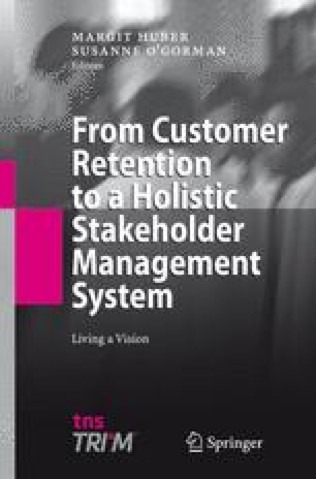
From Customer Retention to a Holistic Stakeholder Management System : Living a Vision
Being the fourth in the series on Stakeholder Management books, the current volume looks back at the beginnings of Stakeholder Management and how it has since developed into a fully-fledged system over the last 20 years. It also highlights the importance of a benchmarking database generated from several thousand case studies for comparing businesses. Furthermore, international case studies look at the application of Stakeholder Management in a wide array of industries such as the automotive, public and hospitality sector as well as the consumer market. The reader benefits from a well-rounded account of articles that explain the entire process from data collection to implementation of actions derived from result analysis.

Foundations of software science and computation structures ; 24th International conference, FOSSACS 2021, Held as Part of the European joint conferences on theory and practice of software, ETAPS 2021, Luxembourg City, Luxembourg, March 27 – April 1, 2021, proceedings
This book constitutes the proceedings of the 24th International Conference on Foundations of Software Science and Computational Structures, FOSSACS 2021, which was held during March 27 until April 1, 2021, as part of the European Joint Conferences on Theory and Practice of Software, ETAPS 2021. The conference was planned to take place in Luxembourg and changed to an online format due to the COVID-19 pandemic.
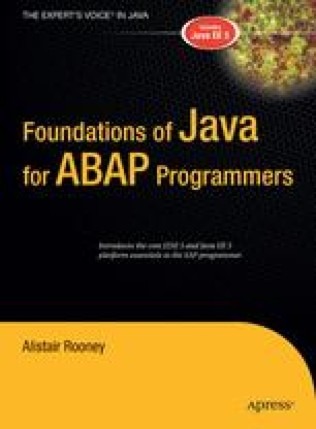
Foundations of Java for ABAP Programmers
The only beginning book of its kind, this book will teach you SAP/ABAP developers the skills you need for Java 5 programming. The book emphasizes the fundamentals of core Java SE 5 and Java EE 5, to get you up to speed with these technologies. You'll learn about the most important enterprise Java API found in the new Java EE 5 platform, which you can immediately use and integrate. Furthermore, the book elaborates on connecting to a database, SAP Java Connector, servlets, Java Server Pages, Enterprise JavaBeans, and Java Messaging.

Foundations of Intelligent Systems ; 17th International Symposium, ISMIS 2008 Toronto, Canada, May 20-23, 2008 Proceedings
This book constitutes the refereed proceedings of the 17th International Symposium on Methodologies for Intelligent Systems, ISMIS 2008, held in Toronto, Canada, in May 2008.The 68 revised papers presented together with 3 plenary talks were carefully reviewed and selected from over 100 submissions. The papers are organized in topical sections on knowledge discovery and data mining: foundations, advances, mining changes and actional patterns; logic for artificial intelligence, autonomic and evolutionary computation, soft computing, databases and data warehouses, digital library, intelligent information retrieval.

Foundations of information and knowledge systems ; 5th International Symposium, FoIKS 2008, Pisa, Italy, February 11-15, 2008. Proceedings
This book constitutes the refereed proceedings of the 5th International Symposium on Foundations of Information and Knowledge Systems, FoIKS 2008 held in Pisa, Italy, in February 2008. The 13 revised full papers presented together with 9 revised short papers and 3 invited lectures were carefully selected during two rounds of reviewing and improvement from from 79 submissions. The papers deal with any foundational aspect of information and knowledge systems, including submissions from researchers working in fields such as discrete mathematics, logic and algebra, model theory, information theory, complexity theory, algorithmics and computation, geometry, analysis, statistics and optimisation who are interested in applying their ideas, theories and methods to research on information and knowledge systems.

Foundations of information and knowledge systems ; 4th International Symposium, FoIKS 2006, Budapest, Hungary, February 14-17, 2006, Proceedings
This book constitutes the refereed proceedings of the 4th International Symposium on Foundations of Information and Knowledge Systems, held in February 2006. The 14 revised full papers presented together with three revised short papers and one invited paper were carefully reviewed and selected from 54 submissions. Among the topics covered are the theoretical foundations of information and knowledge systems, as well as mathematical fields such as discrete mathematics, combinatorics, logics and finite model theory, and applications thereof for research on database and knowledge base theory.

Foundations of F#
F# is much more than just an FP language. Every professional .NET programmer needs to learn about FP, and there's no better way to do it than by learning F#, and no easier way to learn F# than from Foundations of F#, and this is the first book to bring F# to the world.

Foundations of Data Mining and Knowledge Discovery
This volume presents the results of investigations into the foundations of the discipline, and represents the state-of-the-art for much of the current research. This book will prove extremely valuable and fruitful for data mining researchers, no matter whether they would like to uncover the fundamental principles behind data mining, or apply the theories to practical applications.

Foundations of Agile Python Development
You've long been enamored with the Python language, and have mastered its many nuances. Yet something seems to be missing—a productivity boost that you know is possible but you're not sure how to go about it. This was the sentiment of so many developers before discovering Agile programming paradigm, which embraces concepts such as automation, effective code management, and test–driven development. Foundations of Agile Python Development is the first book to apply these sought–after principles to Python developers, introducing both the tools and techniques built and supported by the Python community. Authored by Jeff Younker, a well–known member of Python's agile community who is perhaps best known for his creation of a popular Python testing framework

Foundations and novel approaches in data mining
Data-mining has become a popular research topic in recent years for the treatment of the "data rich and information poor” syndrome. Currently, application oriented engineers are only concerned with their immediate problems, which results in an ad hoc method of problem solving. Researchers, on the other hand, lack an understanding of the practical issues of data-mining for realworld problems and often concentrate on issues that are of no significance to the practitioners. In this volume, we hope to remedy problems by (1) presenting a theoretical foundation of data-mining, and (2) providing important new directions for data-mining research. A set of well respected data mining theoreticians were invited to present their views on the fundamental science of data mining.
Foundation XML for Flash
XML is a completely platform-agnostic data medium. Flash is able to make use of XML data, which is very useful when creating rich Internet applications. It allows you to populate Flash web interfaces with data from almost any source that supports XML as a data medium, be it databases, raw XML files, or more excitingly, .NET applications, Web Services, and even Microsoft Office applications like Excel and Word! In this book, Sas Jacobs first introduces XML itself—what it is, its syntax, its associated technologies (such as CSS and XSLT,) and how to get XML out of your applications in a format Flash can use. Then, she shows how to use the XML object to stream XML data into Flash, and how to use the XMLConnector component and XML Sockets to build advanced Flash/XML applications.

Foundation Web Design with Dreamweaver 8
Dreamweaver is Macromedia's bestselling web design/development environment. Dreamweaver has the capability to generate dynamic website code using server-side languages like ASP, PHP, and ASP.NET. We know that you don't always require a full database-driven site though, so this book focuses on using version 8 of Dreamweaver to design and create usable, standards-compliant websites using XHTML and CSS. One of the highlights of this version is much closer, tighter CSS/XHTML. This book will show you how to make the most of that feature. After a brief introduction to the latest version of Dreamweaver, and how CSS and XHTML fit into it, Craig Grannell looks at using the software for your web design projects in a hands-on, task based manner.
Foundation PHP5 for Flash
This latest, completely rewritten, edition again brings together three of the web's hottest technologies—Flash, the server-side language PHP, and the MySQL database system. We've brought things back up to date, using ActionScript 2.0, PHP 5.0, and MySQL 4.1, the book has been designed to be version-neutral. In other words, you can be confident that you're working with the latest standards, but that your applications won't break if deployed on an older server. The book also provides a brief introduction to an alternative database system, SQLite, which is now automatically bundled with PHP 5 and requires no installation.

Foundation PHP for Dreamweaver 8
In this book, we look specifically at using Dreamweaver's built-in server behaviors to build dynamic web sites using PHP and MySQL, the world's most popular open source server-side language and database server combination, which are both reliable, powerful, and open source (and therefore free to use). This version of Dreamweaver includes more powerful support for PHP and MySQL than ever before, and we'll show you how to make this work for you. No previous experience of PHP or MySQL is necessary to use this book. Examples built throughout the book include a content management system, and an online image gallery. All examples are designed to meet modern usability requirements and be web standards-compliant.
