



Page 7
Page 7

Probabilistic Modeling in Bioinformatics and Medical Informatics
Probabilistic Modelling in Bioinformatics and Medical Informatics has been written for researchers and students in statistics, machine learning, and the biological sciences. The first part of this book provides a self-contained introduction to the methodology of Bayesian networks. The following parts demonstrate how these methods are applied in bioinformatics and medical informatics. All three fields - the methodology of probabilistic modeling, bioinformatics, and medical informatics - are evolving very quickly. The text should therefore be seen as an introduction, offering both elementary tutorials as well as more advanced applications and case studies.

Privacy-Preserving Data Mining : Models and Algorithms
Privacy Preserving Data Mining: Models and Algorithms proposes a number of techniques to perform the data mining tasks in a privacy-preserving way. These techniques generally fall into the following categories: data modification techniques, cryptographic methods and protocols for data sharing, statistical techniques for disclosure and inference control, query auditing methods, randomization and perturbation-based techniques. This edited volume also contains surveys by distinguished researchers in the privacy field. Each survey includes the key research content as well as future research directions of a particular topic in privacy.

Privacy Preserving Data Mining
Data mining has emerged as a significant technology for gaining knowledge from vast quantities of data. However, concerns are growing that use of this technology can violate individual privacy. These concerns have led to a backlash against the technology, for example, a "Data-Mining Moratorium Act" introduced in the U.S. Senate that would have banned all data-mining programs (including research and development) by the U.S. Department of Defense. Privacy Preserving Data Mining provides a comprehensive overview of available approaches, techniques and open problems in privacy preserving data mining. This book demonstrates how these approaches can achieve data mining, while operating within legal and commercial restrictions that forbid release of data. Furthermore, this research crystallizes much of the underlying foundation, and inspires further research in the area.

Principles of Data Mining
This book explains and explores the principal techniques of Data Mining: for classification, generation of association rules and clustering. It is written for readers without a strong background in mathematics or statistics and focuses on detailed examples & explanations of the algorithms given.

Primate Origins : Adaptations and Evolution
Updates, summarizes and synthesizes past and current research regarding the origin of the Order Primates. When did Primates arise? To what group of mammals are they most closely related? What is the functional and adaptive meaning of their constellation of derived characteristics? The papers in this volume examine hypotheses that have dominated our notions regarding early primate evolution and by coupling this with an emergent body of novel evidence due to new fossil discoveries and technological and methodological advances.
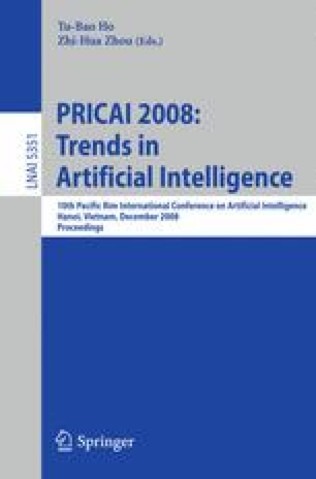
PRICAI 2008 : Trends in Artificial Intelligence ; 10th Pacific Rim International Conference on Artificial Intelligence, Hanoi, Vietnam, December 15-19, 2008. Proceedings
Constitutes the refereed proceedings of the 10th Pacific Rim International Conference on Artificial Intelligence, PRICAI 2008, held in Hanoi, Vietnam, in December 2008.The 49 revised long papers, 33 revised regular papers, and 32 poster papers presented together with 1 keynote talk and 3 invited lectures were carefully reviewed and selected from 234 submissions. The papers address all current issues of modern AI research with topics such as AI foundations, knowledge representation, knowledge acquisition and ontologies, evolutionary computation, etc. as well as various exciting and innovative applications of AI to many different areas. Particular importance is attached to the areas of machine learning and data mining.

Practical Machine Learning for Streaming Data with Python : Design, Develop, and Validate Online Learning Models
A quick start guide for data scientists and machine learning engineers looking to implement machine learning models for streaming data with Python to generate real-time insights. You'll start with an introduction to streaming data, the various challenges associated with it, some of its real-world business applications, and various windowing techniques. You'll then examine incremental and online learning algorithms, and the concept of model evaluation with streaming data and get introduced to the Scikit-Multiflow framework in Python. This is followed by a review of the various change detection/concept drift detection algorithms and the implementation of various datasets using Scikit-Multiflow. Introduction to the various supervised and unsupervised algorithms for streaming data, and their implementation on various datasets using Python are also covered. You will: Understand machine learning with streaming data concepts / Review incremental and online learning / Develop models for detecting concept drift / Explore techniques for classification, regression, and ensemble learning in streaming data contexts / Apply best practices for debugging and validating machine learning models in streaming data context / Get introduced to other open-source frameworks for handling streaming data.

Practical Aspects of Knowledge Management ; 7th International Conference, PAKM 2008, Yokohama, Japan, November 22-23, 2008. Proceedings
This book constitutes the refereed proceedings of the 7th International Conference on Practical Aspects of Knowledge Management, PAKM 2008, held in Yokohama, Japan, in November 2008.The 23 revised full papers presented together with 2 invited lectures were carefully reviewed and selected from 62 submissions. All aspects of knowledge management and their role in next-generation business solutions are addressed in perspective to business and organisation sciences, cognitive science, and computer science. The papers are organized in topical sections on knowledge sharing, collaboration platforms, content-oriented retrieval, knowledge acquisition, knowledge management solutions, knowledge mining from data, text and the Web, ontology, and knowledge utilization.

Practical Aspects of Knowledge Management ; 6th Internatioal Conference, PAKM 2006, Vienna, Austria, November 30-December 1, 2006, Proceedings
The biennial PAKM Conference Series o?ers a communication platform and meeting ground for practitioners and researchers involved in developing and deploying advanced business solutions for the management of knowledge in - ganizations. PAKM is a forum for people to share their views, exchange ideas, develop new insights, and envision completely new kinds of knowledge mana- ment solutions. PAKM 2006, the Sixth International Conference on Practical Aspects of Knowledge Management, was held again in Vienna.

Post-Traumatic stress disorder (PTSD)
Post-Traumatic Stress Disorder is a wide spread disorder influence human life value and their production this disorder had many classifications before it has a specific classification and definition and the PTSD diagnosis was described in DSM III. Many studies have done to compute PTSD patients around the world including Syria especially after the recent war. PTSD differentiates into five types separated through several parameters. Trauma could immerge from many life events and because of that the development of PTSD engaged to many causes, while some of these trauma’s events can develop dissociation disorder in patients had PTSD.

Post-Transplant Lymphoproliferative Disorders
This disorder transcends multiple disciplines and demands a team approach to improve knowledge and treatment. The highly experienced internationally recognized authors have updated every section and added many new chapters, including some on genetic abnormalities in virus and host seen in PTLDs. In this successor edition, there is a completely new section on PTLDs after hematopoietic stem cell transplantation. The newest PTLD classifications and current treatment paradigms that reflect recently conducted international trials are fully incorporated. As technologies have advanced, this book provided state-of-the-art new diagnostic and prognostic information.

PNF in Practice : An Illustrated Guide
PNF (Proprioceptive Neuromuscular Facilitation) is an approach to therapeutic exercise which therapists all over the world have found effective for treating patients with a wide range of diagnoses. The approach presented in this richly illustrated guide is based on the concepts set out by Dr. Herman Kabat and taught by Margaret Knott. The fully revised third edition demonstrates how the principles of the International Classification of Functioning, Disability and Health (ICF) and aspects of motor learning and motor control (from "hands-on" to "hands-off" management) are applied in modern PNF evaluation and treatment. The section on Activities of Daily Living has been expanded with new photos and more in-depth text instructions. A new fresh design and layout highlight the clearly structured way in which philosophy, basic procedures and treatment patterns of PNF are presented.

Plant Conservation and Biodiversity
Brings together a selection of original studies submitted to Biodiversity and Conservation addressing aspects of the conservation and biodiversity of plants. Plants are, along with terrestrial vertebrates, the best known organisms on Earth, and so work on them can be a model for that on less known organism groups.

Pixelization Paradigm ; Visual Information Expert Workshop, VIEW 2006, Paris, France, April 24-25, 2006, Revised Selected Papers
The pixelization paradigm states as a postulate that pixelization methods are rich and are worth exploring as far as possible. In fact, we think that the strength of these methods lies in their simplicity, in their high-density way of information representation property and in their compatibility with neurocognitive processes.

Phenolic Compound Biochemistry
This book is written for researchers, instructors, advanced undergraduate students and beginning graduate students in the life sciences who wish to become more familiar with these and many other intriguing aspects of phenolic compounds. Topics covered include nomenclature, chemical properties, biosynthesis, including an up-to-date overview of the genetics controlling phenolic metabolism, isolation and characterization of phenolic compounds, phenolics used in plant defense, and the impact of phenolics on human health. The book is written in an accessible style, and assumes only basic knowledge of organic chemistry, biochemistry and cell physiology. More than 300 chemical structures and reaction schemes illustrate the text.

Phase Portraits of Planar Quadratic Systems
This book attempts to give a presentation of the advance of our knowledge of phase portraits of quadratic systems, paying special attention to the historical development of the subject. The book organizes the portraits into classes, using the notions of finite and infinite multiplicity and finite and infinite index. Classifications of phase portraits for various classes are given using the well-known methods of phase plane analysis.

Pharmacovigilance for Herbal and Traditional Medicines : Advances, Challenges and International Perspectives
Dedicated to the topic of pharmacovigilance for herbal and traditional medicines. Taking a truly global perspective, this volume draws together contributions from a diverse group of experts, writing on current knowledge and practices in pharmacovigilance for herbal and traditional medicines, and on advances and innovation in monitoring the safety of this unique and complex category of products and preparations. In part one, the book discusses the current status of pharmacovigilance for herbal and traditional medicines, including the importance of natural products chemistry to harms, and its relevance in considering how pharmacovigilance for these products could be undertaken. Several other chapters discuss methodological approaches and ongoing challenges in pharmacovigilance for herbal and traditional medicines, including issues relating to nomenclature, coding and classification, and the nuances involved in causality assessment.

Pharmacognosy and phytochemistry : Principles, techniques, and clinical applications
Covers the classification of crude drugs, complementary and alternative medical (CAM) systems, adulteration and evaluation of drugs, extraction methods of plant drugs, and ethnobotany and ethnopharmacology.

Pharmaceutical dissolution testing, bioavailability, and bioequivalence : Science, applications, and beyond
Delivers a comprehensive and up-to-date reference covering the established and emerging roles of dissolution testing in pharmaceutical drug development. After discussing the fundamentals of the subject, the included resources go on to explore common testing practices and methods, along with their associated challenges and issues, in the drug development life cycle. A thorough introduction to the fundamentals and essential applications of pharmaceutical dissolution testing. Comprehensive explorations of the foundations and drug development applications of bioavailability and bioequivalence. Practical discussions about solubility, dissolution, permeability, and classification systems in drug development. In-depth examinations of the mechanics of dissolution, including mathematical models and simulations. An elaborate assessment of biophysiologically relevant dissolution testing and IVIVCs, and their unique applications. A complete understanding of the methods, requirements, and global regulatory expectations pertaining to dissolution testing of generic drug products

Pharmaceutical cocrystals : Along the path to improved medicines
Active pharmaceutical ingredients (APIs) may exist in various solid forms, which can lead to differences in the intermolecular interactions, Differences in solid forms often lead to differences in thermodynamic parameters and physicochemical properties for example solubility {especially that a lot of drugs are in Class II and IV according to BCS (Biopharmaceutics Classification System) and these classes suffer from poor aqueous solubility and hence low bioavailability} ,dissolution rate, stability and mechanical properties of APIs and excipients. Hence, solid forms of APIs play a vital role in drug discovery and development.
