



Page 7
Page 7

Micro-, Meso- and Macro-Connectomics of the Brain
Highlights cutting-edge methods that can accelerate progress in elucidating static ‘hard-wired’ circuits of the brain as well as dynamic interactions that are vital for brain function. The power of connectomic approaches in characterizing abnormal circuits in the many brain disorders that afflict humankind is considered. Experts in computational neuroscience and network theory provide perspectives needed for synthesizing across different scales in space and time. Altogether, this book provides an integrated view of the challenges and opportunities in deciphering brain circuits in health and disease.
Micro and Nanomanufacturing
Engineers seeking more knowledge of how nano and micro devices are designed and fabricated will learn: Manufacturing and fabrication at the micro and nanoscales Using bulk and surface micromachining techniques, LiGA and deep x-ray lithography to manufacture semiconductors Producing master molds with micromachining The deposition of thin films, pulsed water drop machining, and nanomachining Mark J. Jackson is an Associate Professor in the Department of Mechanical Engineering Technology at Purdue University. His current research focuses on understanding the properties of materials in the field of micro scale metal cutting, micro and nano abrasive machining, and laser micro machining.

Micro and Nano Mechanical Testing of Materials and Devices
Nanoscale and nanostructured materials have exhibited different physical properties from the corresponding macroscopic coarse-grained materials due to the size confinement. As a result, there is a need for new techniques to probe the mechanical behavior of advanced materials on the small scales. Micro and Nano Mechanical Testing of Materials and Devices presents the latest advances in the techniques of mechanical testing on the micro- and nanoscales, which are necessary for characterizing the mechanical properties of low-dimensional materials and structures.

Methods in Modern Biophysics
Incorporating recent dramatic advances, this textbook presents a fresh and timely introduction to modern biophysical methods. An array of new, faster and higher-power biophysical methods now enables scientists to examine the mysteries of life at a molecular level. This innovative text surveys and explains the ten key biophysical methods, including those related to biophysical nanotechnology, scanning probe microscopy, X-ray crystallography, ion mobility spectrometry, mass spectrometry, proteomics, and protein folding and structure. Incorporating much information previously unavailable in tutorial form, Nölting employs worked examples and 267 illustrations to fully detail the techniques and their underlying mechanisms.

Metathesis Chemistry : From Nanostructure Design to Synthesis of Advanced Materials
Recently, an important scientific event in metathesis chemistry, the NATO-Advanced Study Institute New Frontiers in Metathesis Chemistry: From Nanostructure Design to Sustainable Technologies for . Synthesis of Advanced Materials was organized in Antalya, Turkey (September 4-16, 2006). Prominent scientists, young researchers and students, convened for two weeks to debate on the newest trends in olefin metathesis and identify future perspectives in this fascinating field of synthetic organic, organometallic and polymer chemistry with diverse potential applications in materials science and technology. Following the fruitful practice of the previous NATO ASI meetings, selected contributions comprising plenary lectures, short communications and posters are compiled in this special volume dedicated to this outstanding international scientific meeting.
Metallopolymer Nanocomposites
Highly dispersed nanoscale particles in polymer matrices are currently attracting great interest in many fields of chemistry, physics and materials science. This book presents and analyzes the essential data on nanoscale metal clusters dispersed in, or chemically bonded with polymers. Special attention is paid to the in situ synthesis of the nanocomposites, their chemical interactions, and the size and distribution of the particles in the polymer matrix. Numerous novel nanocomposites are described with regard to their mechanical, electrophysical, optical, magnetic, catalytic and biological properties. Their applications, present and future, are outlined. The book is addressed both to researchers who actively use these materials and to students entering this multidisciplinary field.

Metal-containing molecules and nanomaterials : from diagnosis to therapy
Since the discovery and successful deployment of salvarsan to treat syphilis, as well as cisplatin as a cancer drug, the field of metallodrugs has been flourishing. In addition to therapeutic applications, metals and metal-containing molecules have properties, such as an electrochemical or an optical signal, used to diagnose biologically relevant molecules or unravel cellular metabolism. Metals are part of the essential elements for life, and of increased attention in nutraceuticals. Most of the current diagnosis processes, therapeutics and nutraceuticals are based on organic molecules. MILS-26 reviews the most recent metal-containing molecules and nanomaterials for diagnosis and therapy
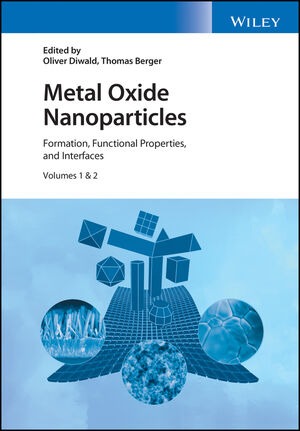
Metal Oxide Nanoparticles : Formation, Functional Properties, and Interfaces ; 2 Volume Set
Metal oxide nanoparticles are integral to a wide range of natural and technological processes—from mineral transformation to electronics. Additionally, the fields of engineering, electronics, energy technology, and electronics all utilize metal oxide nanoparticle powders. Metal Oxide Nanoparticles: Formation, Functional Properties, and Interfaces presents readers with the most relevant synthesis and formulation approaches for using metal oxide nanoparticles as functional materials. It covers common processing routes and the assessment of physical and chemical particle properties through comprehensive and complementary characterization methods.

Medicinal plants and antimicrobial therapies
Serves as an excellent comprehensive material covering the current understandings and updates on antimicrobial resistance (AMR) and the use of medicinal plant resources for tackling it. Chapters cover important aspects of AMR and strategies to address this threatening issue with medicinal plants and their resources. One health perspectives for addressing AMR have been presented for the readers. Antimicrobial medicinal plant therapeutic resources including crude extracts, active fractions, pure molecules and essential oils, besides using them as functionalizing agents for nano-antimicrobials have been covered. Further, plant endophytes as a source of antimicrobial compounds have been discussed. Chapters cover both the bactericidal as well as resistance-reversal (or potentiating/ combinatorial therapies) potencies of medicinal plant resources. The book also focuses on how medicinal plant resources effectively target major determinants of AMR.

Medicinal compounds in modern healthcare : From tradition to innovation
Reviews the evolution, development, and application of medicinal compounds, beginning with their historical context and advancing to modern innovations. The book describes the therapeutic potential of bioactive compounds from microorganisms, the role of antioxidants and anti-inflammatory agents in managing chronic diseases, and the use of small molecules in pain management and mental healthcare. It further explores immunomodulatory compounds, epigenetic modifiers, and the latest advancements in drug development, including integrative medicine approaches and the applications of nanotechnology in traditional medicine. Additionally, the book addresses the use of immunomodulatory agents like methotrexate and paclitaxel in cancer treatment, regulatory considerations for ensuring safety and efficacy in medicinal compounds, and the growing field of nutraceuticals. Towards the end, the book covers the extraction, profiling, and ADMET evaluation of medicinal compounds, intellectual property challenges, and the significance of traditional medicine in modern healthcare.

Medicinal Chemistry and Pharmacological Potential of Fullerenes and Carbon Nanotubes
Medicinal Chemistry and Pharmacological Potential of Fullerenes and Carbon Nanotubes features important insights into the applications of fullerenes and carbon nanotubes. It discusses the fullerene and nanotubes derivatives which are effective against viruses, cells, and bacteria and those which are able to interact and inhibit certain enzymes. Also covered in this book are the formation of complex structures between biologically active molecules and carbon materials. Furthermore, the application of fullerenes in certain medical therapies is explored, including the very recent discovery of new bio-compatible media which could be used as carriers in the delivery of fullerenes in vivo. An additional topic of this text is the formation of hybrids between nanotubes and biological molecules and their use as chemical sensors.

Medical biotechnology, biopharmaceutics, forensic : science and bioinformatics
Covers a range of topics on exploiting Nigeria’s mega biodiversity for food security and health; DNA forensic science and its applications; medical biotechnology and biopharmaceutics; medicinal and underutilized plants; impact and mitigation of antibiotic resistance; bioinformatics applications; medical insect biotechnology; etc. The book will be useful reference material for the scientists and researchers working in the fields of nutraceuticals, molecular diagnostics and DNA forensics, biopharmaceuticals and medical biotechnology, nanotechnology, antimicrobials from indigenous plant species, bioinformatics, etc.

Mechanochemistry in Nanoscience and Minerals Engineering
Mechanochemistry as a branch of solid state chemistry enquires into processes which proceed in solids due to the application of mechanical energy. This provides a thorough, up to date overview of mechanochemistry of solids and minerals. Applications of mechanochemistry in nanoscience with special impact on nanogeoscience are described. Selected advanced identification methods, most frequently applied in nanoscience, are described as well as the advantage of mechanochemical approach in minerals engineering. Examples of industrial applications are given. Mechanochemical technology is being applied in many industrial fields: powder metallurgy (synthesis of nanometals, alloys and nanocompounds), building industry (activation of cements), chemical industry (solid waste treatment, catalyst synthesis, coal ashes utilization), minerals engineering (ore enrichment, enhancement of processes of extractive metallurgy), agriculture industry (solubility increase of fertilizers), and pharmaceutical industry (improvement of solubility and bioavailability of drugs).

Introduction to Wave Scattering, Localization and Mesoscopic Phenomena
Waves represent a classic topic of study in physics, mathematics, and engineering. Many modern technologies are based on our understanding of waves and their interaction with matter. In the past thirty years there have been some revolutionary developments in the study of waves. The present volume is the only available source which details these developments in a systematic manner, with the aim of reaching a broad audience of non-experts. It is an important resource book for those interested in understanding the physics underlying nanotechnology and mesoscopic phenomena, as well as for bridging the gap between the textbooks and research frontiers in any wave related topic. A special feature of this volume is the treatment of classical and quantum mechanical waves within a unified framework, thus facilitating an understanding of similarities and differences between the two.

Introducing Molecular Electronics
This volume presents a summary of our current understanding of molecular electronics combined with selected state-of-the-art results at a level accessible to the advanced undergraduate or novice postgraduate. This single book comprises the basic knowledge of both theory and experiment underpinning this rapidly growing field. Concepts and techniques such as density functional theory and charge transport, break junctions and scanning probe microscopy are introduced step-by-step and are subsequently used in specific examples. The text addresses a wide range of systems including molecular junctions made of single-molecules, self-assembled monolayers, carbon nanotubes and DNA.

Interphases and Mesophases in Polymer Crystallization III
In polymer crystallization the challenge is to identify and clarify the transformations by which chain molecules pass from a disordered, molten state to the ordered supra-molecular organization known as the semi-crystalline state. The subject is highly relevant in terms of both basic science and technology; it is indeed clear that many modern applications require complete control of the structure and the morphology of polymers from macroscopic dimensions down to below the nanoscale. As a simple example, making the crystallites in a polymer fiber equally oriented and reducing the number of chain folds (or hairpins) therein, usually turn out to be very favorable requisites for mechanical performance . .This series presents critical reviews of the present and future trends in polymer and biopolymer science including chemistry, physical chemistry, physics and material science. It is adressed to ali scientists at universities and in industry who wish to keep abreast of advances in the topics covered

Interfacial Transport Phenomena
This is an extensively revised second edition of Interfacial Transport Phenomena, a unique presentation of transport phenomena or continuum mechanics focused on momentum, energy, and mass transfer at interfaces. In addition to tightening the focus of the book there are two important additions: an extended discussion of transport phenomena at common lines or three-phase lines of contact, as well as a new theory for the extension of continuum mechanics to the nanoscale region immediately adjacent to the interface. Applications and supporting experimental data are provided and discussed in detail. This book is written for the advanced student of transport phenomena. The emphasis is upon achieving an in-depth understanding based upon first principles. It is designed to prepare the reader for active research. It includes exercises and answers, and can serve as a graduate level textbook.

Interfacial Processes and Molecular Aggregation of Surfactants
Given the enormous interest in surface phenomena in areas ranging from materials science to applications in life science, this volume is a very timely addition to the literature. Emphasis is on surfactants mediating interfacial and molecular aggregation phenomena, and the following topics are reviewed in particular: dissolution rates, equilibrium adsorption, mixing rules, and spreading on a solid surface of surfactants, as well as the role of surfactants in mediating a range of processes, such as the fabrication of various nanomaterials.

Interfacial Nanochemistry : Molecular Science and Engineering at Liquid-Liquid Interfaces
The presence of liquid-liquid interface means that real liquids are far from ideal liquids that must be miscible with any kinds of liquids and have no interface. Thus it can be said that the non-ideality of liquids might generate the liquid-liquid interface indeed and that biological systems might be generated from the non-ideal interface. The liquid-liquid interface has been, therefore, studied as a model of biological membrane. From pairing two-phases of gas, liquid and solid, nine different pairs can be obtained, which include three homo-pairs of gas-gas, liquid-liquid and solid-solid pairs. The gas-gas interface, however, is practically no use under the ordinary conditions. Among the interfaces produced by the pairing, the liquid-liquid interface is most slippery and difficult to be studied experimentally in comparison with the gas-liquid and solid-liquid interfaces, as the liquid-liquid interface is flexible, thin and buried between bulk liquid phases. Therefore, in order to study the liquid-liquid interface, the invention of innovative measurement methods has a primary importance.

Interconnect Noise Optimization in Nanometer Technologies
The authors bring together a wealth of information presenting a range of CAD algorithms and techniques for synthesizing and optimizing interconnect. Practical aspects of the algorithms and the models are explained with sufficient details. The book investigates the most effective parameters in layout optimization. Different post-layout optimization techniques with complexity analysis and benchmarks tests are provided. The impact crosstalk noise and coupling on the wire delay is analyzed. Parameters that affect signal integrity are also considered.
