



Page 63
Page 63

ITI treatment Guide ; Vol.9 : Implant therapy in the geriatric patient
Attests to the ITI's holistic approach to implant dentistry and to its professional responsibility for patients who have aged with implant-supported restorations in place, as well as for patients at a more advanced age who, until late in life, can benefit from the progress we have made in terms of the materials and techniques that present-day implant dentistry has to offer

It’s all in your mouth biological dentistry and the surprising impact of oral health on whole body wellness
Pesents the principles of biological dentistry along with emerging scientific research on the mouth’s vital role in the body’s microbiome—a key to whole body wellness. Challenging conventional dental wisdom that views the teeth as separate from the rest of the body, and conventional dental practices that often cause more harm than good. Offers a necessary new approach to natural immunity to chronic disease and integrating dental hygiene into whole body health.

Issues of Decapod Crustacean Biology
This volume presents the proceedings of the eighth Colloquium Crustacea Decapoda Mediterranea, which was held at the Ionian University on Corfu Island, Greece, from 2 to 6 September 2002, and reflects recent advancements in decapod crustacean research. The meeting is the oldest European carcinological event, organized regularly at 3-year intervals since 1972. Although focused on the Mediterranean Sea, worldwide contributions provided a forum for fruitful contact and scientific exchange. The book covers up-to-date issues in decapod crustacean research, including genetics, morphology, reproduction, ecology, behaviour and fisheries, and it is primarily aimed at scientists interested in decapod crustacean research, but other scientists and decision-makers working on marine ecology and fisheries will also find up-to-date information on relevant issues.

Israel and the Palestinian refugees
This edited book offers diverse perspectives on the Palestinian refugee problem and the possible ways to facilitate its resolution. The book contains contributions of Israeli, Palestinian and other scholars, and its main goal is to initiate an informed dialogue that will bridge the “knowledge gap” between the different camps.

Compulsory Insurance and Compensation for Bunker Oil Pollution Damage
Oil tankers are not the only vessels that have caused oil pollution at sea. Numerous spills in the past have been of heavy fuel oil from non-tankers. However, the international liability and compensation regime covered only oil pollution damage caused by oil tankers. There was thus a need to bring the law on marine oil pollution responsive to oil pollution damage caused by non-tankers. In March 2001, the International Convention on Civil Liability for Bunker Oil Pollution Damage was adopted following a diplomatic conference at the International Maritime Organization. Though this convention has not yet come into force, its various aspects should already be considered as they will surely affect the maritime industry as a whole and the non-tanker sector, in particular. This book provides a timely and comprehensive study on the concept of compulsory insurance, its main purpose of ensuring compensation and its interrelations with other features such as the rule of strict liability and the limitation of liability under the convention.

Comprehensive multiple-choice questions in pathology : A study guide
Provides important Pathology concepts to aid pathology trainees, including medical students and resident physicians, in passing any advanced pathology examination…

Compositionality and Concepts in Linguistics and Psychology
By highlighting relations between experimental and theoretical work, this volume explores new ways of addressing one of the central challenges in the study of language and cognition. The articles bring together work by leading scholars and younger researchers in psychology, linguistics and philosophy. An introductory chapter lays out the background on concept composition, a problem that is stimulating much new research in cognitive science. Researchers in this interdisciplinary domain aim to explain how meanings of complex expressions are derived from simple lexical concepts and to show how these meanings connect to concept representations.

Component-Based Software Testing with UML
Component-based software development regards software construction in terms of conventional engineering disciplines where the assembly of systems from readily-available prefabricated parts is the norm. Because both component-based systems themselves and the stakeholders in component-based development projects are different from traditional software systems, component-based testing also needs to deviate from traditional software testing approaches. Gross first describes the specific challenges related to component-based testing like the lack of internal knowledge of a component or the usage of a component in diverse contexts. He argues that only built-in contract testing, a test organization for component-based applications founded on building test artifacts directly into components, can prevent catastrophic failures like the one that caused the now famous ARIANE 5 crash in 1996. This book is the first comprehensive treatment of the intricacies of testing component-based software systems. With its strong modeling background, it appeals to researchers and graduate students specializing in component-based software engineering. Professionals architecting and developing component-based systems will profit from the UML-based methodology and the implementation hints based on the XUnit and JUnit frameworks.

Complicities : A theory for subjectivity in the psychological humanities
The book examines how we might develop a more socially just psychological theory and practice, which is both systems work and intra-psychological work. In bringing together ways of thinking developed in the humanities with clinical psychotherapeutic practice, this book offers one interdisciplinary take on key questions of social and emotional efficacy in action-oriented psychotherapy work.

Complications and quandaries in the ICT sector : Standard essential patents and competition issues
Talks about how the regulatory agencies and courts in the United States, European Union and India are dealing with the rising allegations of anti-competitive behaviour by standard essential patent (SEP) holders. It also discusses the role of standards setting organizations / standards developing organizations (SSO/SDO) and the various players involved in implementing the standards that influence practices and internal dynamics in the ICT sector. The book includes discussions on fair, reasonable and non-discriminatory (FRAND) licensing terms and the complexities that arise when both licensors and licensees of SEPs differ on what they mean by “fair”, “reasonable” and “non-discriminatory” terms. It also addresses topics such as the appropriate royalty base, calculation of FRAND rates and concerns related to FRAND commitments and the role of Federal Trade Commission (FTC) in collaborative standard setting process.

Complexity in landscape ecology
Interactions matter. To understand the distributions of plants and animals in a landscape you need to understand how they interact with each other, and with their environment. The resulting networks of interactions make ecosystems highly complex. Recent research on complexity and artificial life provides many new insights about patterns and processes in landscapes and ecosystems. This book provides the first overview of that work for general readers. It covers such topics as connectivity, criticality, feedback, and networks, as well as their impact on the stability and predictability of ecosystem dynamics. With over 60 years of research experience of both ecology and complexity, the authors are uniquely qualified to provide a new perspective on traditional ecology.

Complex Systems Science in Biomedicine
Complex Systems Science in Biomedicine covers the emerging field of systems science involving the application of physics, mathematics, engineering and computational methods and techniques to the study of biomedicine including nonlinear dynamics at the molecular, cellular, multi-cellular tissue, and organismic level. With all chapters helmed by leading scientists in the field, Complex Systems Science in Biomedicine's goal is to offer its audience a timely compendium of the ongoing research directed to the understanding of biological processes as whole systems instead of as isolated component parts.
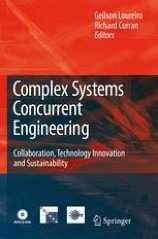
Complex systems concurrent engineering : Collaboration, technology innovation and sustainability
Concurrent engineering is well-established as an approach to engineer product parts. However, the concept has much broader application. Complex Systems Concurrent Engineering: Collaboration, Technology Innovation and Sustainability demonstrates how concurrent engineering can be used to benefit the development of complex systems, to produce results that sustain balanced stakeholder satisfaction over time. Gathered from the 14th ISPE International Conference on Concurrent Engineering, the collected papers cover all aspects of the sustainable and integrated development of complex systems, such as airplanes, satellites, space vehicles, automobiles and ships.

Complex Geometry : An Introduction
Complex geometry studies (compact) complex manifolds. It discusses algebraic as well as metric aspects. The subject is on the crossroad of algebraic and differential geometry. Recent developments in string theory have made it an highly attractive area, both for mathematicians and theoretical physicists. The book contains detailed accounts of the basic concepts and the many exercises illustrate the theory. Appendices to various chapters allow an outlook to recent research directions.

Complex Anorectal Disorders : Investigation and Management
Book has focused on the broad structural investigation of the anorectum and on the focused management of largely “functional” problems. And it has done so in style. For this is a core area of specialist practice;your more general colleagues may think twice before referring you new cases of cancer and in?ammatory bowel disease (both also central areas in colorectal surgery), but they will not hesitate in referring the patients whose inves- gation and management are described here. And they will expect you to know how to deal with them. These are some of the most challenging patients to manage. Rightly have the editors covered the physiological areas,rightly the psychological issues, rightly the medicolegal aspects: here is the making of a specialist—the sword and the shield.

Complete color harmony : Expert color information for professional color results
A colour reference for all types of designers, artists and anyone who used colour in their work or creative pursuits. Along with some basic colour theory, the guide provides hundreds of one, two, and three-colour combinations selected to reflect a range of moods and adjectives. It includes information on creating special effects using metallic and fluorescent colour palettes, as well as a section devoted to the psychology of colour. The authors help readers determine their best colours and suggest why some colours may inspire creativity while others don't. The book also includes two colour palette sections reflecting black and white as the colour base, along with an expanded and updated colour trends sections that discusses trends and how they are predicted, giving advice on how to be a trend spotter.

Complement and Kidney Disease
It is evident that a defective or deregulated complement system results in kidney diseases. An important role of complement effector and regulatory proteins in pathological settings of the kidney has been demonstrated. A large panel of distinct human kidney diseases is caused by defective complement control. Genetic analyses have identified mutations in complement regulators that are associated with these diseases. Mutations have been identified in the fluid phase alternative pathway regulator Factor H and the membrane regulator Membrane Cofactor Protein MCP (CD46). The functional characterization of the mutant proteins allows to define the pathophysiological events on a molecular level. These new concepts and data on disease mechanisms allowed establishing new diagnostic and promising therapeutic approaches for several human kidney diseases. Molecular biology, clinics and therapy are discussed in this volume.

Compartment Syndrome : A Guide to Diagnosis and Management
Compartment syndrome is a complex physiologic process with significant potential harm, and though an important clinical problem, the basic science and research surrounding this entity remains poorly understood. This book fills the gap in the knowledge of compartment syndrome, re-evaluating the current state of the art on this condition. The current clinical diagnostic criteria are presented, as well as the multiple dilemmas facing the surgeon. Pathophysiology, ischemic thresholds and pressure management techniques and limitations are discussed in detail. The main surgical management strategy, fasciotomy, is then described for both the upper and lower extremities, along with wound care. Compartment syndrome due to patient positioning, in children and polytrauma patients, and unusual presentations are likewise covered. Novel diagnosis and prevention strategies, as well as common misconceptions and legal ramifications stemming from compartment syndrome, round out the presentation.

Comparative Hepatitis
This volume reviews today’s knowledge about hepatitis with emphasis on comparative aspects between hepatitis in humans and animals, but also between different etiological agents. This particular viewpoint makes the book relevant for scientists from both human and veterinary medicine, gastroenterologists, pathologists, virologists and students of human and veterinary medicine.

Comparative genomics ; Vol. 3678 : RECOMB 2005 International Workshop, RCG 2005, Dublin, Ireland, September 18-20, 2005, Proceedings
This book constitutes the refereed proceedings of the RECOMB 2005 Satellite Workshop, the 3rd RECOMB Comparative Genomics meeting RCG 2005, held in Dublin, Ireland in September 2005. The 14 revised full papers presented were carefully reviewed and selected from 21 initial submissions. The papers address a broad variety of aspects and components of the field of comparative genomics, ranging from new quantitative discoveries about genome structure and process to theorems on the complexity of computational problems inspired by genome comparison.
