



Page 6
Page 6
Human-Nature Interactions : Exploring Nature’s Values Across Landscapes
Highlights how humans value nature, the opportunities and challenges in changing socio-ecological systems / Provides insights into concepts and methods to study human-nature relationships, designed for a broad audience / Focus on integrative approaches exploring interactions across different scales, intensity levels and landscapes

High mountain conservation in a changing world
This book aims to provide case studies and a general view of the main processes involved in the ecosystem shifts occurring in the high mountains, and to analyse the implications for nature conservation. Although case studies from the Pyrenees are preponderant, conclusions are aimed at any mountain range surrounded by highly populated lowland areas. The chapters give emphasis to approaches from environmental geography, functional ecology, biogeography, and paleoenvironmental reconstructions. The introductory and closing chapters summarize the main challenges that nature conservation may face in mountain areas under the environmental shifting conditions.

Harmful Cyanobacteria
The purpose of this work is to provide an up-to-date overview of the advances in our knowledge of harmful cyanobacteria. The work is directed towards graduate students and scientists in aquatic microbiology, aquatic ecology, environmental toxicology, and water management, and academic professionals in water management and environmental policy.
Groundwater and Ecosystems
Groundwater Dependent Ecosystems (GDEs) frequently exhibit rich biological diversity and can provide enormous economic wealth. In recent years, GDEs in many industrialized countries have shown signs of serious degradation, primarily the result of groundwater abstraction and pollution. Many such systems, including a number of well documented cases in Eastern Europe, are no longer sustainable. As a consequence, the conservation and sustainable management of GDEs has emerged as one of the most urgent environmental research priorities of our time. A large percentage of the world’s population lives in cities and either depends on, or is affected in some way, by groundwater. Moreover, groundwater has become a very important and complex issue that attracts the interest of many diverse stakeholders. Many problems related to groundwater and ecosystems are shared by countries throughout the world and there is growing recognition that much can be gained by co-operation on an international scale.
Greenhouse gas emissions - fluxes and processes : Hydroelectric reservoirs and natural environments
In a time when an unquestionable link between anthropogenic emissions of greenhouse gases and climatic changes has finally been acknowledged and * widely documented through IPCC reports, the need for precise estimates of greenhouse gas (GHG) production rates and emissions from natural as well as managed ecosystems has risen to a critical level.

Green infrastructure and climate change adaptation : Function, Implementation and Governance
This book introduces the function, implementation and governance of green infrastructure in Japan and other countries where lands are geologically fragile and climatologically susceptible to climate change. It proposes green infrastructure as an adaptation strategy for climate change and biodiversity conservation.

Governance as a trialogue
Focusing specifically on water, this book talks about the core elements of governance, and analyses the linkages between key variables in an effort to increase our understanding of what makes governance good. It is useful for any professional tasked with the responsibility of implementing Integrated Environmental and Water Resource Management.

Global Change and Mountain Regions : An Overview of Current Knowledge
Mountain regions occupy about a quarter of the global terrestrial land surface and provide goods and services to more than half the humanity. Global environmental change threatens the integrity of these systems and their ability to provide the goods and services upon which humanity has come to depend. This book gives an overview of the state of research in fields pertaining to the detection, understanding and prediction of global change impacts in mountain regions. More than 60 contributions from paleoclimatology, cryospheric research, hydrology, ecology, and development studies are compiled in this volume, each with an outlook on future research directions.

Geology and Ecosystems
This book includes an analysis of the relationship between the different geological, hydrochemical, hydrogeological and engineering-geological processes and the processes within surface ecosystems. The analysis of specific interactions between the lithosphere and biosphere provides an integrated concept of the role of the geological environment in the evolution of the biosphere. The practical significance of the book is reflected by the analysis of modern engineering activity associated with the mining of minerals, excessive groundwater withdrawal, disposal of industrial and domestic wastes (including radioactive wastes) and their impacts on all components of the environment. Geology and Ecosystems includes a scientific approach to the complex monitoring of the environment under different natural and anthropogenic conditions, including the monitoring of permafrost regions. An important part of the book is the analysis of the "water factor" impact on ecosystems and sustainable development. Influences of intensive groundwater extraction on river flow, vegetation and land subsidence are also considered.

Geological Approaches to Coral Reef Ecology
By reconstructing the ecological history of coral reefs, the authors are able to evaluate whether or not recent, dramatic changes to reef ecosystems are novel events or part of a long-term trend or cycle. The contributions examine the interacting causes of change, which include hurricane damage, regional outbreaks of coral-consuming predators, disease epidemics, sea-level rise, nutrient loading, global warming and acidification of the oceans. Crucial predictions about the future of coral reefs lead to practical strategies for the successful restoration and management of reef ecosystems.

From research to market : A comprehensive guide
A vital resource for anyone involved in the journey from academia to commercialization. It outlines the main stages and key milestones of technology transfer in a clear and engaging manner, featuring real-world examples of successful university research outcomes. Analyse the circumstances behind their success and learn the essential steps for a successful technology transfer process. Designed as a go-to reference for researchers, doctoral and master's students, scientific entrepreneurs, and academics focused on innovation and entrepreneurship, this book is also invaluable for technology managers at universities, research centres, and public agencies. Enhance your understanding of technology transfer and gain practical knowledge to navigate this complex field successfully.

From Energetics to Ecosystems : the Dynamics and Structure of Ecological Systems
Ecosystems are complex and enigmatic entities that are ultimately our life support systems. Understanding these systems to the point of being able to predict their behaviour in the face of perturbations requires that researchers adopt a number of strategies that vary in both approach and scale. This book, in a sense, is representative of some of the developments that have unfolded when math and physics met ecology. Here, some of the world’s leading ecologists examine ecosystems from theoretical, experimental, and empirical viewpoints, from energetics to ecosystems. The book begins with simplifying and synthesizing nature’s complex relationships. It then moves on to explore the mapping between food web structure and function and ends with the role of theory in integrating different research areas. From the breadth of systems analyzed to the rigor of approaches taken, this book is not only a useful resource for students and researchers in ecology, but also serves as a fitting tribute to the life and work of Peter Yodzis.

From Assessing to Conserving Biodiversity : Conceptual and Practical Challenges
This book despite increasing communication, accelerating policy and management responses, and notwithstanding improving ecosystem assessment and endangered species knowledge, conserving biodiversity continues to be more a concern than an accomplished task. Why is it so? The overexploitation of natural resources by our species is a frequently recognised factor, while the short-term economic interests of governments and stakeholders typically clash with the burdens that implementing conservation actions imply. But this is not the whole story. This book develops a different perspective on the problem by exploring the conceptual challenges and practical defiance posed by conserving biodiversity, namely: on the one hand, the difficulties in defining what biodiversity is and characterizing that “thing” to which the word ‘biodiversity’ refers to; on the other hand, the reasons why assessing biodiversity and putting in place effective conservation actions is arduous.

Freshwater Animal Diversity Assessment
The Freshwater Animal Diversity Assessment gives a state of the art assessment of the diversity and distribution of Metazoa in the continental waters of the world. The project deals with all major animal groups plus the macrophytes, and encompasses the complete array of terrestrial aquatic ecosystems. It is the most comprehensive study of species- and genus-level diversity and chorology of the global freshwater fauna to date, and is the first to present comparable data on the different faunal groups concerned. The project draws from the collected expertise of numerous world-renowned taxonomic experts that have bundled efforts to produce this outstanding volume. The result is invaluable to all scientists, managers and conservationists interested in non-marine aquatic animals.

Fragmentation in Semi-Arid and Arid Landscapes : Consequences for Human and Natural Systems
Exploring the concept of fragmentation, the ecological processes interrupted by fragmentation, and the social consequences of fragmented landscapes, this book presents a timely synthesis on the effects of fragmentation on arid and semi-arid pastoral systems throughout the world. the authors examine how fragmentation occurs, the patterns that result, and the consequences of fragmentation for ecosystems and the people who depend on them. The book will provide a valuable reference for students and researchers in rangeland ecology, park and natural resource management, environmental and ecological anthropology, economics and agriculture.
Forest Trees
Genome Mapping and Molecular Breeding in Plants presents the current status of the elucidation and improvement of plant genomes of economic interest. The focus is on genetic and physical mapping, positioning, cloning, monitoring of desirable genes by molecular breeding and the most recent advances in genomics. The series comprises seven volumes: Cereals and Millets; Oilseeds; Pulses, Sugar and Tuber Crops; Fruits and Nuts; Vegetables; Technical Crops; and Forest Trees. Forest trees cover one third of the global land surface, constitute many ecosystems and play a pivotal role in the world economy. Despite their importance in the economy, ecology and environment, genetic analysis and breeding efforts have lagged behind. Presented here are chapters on Populus trees, pines, Fagaceae trees, eucalypts, spruces, Douglas fir and black walnut, and a first-ever detailed review of Cryptomeria japonica. Innovative strategies to address the inherent problems of genome analysis of tree species are thoroughly discussed.
Forest Radioecology in Fukushima : Radiocesium Dynamics, Impact, and Future
This book provides holistic information on the radioactive contamination of forests. Topics are highly interdisciplinary, ranging from the dynamics of radioactive cesium in forest ecosystems to the radiation protection or the socio-economic aspects of radiation effects. It is designed to help people understand the radioactive contamination in forests and provide hints of how to cope with it and restore their livelihoods. The book is characterized by its well-balanced structure that allows the reader to understand the whole picture without going into too much scientific content. After explaining the basics of radioactive materials and radiation, the book illustrates the radioactive contamination of forests, it also describes the impacts on the forestry and life of local people and the measures taken by. Few books address the concerns about how to deal with radioactive contamination of forests and the future perspectives. In this book, people can learn all about the Fukushima nuclear accident of forests, forest products, and people with abundant reference materials.
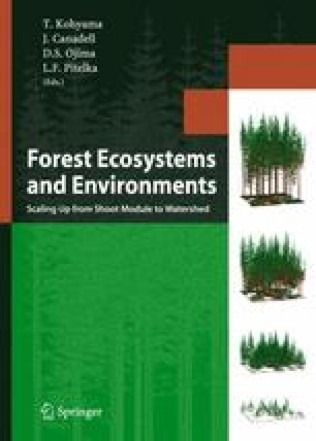
Forest ecosystems and environments : Scaling up from shoot module to watershed
The Global Change Impacts on Terrestrial Ecosystems in Monsoon Asia (TEMA) project was carried out as a unique contribution to the international project Global Change and Terrestrial Ecosystems. TEMA aimed to integrate forest ecosystem processes. This volume presents the scaling-up concept for better understanding of ecosystem functioning.
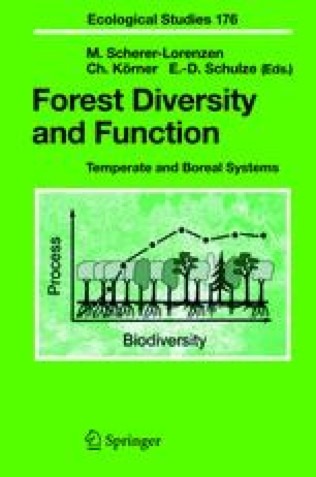
Forest Diversity and Function : Temperate and Boreal Systems
One of the central research themes in ecology is evaluating the extent to which biological richness is necessary to sustain the Earth's system and the functioning of individual ecosystems. In this volume, for the first time, the relationship between biodiversity and ecosystem processes in forests is thoroughly explored. The text examines the multiple effects of tree diversity on productivity and growth, biogeochemical cycles, animals, pests, and disturbances.
Forest and Rangeland Soils of the United States Under Changing Conditions : A Comprehensive Science Synthesis
This book synthesizes leading-edge science and management information about forest and rangeland soils of the United States. It offers ways to better understand changing conditions and their impacts on soils, and explores directions that positively affect the future of forest and rangeland soil health.
