



Page 6
Page 6

IT Security Controls : A Guide to Corporate Standards and Frameworks
Gives an overview of the major standards and frameworks, and a proposed architecture to meet them. The book identifies and describes the necessary controls and processes that must be implemented in order to secure your organization's infrastructure. The book proposes a comprehensive approach to the implementation of IT security controls with an easily understandable graphic implementation proposal to comply with the most relevant market standards (ISO 27001, NIST, PCI-DSS, and COBIT) and a significant number of regulatory frameworks from central banks across the World (European Union, Switzerland, UK, Singapore, Hong Kong, India, Qatar, Kuwait, Saudi Arabia, Oman, etc.). You will learn: Understand corporate IT security controls, including governance, policies, procedures, and security awareness Know cybersecurity and risk assessment techniques such as penetration testing, red teaming, compliance scans, firewall assurance, and vulnerability scans Understand technical IT security controls for unmanaged and managed devices, and perimeter controls Implement security testing tools such as steganography, vulnerability scanners, session hijacking, intrusion detection, and more
Complications and quandaries in the ICT sector : Standard essential patents and competition issues
Talks about how the regulatory agencies and courts in the United States, European Union and India are dealing with the rising allegations of anti-competitive behaviour by standard essential patent (SEP) holders. It also discusses the role of standards setting organizations / standards developing organizations (SSO/SDO) and the various players involved in implementing the standards that influence practices and internal dynamics in the ICT sector. The book includes discussions on fair, reasonable and non-discriminatory (FRAND) licensing terms and the complexities that arise when both licensors and licensees of SEPs differ on what they mean by “fair”, “reasonable” and “non-discriminatory” terms. It also addresses topics such as the appropriate royalty base, calculation of FRAND rates and concerns related to FRAND commitments and the role of Federal Trade Commission (FTC) in collaborative standard setting process.
Challenging American Leadership : Impact of National Quality on Risk of Losing Leadership
After leading the world during most of the 20th century in economic, political, technological, military, and even social terms, America’s role is now being challenged. Its values questioned, and its methods often disparaged, America had become the clear example to be followed or even copied, yet its more recent strategic and political decisions gained little international support and a lot of outright opposition. The quality of its national planning and decision making has been severely compromised, and risk management appears to be largely absent. India and China are now emerging as new economic powers, with advancing technological prowess. Their focus is on socioeconomic development, but their capabilities and potentials are much broader and may challenge America's leadership before long, unless it recognizes the changing demands of the new wide open globalized world.

Central Bank Policy Mix : Issues, Challenges, and Policy Responses: Handbook of Central Banking Studies
Keynote speeches, lectures, and related teaching materials during the five years of the "Central Bank Policy Mix: Issues, Challenges and Policy Responses" flagship program of the BI Institute, the learning and research centre of Bank Indonesia. The book examines the interactions among central bank policies including monetary policy, exchange rate policy, macroprudential policy, and capital flow management and also elaborates on modeling issues and quantitative analysis of the interaction between macroeconomic variables and policy instruments.

Case studies in biocultural diversity from Southeast Asia : Traditional ecological calendars, Folk medicine and Folk names
This book demonstrates the linkages between local languages, traditional knowledge, and biodiversity at the landscape level in Asia, providing a fresh approach to discussions on Asia’s biocultural diversity. The book carries forward earlier analyses but importantly focuses on ‘traditional ecological calendars,’ ‘folk medicine,’ and ‘folk names’ in the context of the vital importance of maintaining biological, cultural, and linguistic diversity. It does this by addressing a range of cases and issues in relation to Southeast Asia: Brunei Darussalam, Indonesia, Malaysia, the Philippines, and North-East India. The several chapters demonstrate the ways in which the various forms of knowledge of the environment and its categorizations are important in areas such as landscape and resource management and conservation. They also demonstrate that environmental knowledge and the practical skills which accompany it are not necessarily widely shared. This book sends important messages to those who care about the sustainability of our environment, the maintenance of its biocultural diversity, or at least the maintenance of what remains of it because much has changed.

Building construction and technology
Highlights various aspects of building construction industry based on data from field studies. It discusses the challenges, methodologies, technological applications in building construction, technology, and management. The book presents new approaches to effective building construction and an understanding of the impact of applications of latest technologies.
Building a Future with BRICs : The Next Decade for Offshoring
In 2003, Goldman Sachs published a startling report on the BRICs (Brazil, Russia, India, and China) region: These four countries would be larger than the G6 economics within 40 years, muscling their way to economic dominance over the coming decades, and powering past developed countries such as the United Kingdom, Germany, and Japan. This book focuses on the technology and technology-enabled services that underpin this social and economic revolution. The editor analyses the reasons why these four countries are in a unique position to lead a 21st century growth in international services. He then features 12 chapters written by the most important chief executives from the BRICs service economy. Indian technology leaders, such as Nandan Nilekani (Infosys), Shiv Nadar (HCL), and Rajendra Pawar (NIIT), feature alongside their peers from Brazil, Russia, and China outlining their views on the next decade for offshoring.

Bioterrorism and Infectious Agents : A New Dilemma for the 21st Century
Since the terrorist attack on the United States on September 11, 2001 and subsequent cases of anthrax in Florida and New York City, attention has been focused on the threat of b- logical warfare and bioterrorism. Biological warfare agents are de?ned as “living org- isms, whatever their nature, or infected material derived from them, which are used for h- tile purposes and intended to cause disease or death in man, animals and plants, and depend for their efforts on the ability to multiply in person, animal or plant attacked.” Biological warfare agents may be well suited for bioterrorism to create havoc and terror in a civilian population, because they are cheap and easy to obtain and dispense. Infectious or contagious diseases have played a major part in the history of warfare – deliberately or inadvertently – in restricting or assisting invading armies over the centuries. In 1346, the Tartars catapulted plaque-infected bodies into Kaffa in the Crimea to end a 3-year siege. Blankets contaminated with smallpox to infect North American Indians were used by British forces in the 18th century. More recently, the Japanese released ?eas infected with plaque in Chinese cities in the 1930s and 1940s. Biological research programs for both offensive and defensive strategies have been developed by the United States, Britain, the former Soviet Union, and Canada; several other nations are thought to have such programs.

Bioceramics and alternative bearings in joint arthroplasty ; 12th BIOLOX® Symposium Seoul, Republic of Korea September 7 - 8, 2007. Proceedings
th ® Dear Colleague and Participant of the 12 International BIOLOX Symposium ® It is an honor for CeramTec to have the BIOLOX Symposium in Asia. The selection of Seoul, Korea as the site was a difficult one due to the fact that there are many wonderful location options in this dynamic and fast growing region of the world. The selection was made easier by the outstanding support of our Symposium Chairman, Prof. Chang, as well as the excellent airline service and meeting facilities present in Seoul. We hope that conducting the Symposium in this region will serve as a foundation for the increased recognition of the potential patient benefits to be derived from the use of ceramics and other alternative bearing technologies in Korea, China, India, Japan and the rest of the countries of the region.

Bayesian Methods in the Search for MH370
This book demonstrates how nonlinear/non-Gaussian Bayesian time series estimation methods were used to produce a probability distribution of potential MH370 flight paths. It provides details of how the probabilistic models of aircraft flight dynamics, satellite communication system measurements, environmental effects and radar data were constructed and calibrated. The probability distribution was used to define the search zone in the southern Indian Ocean. The book describes particle-filter based numerical calculation of the aircraft flight-path probability distribution and validates the method using data from several of the involved aircraft’s previous flights. Finally it is shown how the Reunion Island flaperon debris find affects the search probability distribution.

Banking Sector Liberalization in India : Evaluation of Reforms and Comparative Perspectives on China
Banking Sector Liberalization in India explores in detail the changes in the Indian banking sector over the last 20 years, and puts them into a comparative perspective with the Chinese banking sector. For this purpose, the author develops a detailed indicator-based framework for assessing the liberalization of a banking sector along various process steps based on financial liberalization and transformation studies. This framework, along with the indicators for the process and the results of liberalization, is applied to the banking sectors in India and China to test for the effects of liberalization on the sector and the macro level. The key finding is that while liberalization has improved the sectoral performance, it has so far had no effect on the macro level. The book features a detailed description of recent reforms in the Indian banking sector, a set of indicators for evaluating banking sector reforms, and a large number of graphs with key figures for the banking sectors in India and China.
Attention in Cognitive Systems : Theories and Systems from an Interdisciplinary Viewpoint ; 4th International Workshop on Attention in Cognitive Systems, WAPCV 2007 Hyderabad, India, January 8, 2007 Revised Selected Papers
The embodied nature of sensory-motor intelligence requires a continuous and focused interplay between the control of motor activities and the interpretation of feedback from perceptual modalities. Decision making about the selection of information from the incoming sensory stream – in tune with contextual processing on a current task and an agent’s global objectives – becomes a further challenging issue in attentional control. Attention must operate at interfaces between bottom-up driven world int- pretation and top-down driven information selection, thus acting at the core of arti?cial cognitive systems. These insights have already induced changes in AI-related disciplines, such as the design of behavior-based robot control and the computational modeling of animats. Today, the development of enabling technologiessuch as autonomous robotic systems,miniaturizedmobile–evenwearable–sensors,andambientintelligence systems involves the real-time analysis of enormous quantities of data. These data have to be processed in an intelligent way to provide “on time delivery” of the required relevant information. Knowledge has to be applied about what needs to be attended to, and when, and what to do in a meaningful sequence, in correspondence with visual feedback.
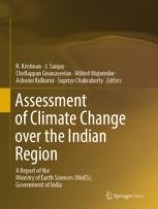
Assessment of climate change over the Indian Region : A report of the Ministry of Earth Sciences (MoES), Government of India
Discusses the impact of human-induced global climate change on the Indian subcontinent and regional monsoon, the adjoining Indian Ocean and the Himalayas. It also examines the regional climate change projections based on the climate models used by the IPCC Fifth Assessment Report (AR5) and national climate change modeling studies using the IITM Earth System Model (ESM) and CORDEX South Asia datasets
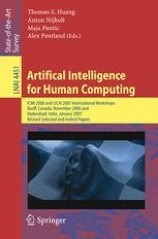
Artifical intelligence for human computing ; ICMI 2006 and IJCAI 2007 International Workshops, Banff, Canada, November 3, 2006 Hyderabad, India, January 6, 2007 Revised Selceted Papers
This book contains the thoroughly refereed post-proceedings of two events discussing AI for Human Computing.It presented a vision of the future of computing technology in which AI, in particular machine learning and agent technology, plays an essential role.
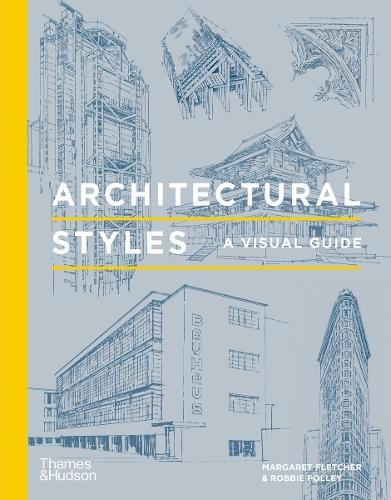
Architectural styles : A visual guide
It begins with the earliest styles of the ancient civilizations – Egypt, Greece and Rome – before travelling through Medieval, Renaissance and Baroque and into the modern world via the panoply of 19th century revivalist styles. Also covered is the traditional architecture of China, India, Japan and Pre-Columbian America. A final section gathers together key architectural elements from different periods – columns, towers, doorways, windows.
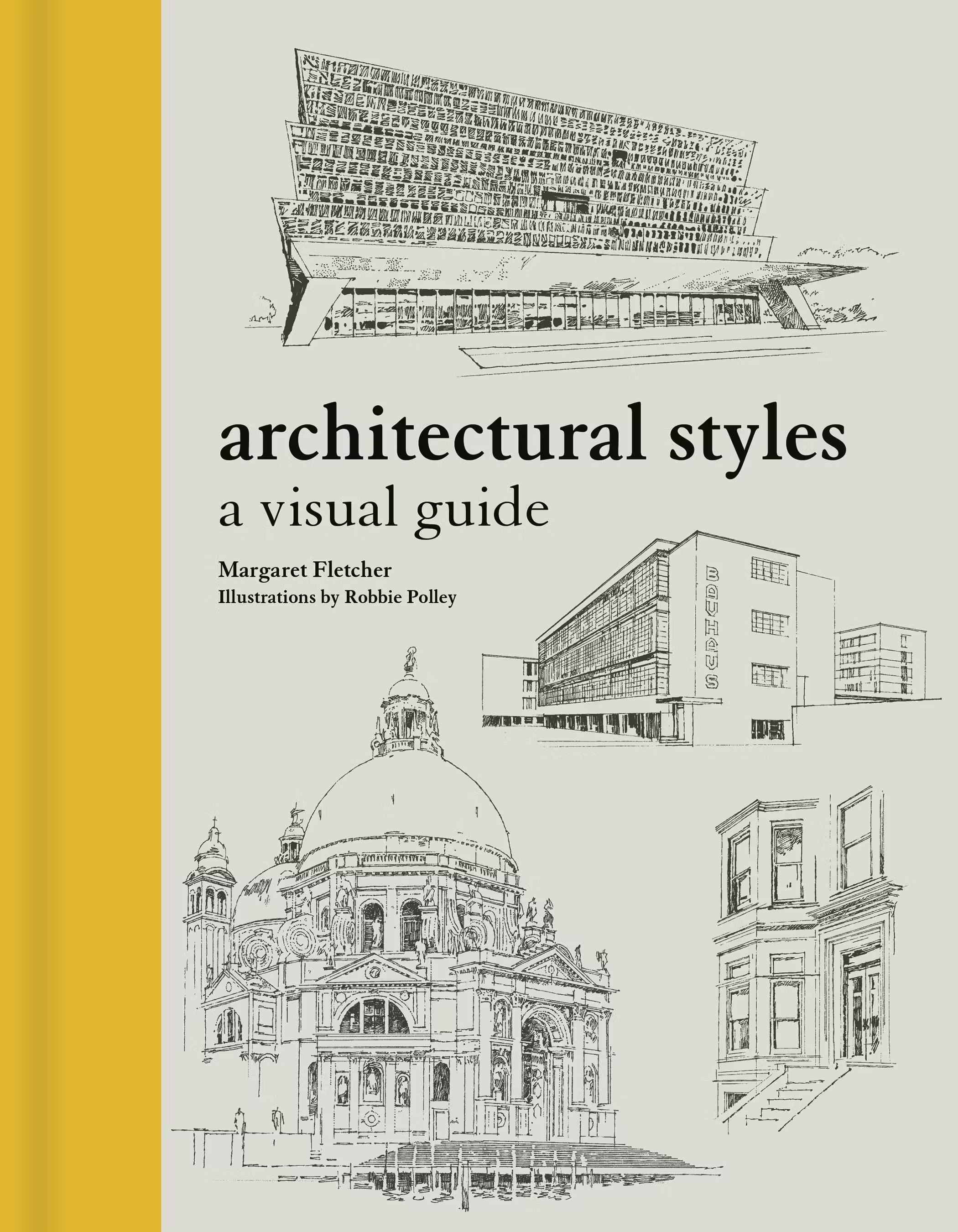
Architectural styles : A visual guide
A guide to architectural styles across the centuries and around the world. Modeled after an architect's plein air sketchbook, the volume features hundreds of detailed drawings by esteemed architectural illustrator Robbie Polley alongside incisive and informative descriptions. This unique guidebook takes readers from Europe and the Americas to Egypt, China, and India. It covers a host of historical and contemporary architectural styles, from ancient and classical to Pre-Columbian, Romanesque, Renaissance, Palladian, art nouveau, Brutalist, and biomorphic. It describes the histories and characteristics of the building traditions of each era and region of the world, and looks at key architectural elements such as buttresses, spandrels, curtain walls, and oculi. The book also includes a section on building parts-from domes and columns to towers, arches, roofs, and vaulting-along with a detailed glossary and bibliography. Comprehensive and authoritative, 'Architectural Styles' is an essential resource for architects and designers and a must-have illustrated guide for anyone interested in architecture or drawing.

Applied algebra, algebraic algorithms and error-correcting codes ; 17th International Symposium, AAECC-17, Bangalore, India, December 16-20, 2007, Proceedings
Among the subjects addressed are block codes, including list-decoding algorithms; algebra and codes: rings, fields, algebraic geometry codes; algebra: rings and fields, polynomials, permutations, lattices; cryptography: cryptanalysis and complexity; computational algebra: algebraic algorithms and transforms; sequences and boolean functions.

Analogy in Indian and western philosophical thought
This book was assembled from numerous excerpts, notes, and fragments according to his initial plans. Zilberman’s legacy still awaits its true discovery and this book is a second installment to it after The Birth of Meaning in Hindu Thought (Kluwer, 1988). Zilberman’s treatment of analogy is unique in its approach, scope, and universality for Western philosophical thought.
An Energy Analysis of Household Consumption : Changing Patterns of Direct and Indirect Use in India
The book presents a novel socio-economic approach to analysing the - ergy system and energy consumption in India from a household persp- tive. In doing so, it views households as the ultimate end-consumers and estimates and analyses the direct and indirect energy requirements of household consumption, both at an aggregate national level as well as at a disaggregate household level. In addition, the work incorporates two c- cial aspects often ignored by many energy studies that are characteristic of most developing countries, namely the importance of non-commercial sources of biomass energy in the energy systems of these countries, and the enormous diversity and inequity in the patterns of energy access and use across households with different lifestyles and levels of well being.
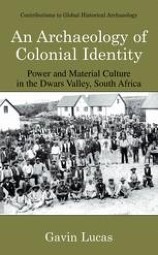
An Archaeology of Colonial Identity : Power and Material Culture in the Dwars Valley, South Africa
This book is the based on the work of many people, and while I discuss many of them in the general context of this book in Chapter 1. The backbone of the book is based on a project, 'Farm Lives' conducted between 1999 and 2002, funded exclusively by the McDonald Institute for Archaeolog-ical Research at the University of Cambridge.
