



Page 5
Page 5
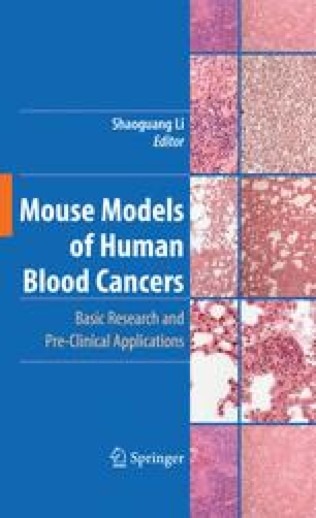
Mouse Models of Human Blood Cancers : Basic Research and Pre-clinical Applications
Although it remains an open question among some people whether mice and humans are similar in disease development, the laboratory mouse has emerged as the preeminent animal model for human diseases. This is underscored by the recently completed mouse and human genome projects, which have revealed that mice and humans share the vast majority of their genes, and thus get many of the same diseases, and for the same reasons. Emphasizing why mouse models are valuable in vivo systems for understanding disease mechanisms and developing therapeutic strategies for human blood cancers, "Mouse Models of Human Blood Cancers: Basic Research and Pre-clinical Applications," edited by Shaoguang Li, aims on presenting thorough analyses of the pathological features and the molecular bases of several major types of blood cancer and to describe translational research using mouse cancer models.

Mosquito Ecology : Field Sampling Methods
The purpose of this book is in keeping with the original vision of Professor Service to describe the methods and rationale for sampling mosquitoes, with particular emphasis on the ecology and behaviour of those species that play a role as vectors of human and animal diseases and infections. The book is designed to serve as a practical reference for field entomologists and mosquito control specialists and describes the sampling methods and available trapping technologies and tools for the collection of all life-stages of mosquitoes, from egg to adult. It also describes the techniques available for data analysis and discusses ecological principles of relevance to the study of field populations of mosquitoes. While concentrating primarily on mosquitoes, many of the techniques described are suitable for the study of other Diptera, including Ceratopogonidae, Chironomidae, Simuliidae, Phlebotominae, etc.

Morphology, Molecules, Evolution and Phylogeny in Polychaeta and Related Taxa; Proceedings of two ISSI Workshops, 18–22 October 1999 and 15–19 May 2000, Bern, Switzerland
Recently, evidence has been accumulated which shows that some of the groups formerly regarded as independent "phyla" such as Pogonophora (now recognized as Siboglinidae), Echiura, Myzostomida and perhaps Sipuncula, are most probably nothing else than greatly modified Annelida. The extreme morphological diversity found especially in Polychaeta displays the plasticity of a simple segmented organisation that basically is nothing else but a serial repetition of identical units. Thus, annelids are highly important to our understanding of fundamental questions about morphological and adaptive diversity, as well as clarifying evolutionary changes and phylogenetic relationships. The book aims to summarize our knowledge on Polychaetes polychaetes and their allies and gives an overview of recent advances gained by studies that employed conventional and modern methods plus, increasingly and importantly, the use of molecular markers and computer-assisted kinship analyses. It also reflects the state of art in polychaete sciences and presents new questions and controversies. As such it will significantly influence the direction of research on Polychaeta and their related taxa.

Monograph of the Urostyloidea (Ciliophora, Hypotricha)
This monograph is the second of a series treating the hypotrichs, a major part of the spirotrichous ciliates. The urostyloids are characterised by a zigzag-arrangement of the ventral cirri. Like the first part of the series, the Oxytrichidae, it summarises the morphological, morphogenetic, faunistic, and ecological data from the past 230 years, scattered in more than 1300 references from all over the world. Dichotomous keys lead to 36 genera and subgenera comprising 153 species illustrated by more than 2100 figures, including original ones. The treatise offers taxonomists, cell biologists, and ecologists a thorough and up-to-date revision because for each species a detailed list of synonyms, a discussion of the nomenclature and systematics, and an extensive description of the morphology and ecology, including almost all published faunistic records, are provided. With the monographs of the Urostyloidea and the Oxytrichidae the interested scientist can identify more than 320 species of hypotrichs, which are an important component of the eukaryotic microbial life in limnetic, marine, and terrestrial habitats.

Monograph of the Spathidiida (Ciliophora, Haptoria) ; Vol. I : Protospathidiidae, Arcuospathidiidae, Apertospathulidae
The present monograph carefully revises the taxonomy, nomenclature, and ecology of all nominal species and shows that spathidiid diversity has been greatly underestimated. Based on the reinvestigation of described species with modern methods (silver impregnation, scanning electron microscopy) and the first description of over 50 new species, the family Spathidiidae is split into four families and 20 genera. Each species is described and figured in detail, making it unnecessary to go back to the original literature often difficult to obtain. Two identification keys are provided, viz., one for taxonomists and another, simple key for users not specifically trained in ciliate taxonomy.

Monoaminergic modulation of cortical excitability
Monoaminergic Modulation of Cortical Excitability serves as an integrative and comprehensive comparison of the diverse and complex modulatory action of dopamine, noradrenaline, and serotonin receptors in the cortex. The volume is organized into several sections offering a broad spectrum of opinions on how the monoamine systems affect cortical function from a cellular/sub-cellular level to a system level. The complexity of these interactions are discussed in light of recent data showing how disruption of these systems dramatically affects the memory formation and information processing in the cortex.

Monitoring Nature Conservation in Cultural Habitats : A Practical Guide and Case Studies
Monitoring Nature Conservation in Cultural Habitats presents monitoring as an integral component of responsible conservation management and as a catalyst for decision making. The early sections of the book cover key areas in the development of a monitoring project, including: - The roles of survey and surveillance - Incorporating knowledge from existing research - Identifying the conservation priority on sites - Minimising observer error - Identifying site-specific condition indicators for habitats - Collecting monitoring data The later sections of the book comprise a series of case studies covering a wide range of habitats and species. These case studies focus mostly, though not exclusively, on sites that form part of the Natura 2000 series in Europe.

Molluscs : From Chemo-ecological Study to Biotechnological Application
Marine molluscs are very promising candidates for a wide range of biotechnological applications. For example, they possess analgesic drugs more potent than morphine and very effective anticancer agents. The present book gives an up-to-date overview of the main classes of bioactive compounds from molluscs, moving from ecological observations, to chemical characterization, to biosynthesis, to large-scale synthesis, and to pharmacological applications. A truly outstanding international panel of experts from all continents provides complete coverage of the most stimulating topics related to molluscs. This knowledge of their history and current studies provides an open door to the future.

Molecular Technology ; Vol.2 : Life Innovation
Interdisciplinary and application-oriented, this ready reference focuses on methods and processes with a high practical aspect, covering new trends in drug delivery, in-vivo analysis, structure formation and much more.

Molecular Targeting in Oncology
In Molecular Targeting in Oncology, authors present an overview of the development of targeted therapies for the treatment of cancer with an emphasis on clinical application. The volume covers the complexity of the rapidly developing area of targeted therapies for the treatment of patients with cancer and is structured in a way so readers may begin with chapters that most interest them and work through the rest of the chapters in the order of their choice. The volume is divided into five sections that cover the most important elements of drug development. The first section focuses on approaches using targeted therapies to inhibit cell growth. The second section describes how clinicians are evaluating targeted therapies in specific organ systems. The third section illustrates how various classes of pharmacologic and immunologic agents are developed for individual molecular targets. The fourth section details new drugs that have novel mechanisms of action. The final section looks to the future of targeted therapeutics and includes chapters on appropriate patient selection, use of combination therapy, dealing with tumor cell resistance, and more. Comprehensive and cutting-edge, Molecular Targeting in Oncology is an essential reference for those working in the field.

Molecular Pharmacognosy
This book discusses the application of molecular biology in resource science and authentication of traditional Chinese medicine (TCM). It also reviews the latest developments in pharmacognosy, introduces new perspectives and insights, discusses the hotspots and focuses in the field of molecular pharmacognosy, and predicts new directions of study. In the last five years, the technologies and scope of molecular pharmacognosy have constantly expanded and evolved. As such, this new edition includes extra content, such as the molecular phylogeography of medicinal plants, functional genome of medicinal plants, and synthetic biology of active compounds. Elucidating the concept, theory, and methodology of molecular pharmacognosy, it promotes the full use of the newly developed technologies and methodologies within the framework of molecular pharmacognosy to solve problems in the field.

Molecular Parameters Indicating Adaptation to Mechanical Stress in Fibrous Connective Tissue
The present study pursues the hypothesis that local compressive force and the occurrence of cartilage-specific transformation processes within tendons and ligaments are directly correlated. In selected anatomical samples of human origin the distribution pattern of certain components of the extracellular matrix is assessed. Investigations are carried out at the extensor tendons of toes and fingers, at the transverse ligament of the atlas, at the transverse ligament of the acetabulum, and at the tendon of the superior oblique muscle and its trochlea. The molecular components of the extracellular matrix are detected with standardized immunohistochemical methods. The results show that certain molecules only occur due to compressive stress, others due to tensile stress. The molecular spectrum of the extracellular matrix allows qualifying conclusions to the mechanical situation of a given part of the tissue. The spatial expansion of the fibrocartilaginous adaptation zones in tendons and ligaments roughly corresponds with the zones subjected to compressive force; tensile stress alone does not result in a production of fibrocartilage.

Molecular Paradigms of Infectious Disease : A Bacterial Perspective
This comprehensive volume, written by leading authors in the field, provides a fundamental understanding of the complex cellular and molecular processes that are important for bacterial virulence and the infectious disease process. Written in a clear and engaging manner, the book highlights key techniques and methodologies that have driven recent discoveries in bacterial pathogenesis, major structures and mechanisms in bacteria that are important for the pathogenesis of these organisms, the regulation of these virulence determinants by global regulators, and bacterial biowarfare agents. Molecular Paradigms of Infectious Disease: A Bacterial Perspective is an ideal book for students, microbiologists, immunologists and scientists and researchers of bacterial pathogenesis.

Molecular Organisation on Interfaces
This volume contains studies on the molecular organisation on interfaces and nanoparticles. The contributions were presented during the 40. General Meeting (Hauptversammlung) of the Kolloid-Gesellschaft in Potsdam in September 2001 and are related to the subject "Colloids and Life Science". Therefore, a diversity of papers were collected covering a large field: synthesis of polymer colloids, biominerals and nanoparticles, investigations on monolayers, lyotropic mesophases, polymeric surfactants, micellar transitions, supramolecular compounds for modifying polymers, solid particles for emulsion stabilisers, and adsorbents for odour control.

Molecular Mimicry : Infection Inducing Autoimmune Disease
The conceptual basis for molecular mimicry was first defined in the early 1980s when monoclonal antibodies against viruses were also shown to react with non-viral host protein; in this case, measles virus phosphoprotein cross-reacted with host cell cytokeratin, herpes simplex virus type 1 with host-cell vimentin and vaccinia virus with host-cell intermediate filaments. Following this discovery, others emerged, again at the clonal level, that T cell clones against proteins from a variety of infectious agents also reacted with host antigenic determinants. The clonal distinction was imperative fo.
Molecular microbiology of heavy metals
Molecular Microbiology of Heavy Metals includes chapters on allocation of metals in cells, metal transporter, storage and metalloregulatory proteins, cellular responses to metal ion stress, transcription of genes involved in metal ion homeostasis, uptake of essential metals, metal efflux and other detoxification mechanisms. Also discussed are metal bioreporters for the nanomolar range of concentration and tools to address the metallome. Chapters in the second part cover specific metals such as Fe, Mn, Cu, Ni, Co, Zn and Mo as key nutrient elements and Ag, As, Cd, Hg and Cr as toxic elements.

Molecular Mechanisms of Synaptogenesis
Molecular Mechanisms of Synaptogenesis is a compilation of recent exciting findings that summarizes the ever-expanding knowledge of how neuronal contacts develop in the normal brain and how their functions are affected in mental disorders. In the last decade, advances in molecular and cellular biology, combined with the development of sophisticated fluorescence microscopy tools to visualize synapses in live neurons, have revealed many intriguing and unexpected findings regarding the dynamics of synapse formation. Studies by a number of researchers have identified several critical protein components of synapses and shown the time course of their arrival at the synapse. Several molecules serve to hold the synaptic contacts between nerve cells and regulate their function.

Molecular Mechanisms of Plant and Microbe Coexistence
Molecular Mechanisms of Plant and Microbe Coexistence presents studies on the complex and manifold interactions of plants and microbes at the population, genomics and proteomics level. The role of soil microbial diversity in enhancing plant health and plant microbe beneficial symbioses is discussed. Microbial communities are shown in the light of evolution. Main topics include genome coexistence and the functional genomics and proteomics of plant-associated microbes, which could form the basis for new environmentally benign strategies to combat infectious plant diseases and regulate plant growth. Further chapters focus on the role of signaling during the different stages of plant microbe coexistence, in symbiotic or pathogenic relationships, in quorum sensing and plant viral infections. Methods for studying the interactions in the root zone complement the book, which will certainly be of relevance in the practical application to agriculture, food security and for maintaining the balance of our ecosystems.

Molecular Mechanisms of Phagocytosis
Although, Phagocytosis was first described nearly 120 year ago, we are just recently beginning to understand the molecules that phagocytic cells use to bring about this complex cell function. Molecular Mechanisms of Phagocytosis was prepared as a series of up-to-date essays (chapters) that describe the present knowledge on the various steps of the phagocytic process from initial cell contact, through internalization of the foreign particle, to the final phagosome formation where the phagocytosed particle is destroyed.

Molecular Mechanisms of Parasite Invasion
All of the parasitic organisms highlighted in this new book represent medically important human pathogens that contribute significantly to the global burden of disease. As such there is intense interest in understanding the molecular basis of infection by these pathogens—not only with regard to their clinical relevance but also the fascinating biology they reveal. For most of the parasites discussed here the ability to penetrate biological barriers and/or to establish intracellular residence is critical to survival of the pathogen in the mammalian hosts. For other parasites, a tissue invasive phenotype is a key virulence determinant. In the ensuing 18 chapters, select members of this diverse set of protozoan parasites, as well as some examples of the extremely reduced fungal parasites classified as Microsporidia, are discussed within the context of the fascinating molecular strategies employed by these organisms to migrate across biological barriers and to establish residence within target host cells.
